Personalized Books for 9- and 10-Year-Olds Who Are Done With Toys
Gifts for 9- and 10-year-olds who don't want toys: personalized books with real history, science and speed, plus an honest answer on whether 10 is too old.


In this article
- Quick picks for 9- and 10-year-olds
- Is a personalized book too young for a 10-year-old?
- Do 9-year-olds still read picture books?
- The Dream Carriers: history they can look up
- Justice: Washington, D.C.
- Hope: Atlanta
- Imagination: Los Angeles
- Tumble Through Time: history with a puzzle in it
- Where Does the Moon Go?: for the stargazer
- The Brickyard Dream: for the racing fan
- In December: Six Days Until Christmas
- What should I get a 10-year-old who doesn't like toys?
- How it works
- Before you order
- Sources
For a 9- or 10-year-old who is done with toys, give something that treats them as older: an experience you share, a real tool for a hobby, or a book about something they care about with them in it. Nine and ten are not too old for picture books when the story has real history or science to dig into. Our picks, each starring your child: The Dream Carriers series (Justice, Hope and Imagination) for history, Tumble Through Time for a time-travel puzzle, Where Does the Moon Go? for the stargazer and The Brickyard Dream for racing fans. In December, the Six Days Until Christmas set adds a nightly countdown.
Ten is the top of our range, so we'll be honest about when a personalized book fits and when it doesn't.
Quick picks for 9- and 10-year-olds
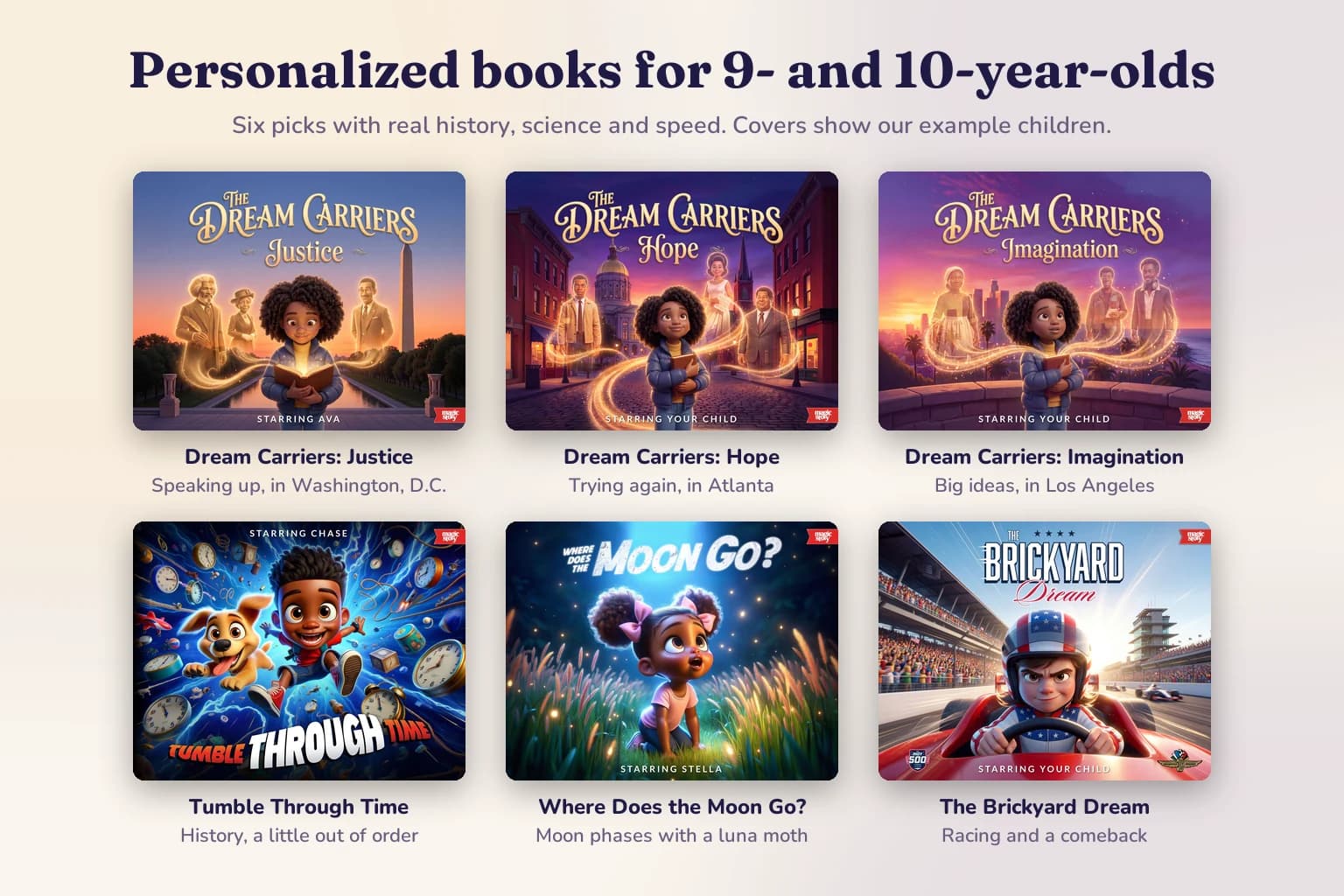
| If they love | Try | What they get out of it |
|---|---|---|
| History and justice | The Dream Carriers: Justice | Frederick Douglass, Mary Church Terrell and Thurgood Marshall in Washington, D.C. |
| Making a difference | The Dream Carriers: Hope | John Lewis, Coretta Scott King and Maynard Jackson in Atlanta |
| Writing, music and big ideas | The Dream Carriers: Imagination | Biddy Mason, Quincy Jones and Octavia E. Butler in Los Angeles |
| Puzzles and history | Tumble Through Time | Seven stops in time, and one of them is out of order |
| Space and science | Where Does the Moon Go? | Moon phases, eclipses and tides, explained by a luna moth |
| Speed | The Brickyard Dream | A comeback from 33rd place at the Indy 500 |
Is a personalized book too young for a 10-year-old?
It can be, and it depends on the book and the child. A personalized picture book is not a chapter book, and a 10-year-old who is reading long novels won't treat it as one. Where it works at ten:
- When the story has substance. A book that puts your child next to Frederick Douglass or Thurgood Marshall gives them something real to look up afterward.
- As a keepsake. Seeing themselves as the hero still lands at ten. It just lands differently: more proud, less giggly.
- As a book to share. Older kids love reading to younger brothers, sisters and cousins, and a book with their own face in it is the one they'll volunteer for.
Our books are made for ages 2 to 10. The Dream Carriers series page suggests ages 4 to 12, and Tumble Through Time is written for 4 to 10, so those are the strongest fits at the top of the range. The example children on our covers are often younger, so make the free preview and let your child see how they look before you decide.

Do 9-year-olds still read picture books?
Many do, alongside chapter books. Nine is often when reading for fun starts to slip. In the National Literacy Trust's 2024 survey of UK children and young people aged 8 to 18, about one in three said they enjoyed reading in their free time. In a group of 8- to 14-year-olds whose survey answers were matched with a reading test, those who enjoyed reading had higher average reading scores than those who didn't. That is an association, not proof that one causes the other, but it is a good reason to protect reading that feels like fun.
The 2025 survey asked what would get children reading. The top answers were a link to a favorite film or TV series (38.1%) and material that matched their interests or hobbies (37.1%), followed by an interesting cover or title (30.9%). Our suggestion: follow the interest, and let a short book count.
The Dream Carriers: history they can look up
The Dream Carriers series is six books, each set in an American city with three Black heroes. Every book starts with a real school moment, a field trip to the Dream Carriers Museum and a glowing wooden map. Your child touches a city, meets three people from its history, sketches something from each in a notebook, and goes back to school to try again. Each book stands on its own, and the series page suggests ages 4 to 12. Here are the three we'd start with at nine or ten.
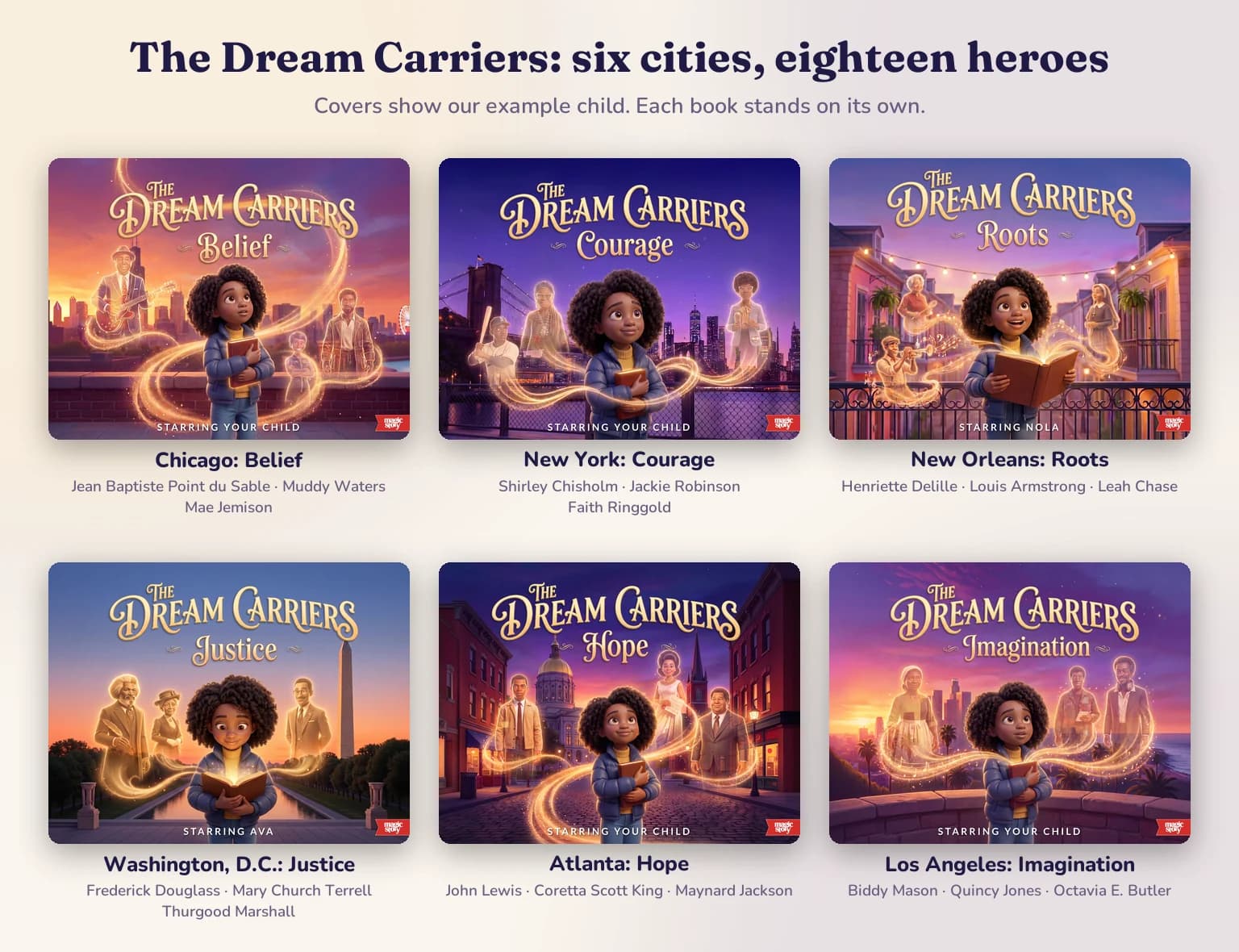
Justice: Washington, D.C.
In the cafeteria line, a bigger kid cuts in front of your child, and nobody says anything. In Washington, Frederick Douglass hands them a pen and asks them to add a word. Mary Church Terrell, eighty-six and still asking for justice, makes room for them in a line where people are being passed over. Thurgood Marshall walks them onto the courthouse steps after the Court rules that separate is not equal. Back at school, your child steps forward: "They were here first."
-
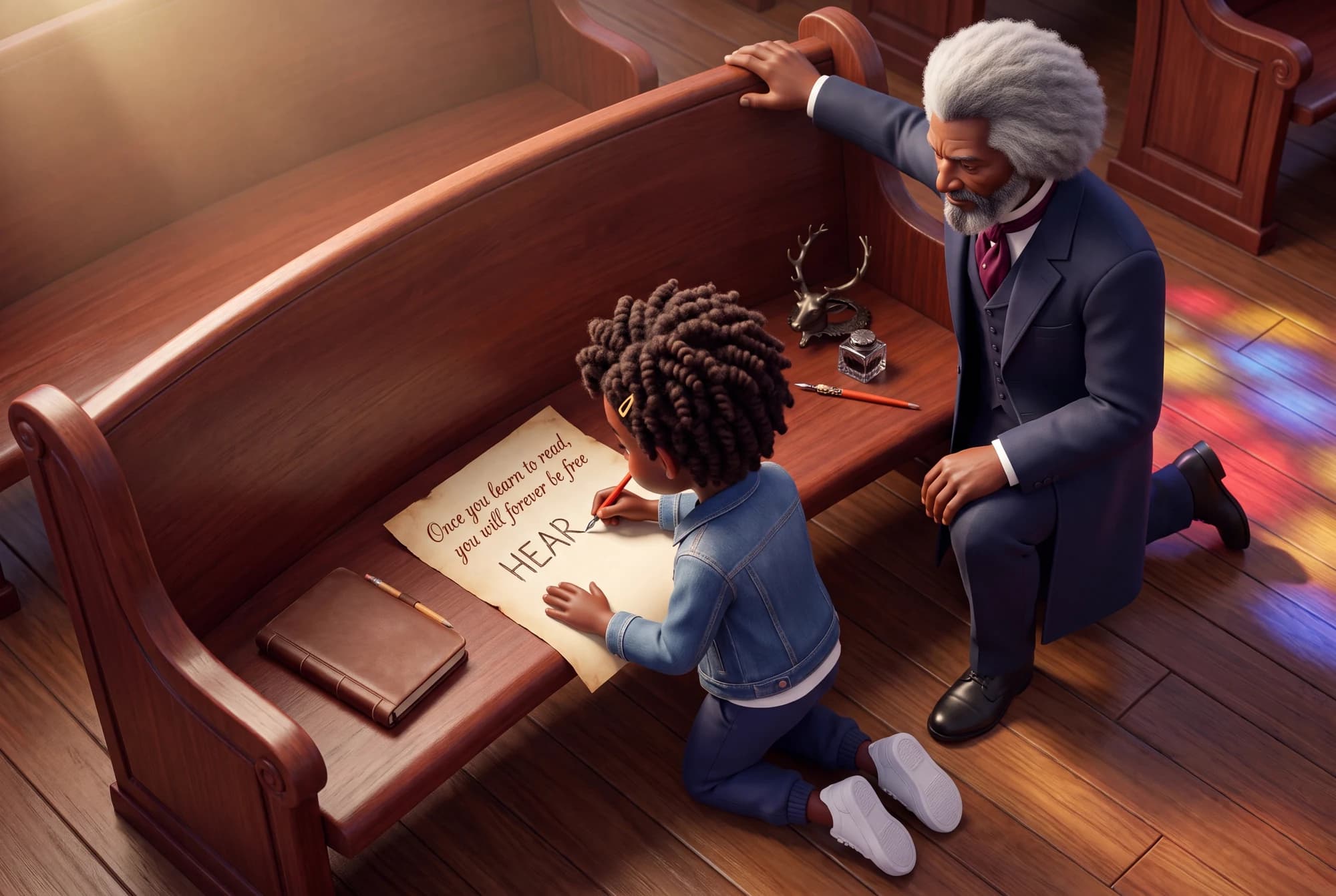
Frederick Douglass "Add your word." Your child writes: HEAR.
-
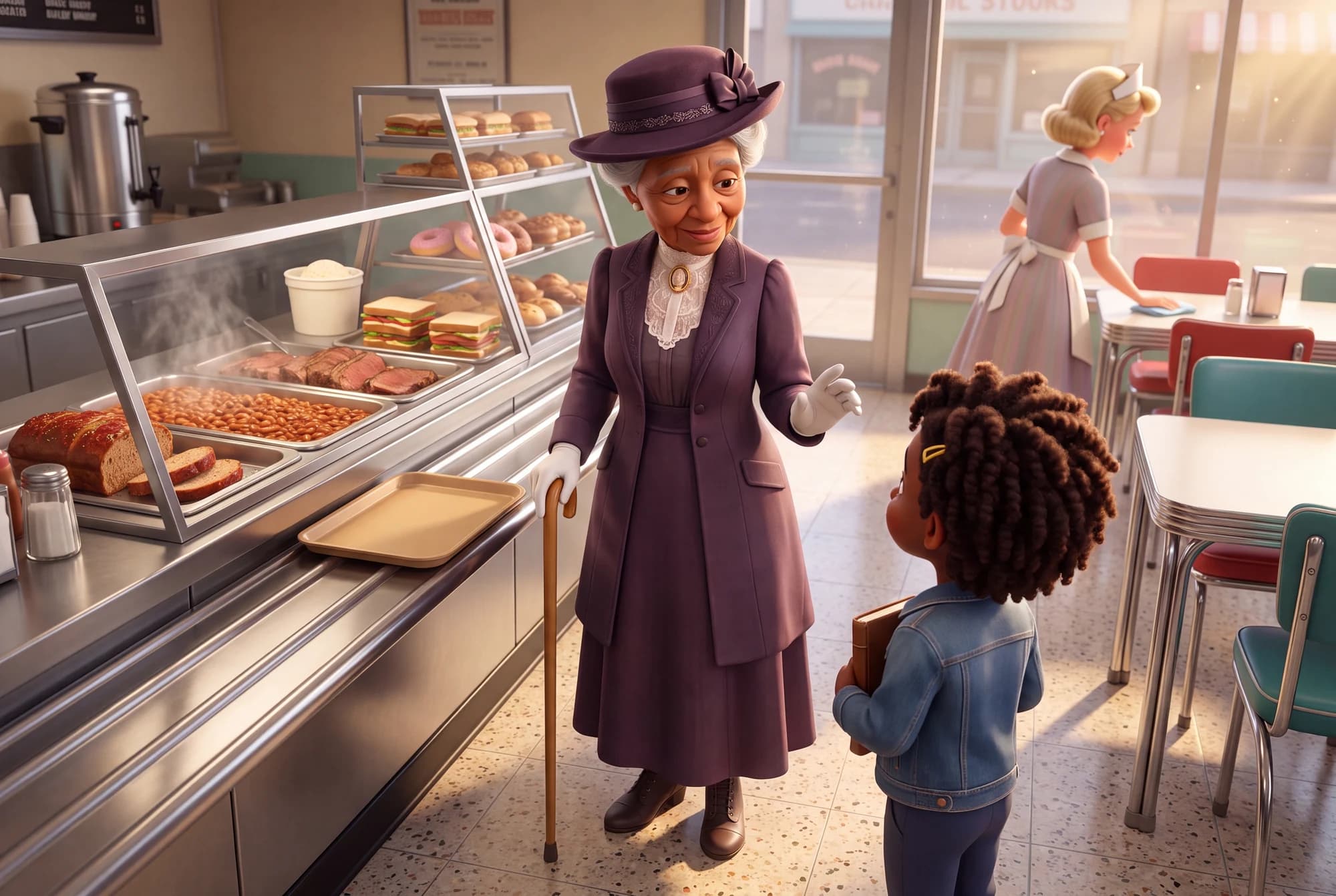
Mary Church Terrell "When the room won't listen, say it again."
-
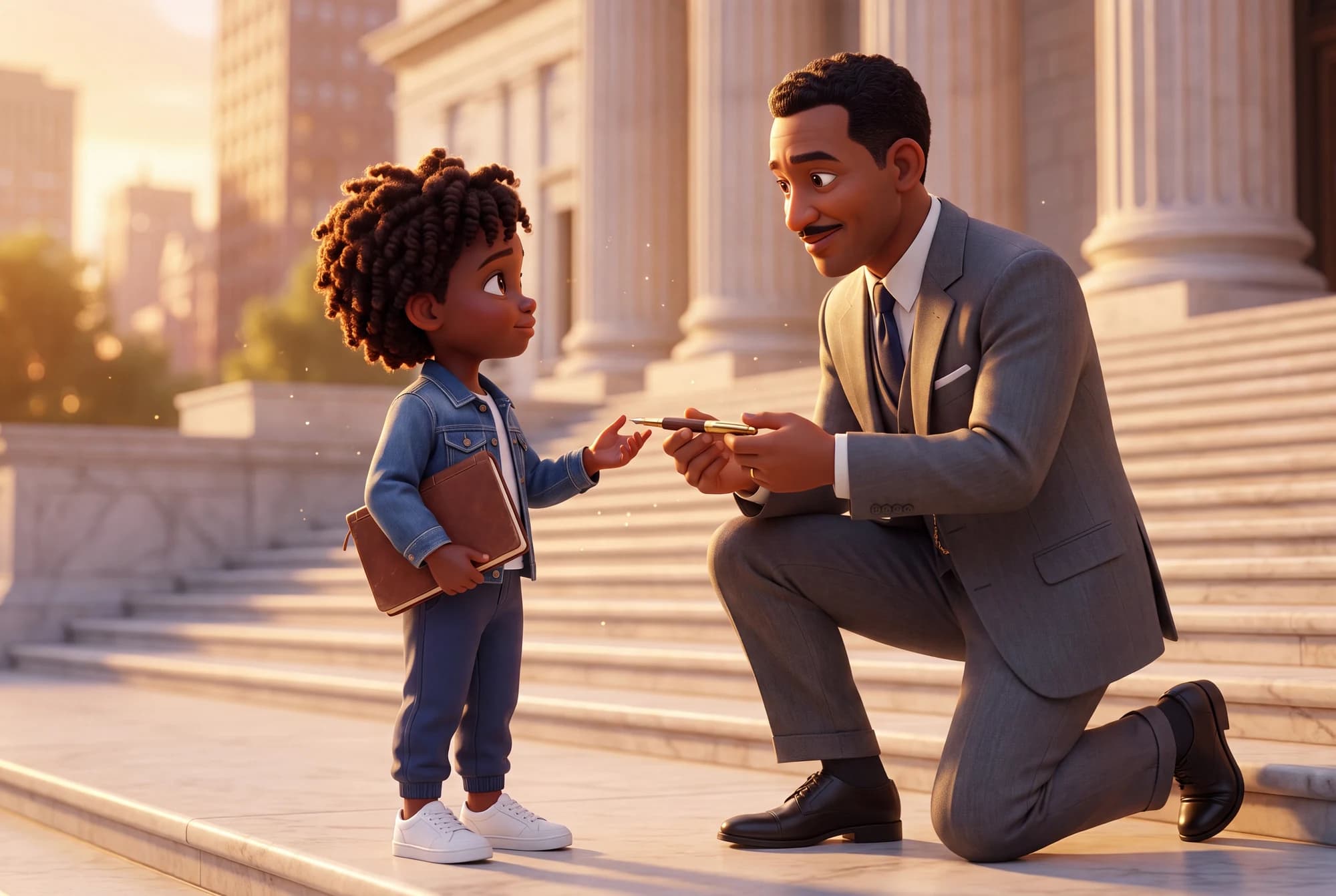
Thurgood Marshall "Now carry it forward."
Hope: Atlanta
Your child has an idea for the school garden, sunflowers, and keeps it to themselves after one "they grow too tall." In Atlanta, a young John Lewis hands them chalk and asks what the march is for. Coretta Scott King helps their shaky singing voice find its place in a freedom song. Mayor Maynard Jackson unrolls blueprints for a city being built to fit everyone. Back at school, your child asks again, and the group plants one seed.
-
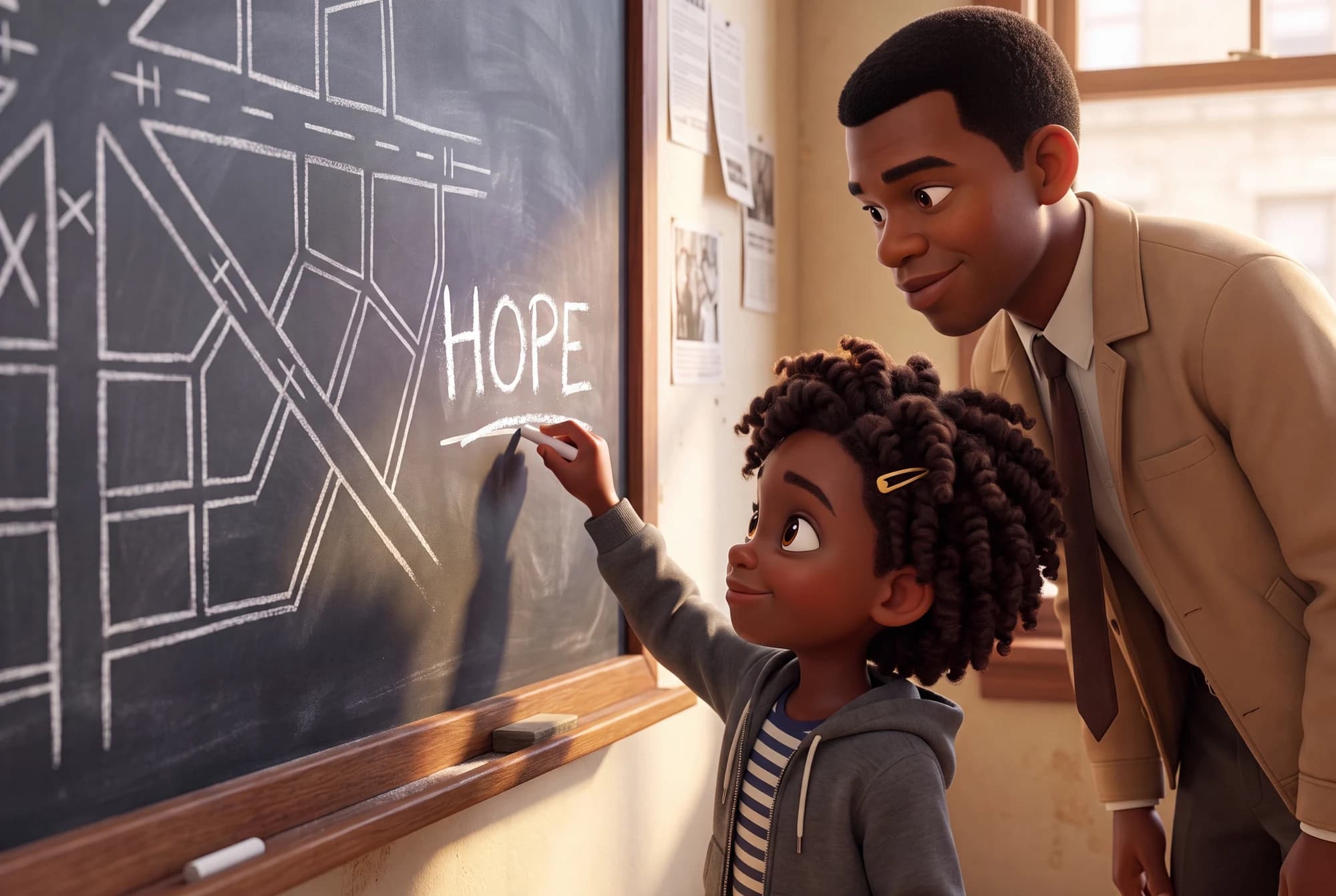
John Lewis "Some trouble is good trouble." Your child writes: HOPE.
-
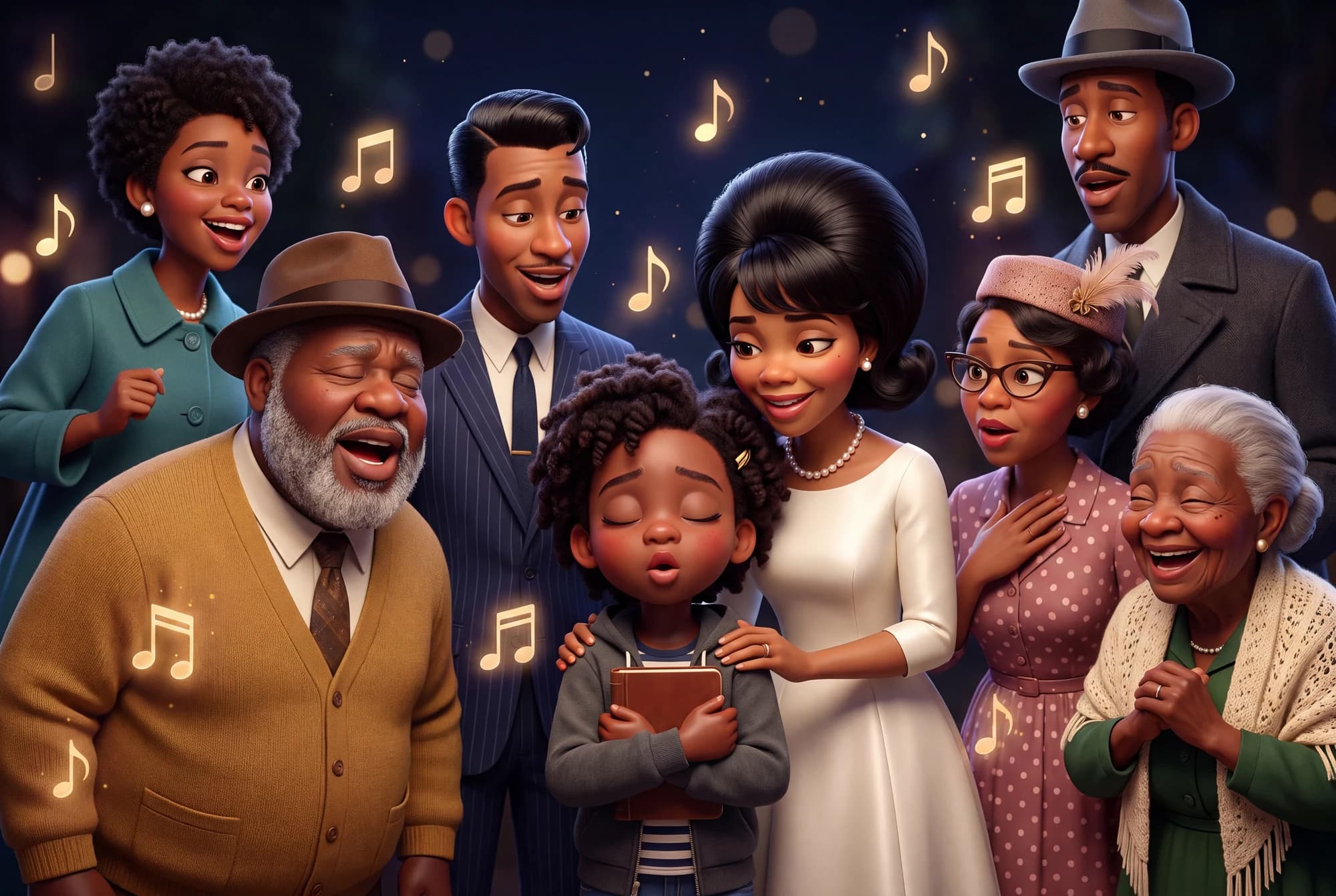
Coretta Scott King "Hope is daily work."
-
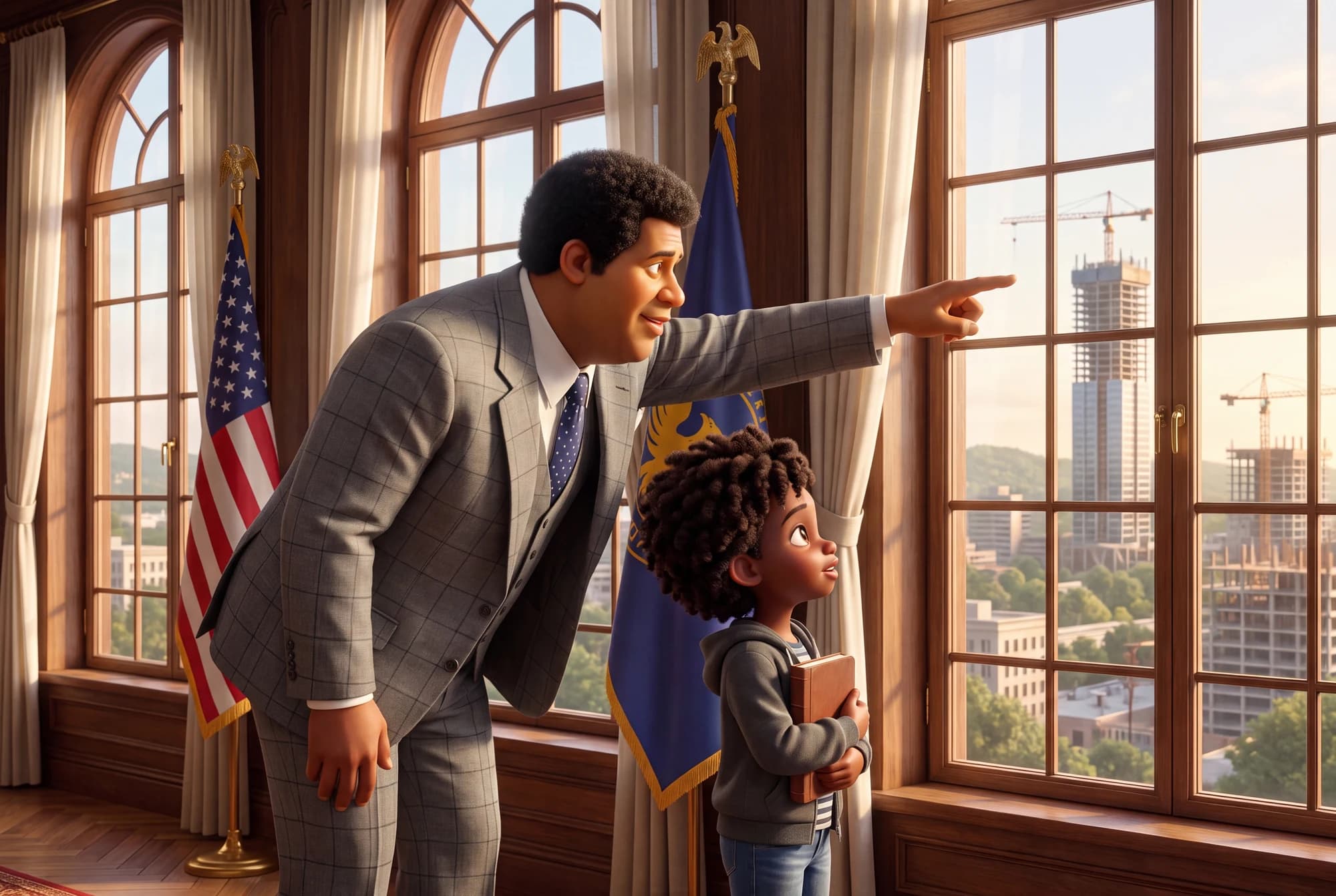
Maynard Jackson A city still being built.
Imagination: Los Angeles
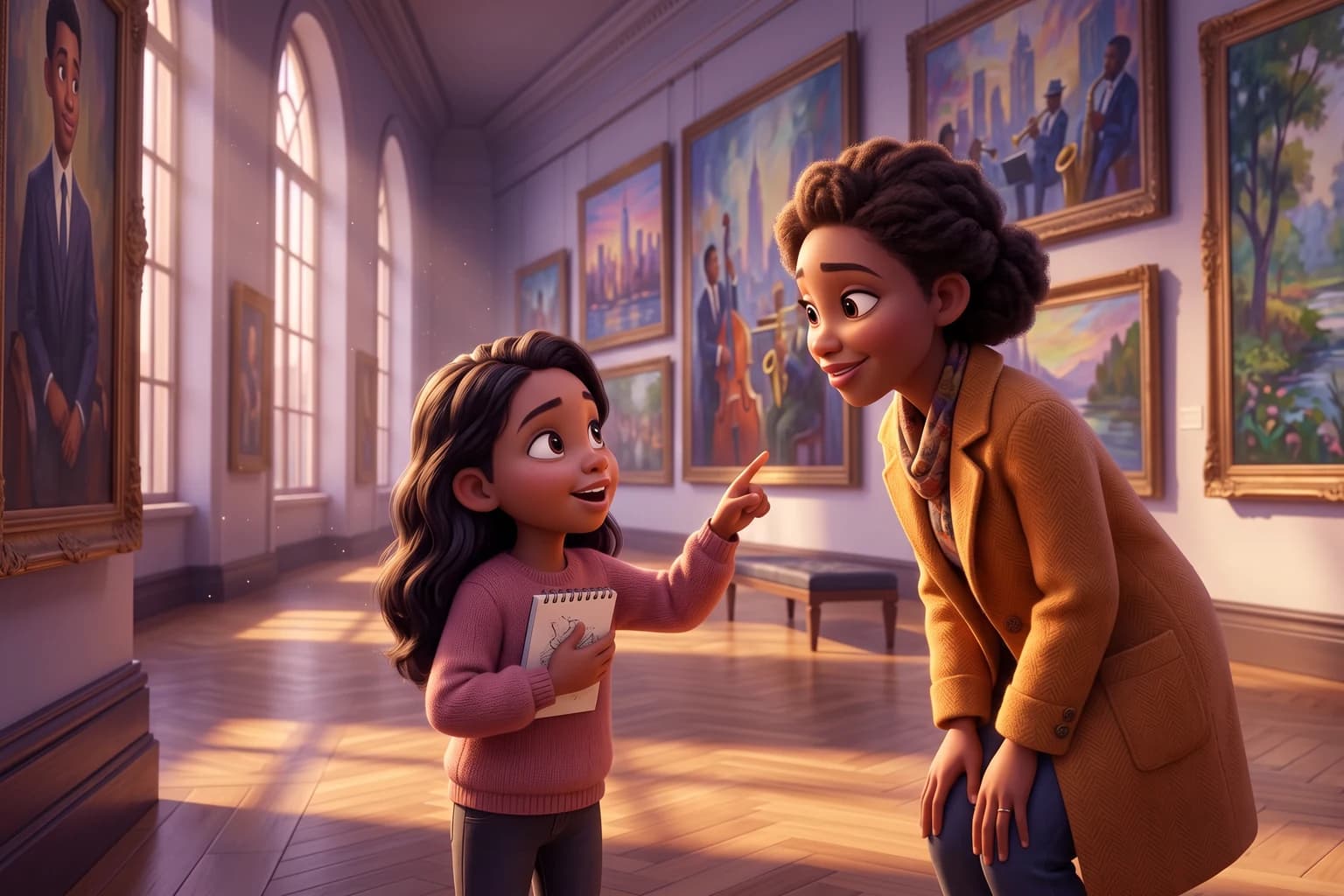
For the 10-year-old who writes stories, makes beats or draws in the margins. At the art table, a wild idea starts to take shape, and your child draws something safe instead. In Los Angeles, Biddy Mason places a brick in their hands, Quincy Jones works their clapped beat into the music for a film, and Octavia E. Butler slides a notebook across the desk: "Tell me what you see." Back at the art table, the wild idea gets drawn.
-
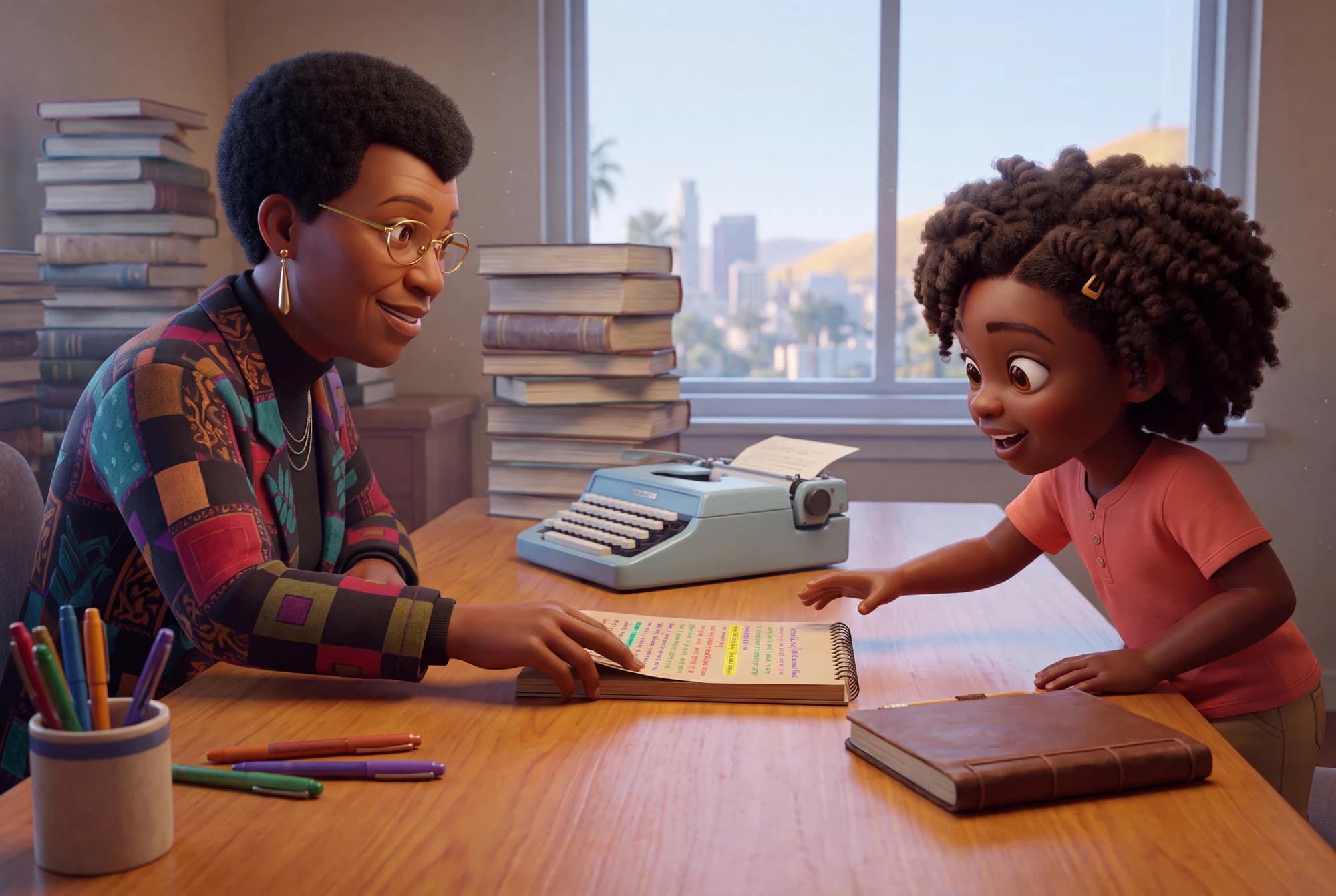
Octavia E. Butler "Tell me what you see."
-
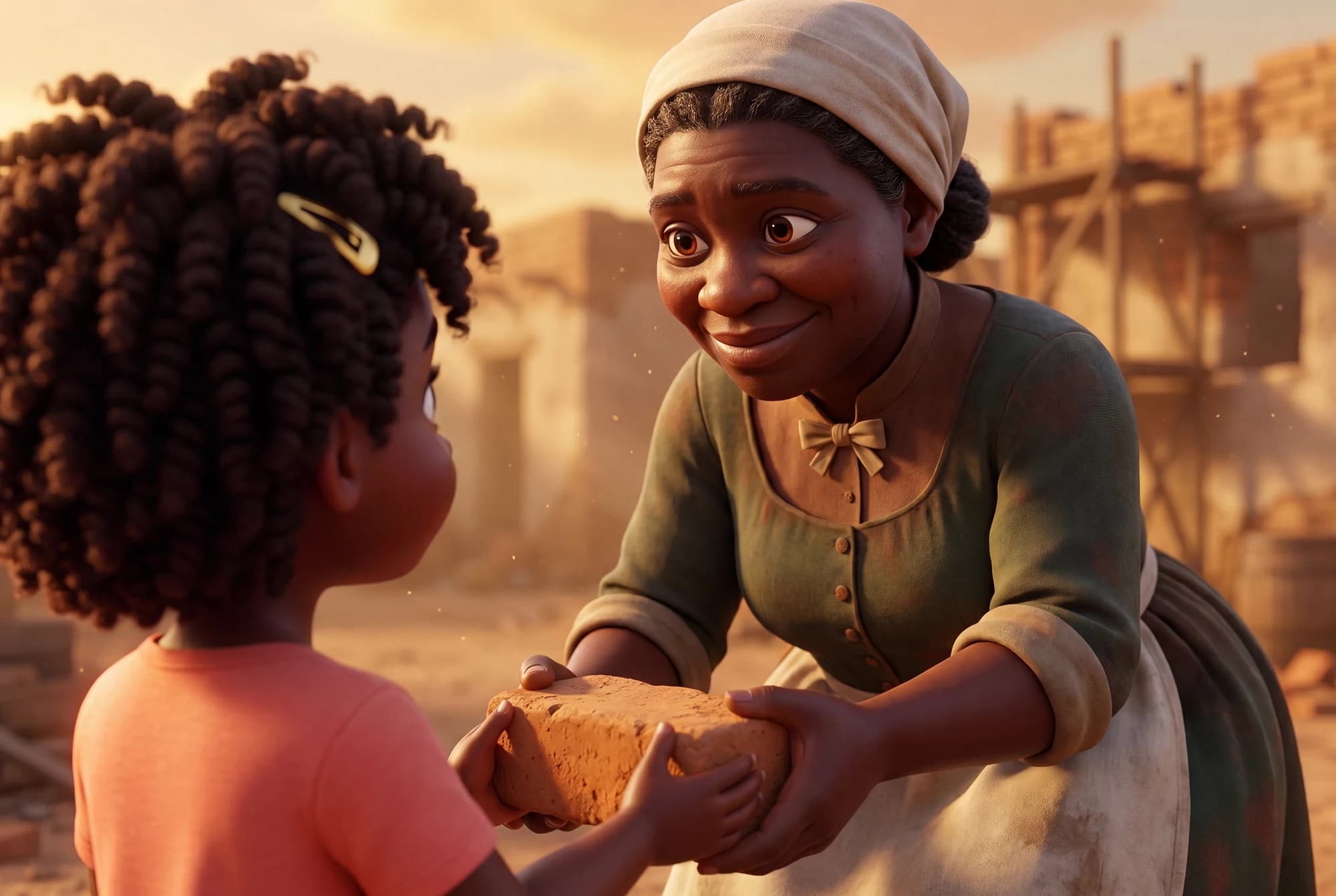
Biddy Mason "Imagine it. Then build it."
The visits and dialogue are imagined, so treat the books as historical fiction. At nine and ten, that line is the fun part: pick one person, find a real photograph, speech or recording, and ask, "What did the book make up, and what really happened?" Our guide to the whole series covers all six cities, and the original The Dream Carriers, a separate book with seven different heroes, is another way in.
Tumble Through Time: history with a puzzle in it
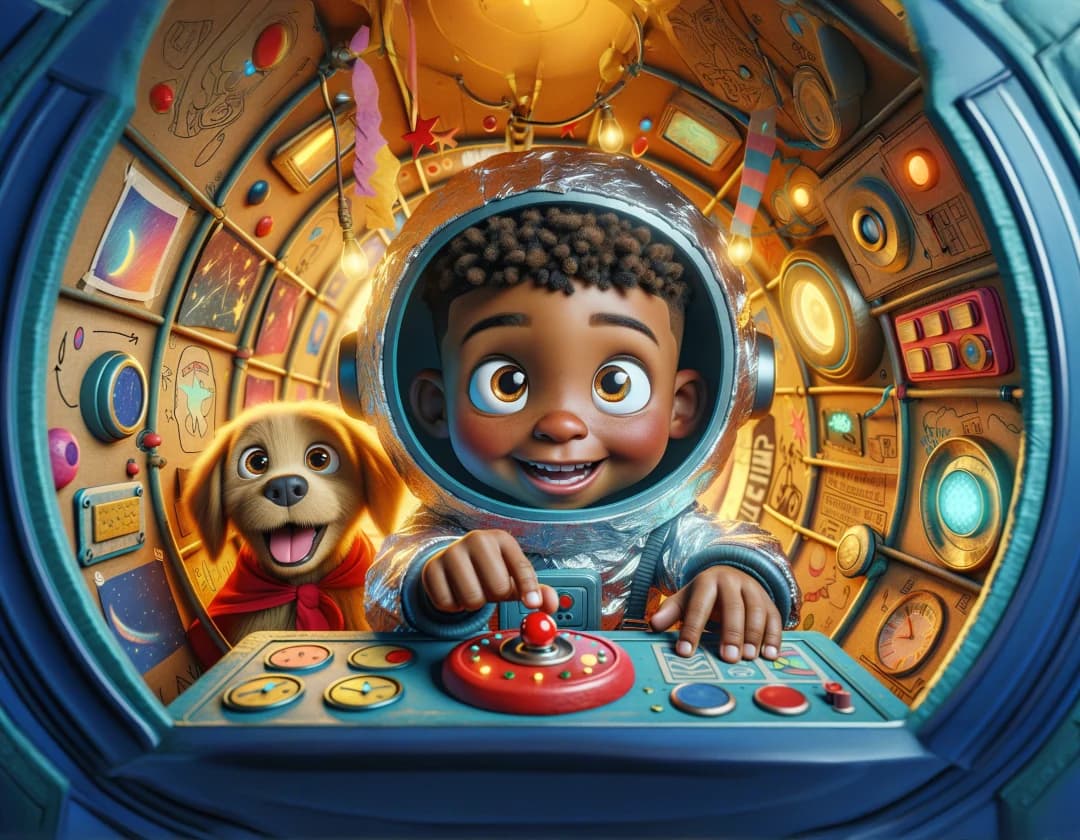
Your child and their dog, Buddy, are bored. They build a time machine out of cardboard, clocks and tape, Buddy hits the big red button, and off they go: dinosaurs, ancient Egypt with Cleopatra and some unhappy mummies, Leonardo da Vinci's studio, revolutionary Philadelphia, a pirate ship and Blackbeard, the moon landing, and a future full of robots. It ends where good adventures do, back at home. The book is written for ages 4 to 10, and older kids catch more of the history on each reread.
For a 9- or 10-year-old, here's the hidden puzzle: the Hopper doesn't visit history in order. Put the dates next to the stops, and one of them is out of place.
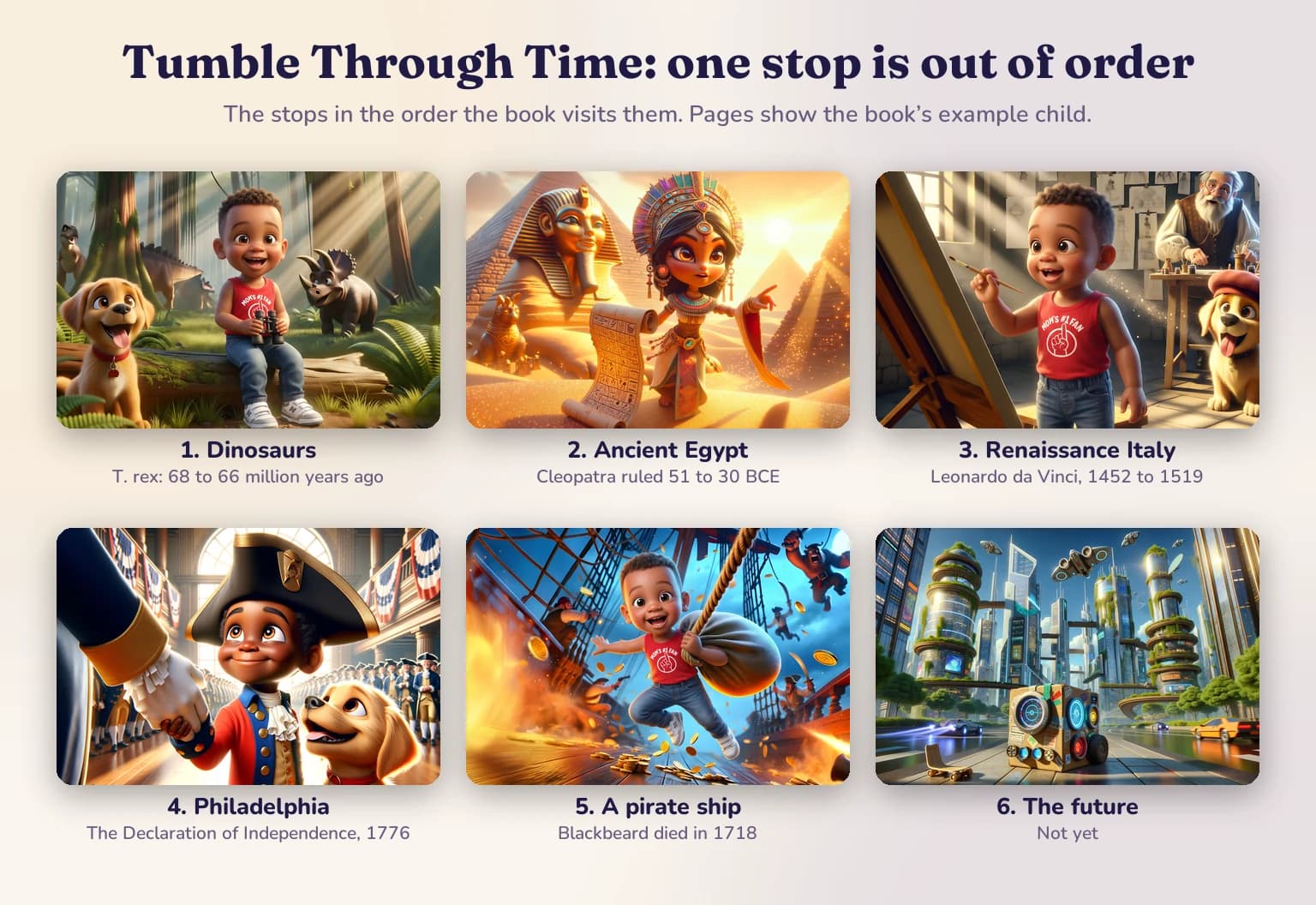
Spotted it? Blackbeard died in 1718, so the pirate stop belongs before Philadelphia in 1776. Ask your child to put all seven stops in order, including the moon landing in 1969, then ask which era they'd visit and why.
Where Does the Moon Go?: for the stargazer
Your child sets up a telescope in the backyard with one question: where does the moon go during the day? A glowing luna moth answers. The moon makes no light of its own and reflects the sun. It orbits the Earth in about twenty-seven days. It waxes and wanes from crescent to gibbous, slips into the Earth's shadow in an eclipse, and pulls on the ocean tides. For a 9-year-old, that's a science unit in a bedtime story, and a reason to go outside and look.
-

The luna moth "I'll teach you the mysteries of the moon in the sky."
-

Earth and moon "The moon and the Earth never really stray."

The Brickyard Dream: for the racing fan
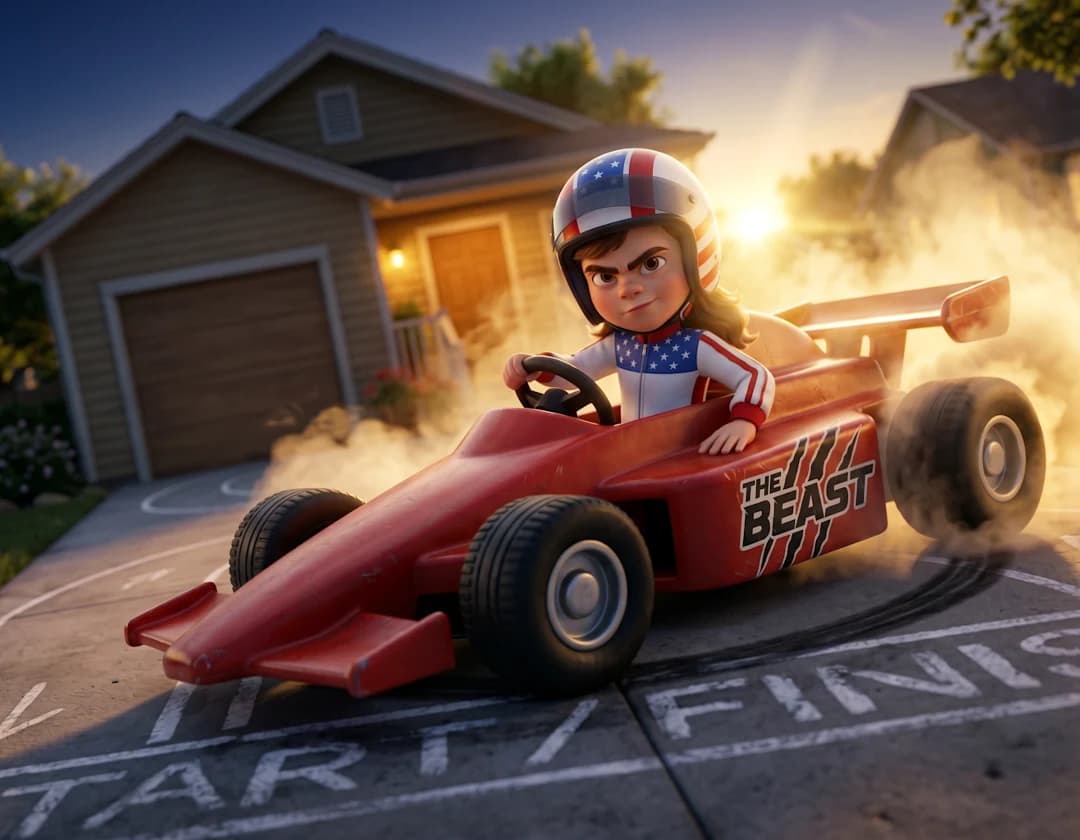
A small driver in a bright red toy car, a crew of a cow, a penguin and a dog, and a start from 33rd place at the Indianapolis Motor Speedway. Older racing fans will notice the real details, from the 2.5-mile track to the Yard of Bricks, and the line that carries the story: "I'm small. So what?"
In December: Six Days Until Christmas
For the season, the Six Days Until Christmas books are written for ages 3 to 10 and read one a night, starting with Book 1 on December 19 and ending on Christmas Eve. Each kindness in the story adds to Santa's carved beard and lights up another house in town. The six books are sold only as the complete set, and one photo personalizes all six.
What should I get a 10-year-old who doesn't like toys?
Ten-year-olds who are past toys still like to be taken seriously and still like to be surprised. A few non-toy ideas that work:
- An experience you share: a museum, a planetarium night, a game or a race day.
- A real tool for a hobby: a sketchbook and good pencils, a beginner's telescope, a notebook for stories.
- Something that's about them: a book where they stand next to Thurgood Marshall, outrun a T-Rex in a time machine or win from 33rd place.
The best gifts often pair two of these: The Dream Carriers before a history museum visit, or Where Does the Moon Go? with a stargazing night. To give a book to a child who isn't yours, see buying a book as a gift and gift wrap. If you are buying for two children, our Help article on books for siblings explains your options.
How it works

- Add one clear photo and your child's name. Magic Story uses AI to turn the photo into your child's illustrated character. Our photo tips help it look like them.
- See a free preview. It shows your child's character in a scene from the book. No account or credit card is needed, and the preview doesn't show every page. More on the free preview.
- Order the hardcover. It is printed to order after you buy, then shipped to you.
Before you order
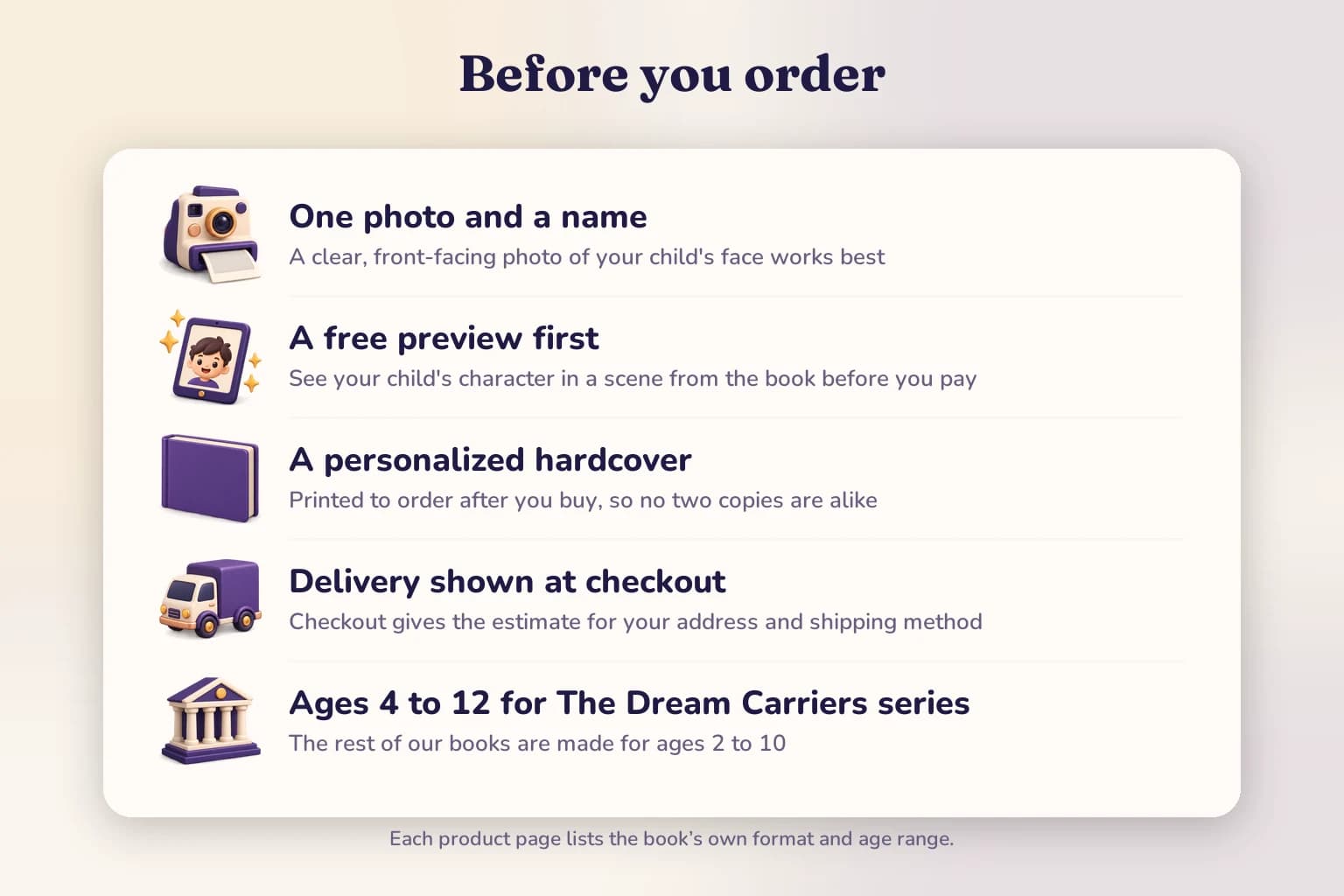
In the US, standard delivery usually takes 5 to 10 business days, including printing, and checkout shows the estimate for your address. Prices are on each product page, and our Help article explains how much a Magic Story book costs.
Start with The Dream Carriers series for a history lover, or Tumble Through Time for a kid who likes a puzzle.
Sources
- National Literacy Trust, Children and young people's reading in 2024. UK survey of children and young people aged 8 to 18; reading scores were matched for 3,861 children aged 8 to 14. The link between enjoyment and scores is an association.
- National Literacy Trust, Children and young people's reading in 2025. Self-reported motivations to read, ages 8 to 18.
Questions parents ask
Is a personalized picture book too young for a 10-year-old?
It depends on the book and the child. A picture book is not a chapter book, so at ten it works best when the story has real substance, like history they can look up or science they can test, or as a keepsake and a book to read to younger children. Our books are made for ages 2 to 10, and The Dream Carriers series page suggests 4 to 12. Show your child the free preview and let them decide.
Do 9-year-olds still read picture books?
Many do, alongside chapter books. Nine-year-olds often choose picture books for humor, art or a subject they love, and they make good shared reads because they take ten minutes and leave plenty to talk about.
What should I buy a 10-year-old who is done with toys?
Something that treats them as older: an experience you share, a real tool for a hobby, or a book about something they care about with them in it. A personalized book about history, space or racing can be paired with a museum, planetarium or race-day trip.
What books should a 9-year-old read?
Whatever keeps them reading. Let them choose, mix chapter books with shorter reads, and follow their interests. For history fans, The Dream Carriers series and Tumble Through Time put your child inside the story; for science fans, Where Does the Moon Go? explains moon phases.
Which Magic Story books suit older kids who love history or science?
The Dream Carriers: Justice, Hope and Imagination each take your child to meet three Black Americans in a different city. Tumble Through Time visits dinosaurs, ancient Egypt, Leonardo da Vinci's studio and revolutionary Philadelphia. Where Does the Moon Go? covers moon phases, eclipses and tides.
Will my child look the same age as the example child on the cover?
The example children on our covers are often younger. Your child's character is made from their own photo, so create the free preview and check how they look before you buy.


