The Dream Carriers: A Personalized Black History Series in Six Cities
Six personalized books take your child from Chicago to Los Angeles to meet 18 Black heroes, then back to school to try again. Here is what happens in each.


In this article
- One museum, six cities
- Six cities. Eighteen Black heroes.
- Chicago: Belief
- New York: Courage
- New Orleans: Roots
- Washington, D.C.: Justice
- Atlanta: Hope
- Los Angeles: Imagination
- Where the story ends and history begins
- A series that welcomes grandparents
- A world to return to, not a syllabus
- How to start the series
The hand goes up halfway. Then louder voices fill the classroom, and it sinks back down.
That is how The Dream Carriers: Belief begins, with a moment most children know and most grown-ups remember. By the end of the book, the same hand goes all the way up, and this time the idea gets heard.
In between comes the heart of the series: a field trip, a museum, a glowing wooden map of America, and three Black heroes from a city's history who each give your child something to carry home.
One museum, six cities
Every book opens the same door. Your child has a small doubt at school. On the bus, they flip through a notebook that fills up a little more with each book. At the Dream Carriers Museum, a silver-haired keeper notices them. Then your child touches the map, and a city lights up.
There, your child meets three Black heroes, one at a time. Each offers an object, a sound or an idea, and your child sketches it in the notebook with a caption. Then it is back to school to try again.
The repetition is the point. Children learn the shape of the story, so each new book feels like coming back somewhere familiar. Close readers get small rewards, too: in Hope, the keeper turns out to have an old notebook the same shape as your child's.

Sample pages show an example child. Your child's book uses their own name and illustrated likeness.
Six cities. Eighteen Black heroes.
Each book brings your child into an imagined encounter with three Black heroes. Here is the journey in the recommended reading order.
Chicago: Belief
Your child has an idea at school, but their hand drops before anyone hears it. In Chicago, building, music and a journey into space help them find the nerve to raise it again.
-
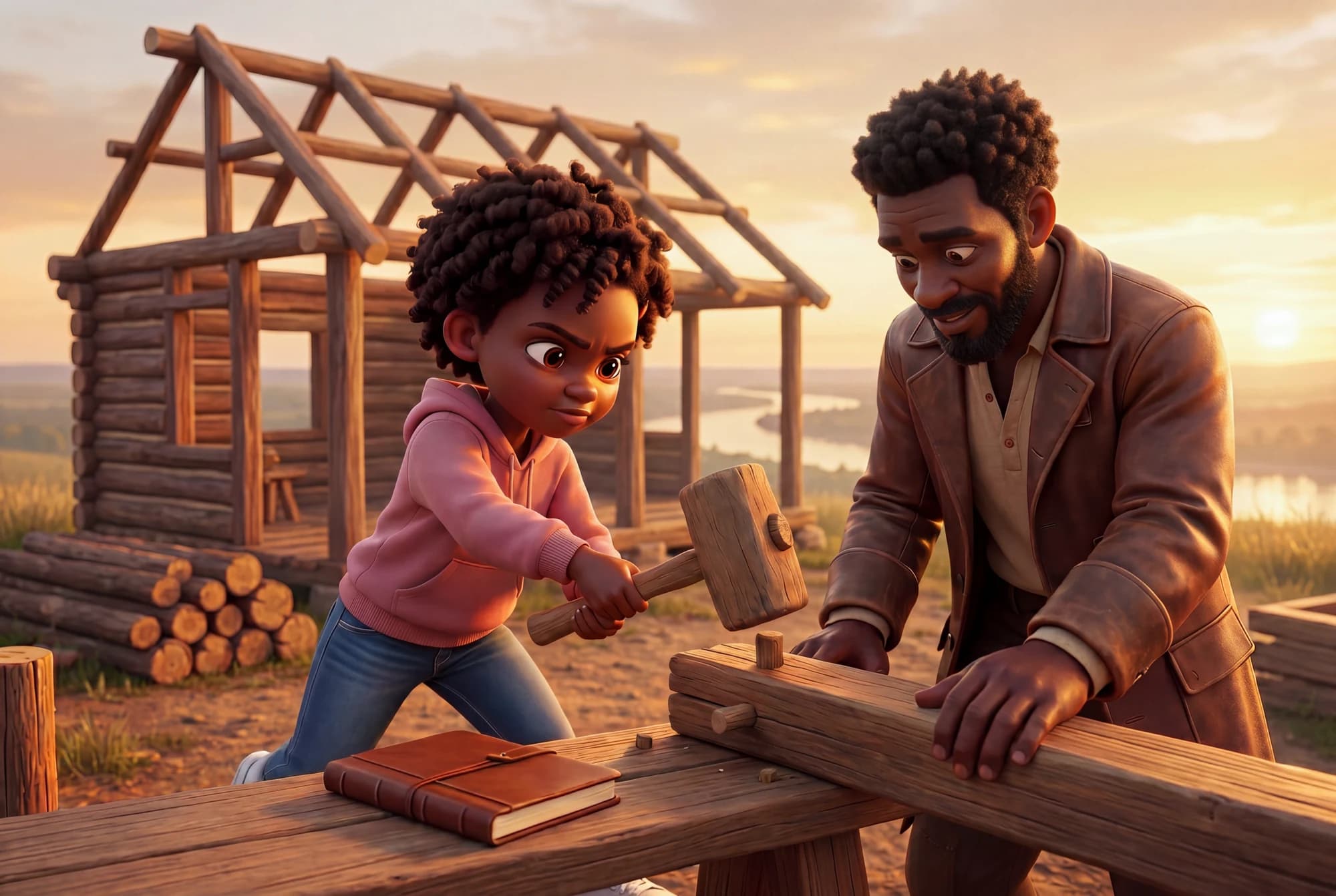
Jean Baptiste Point du Sable He hands your child a hammer and helps them steady a beam as they build together.
-
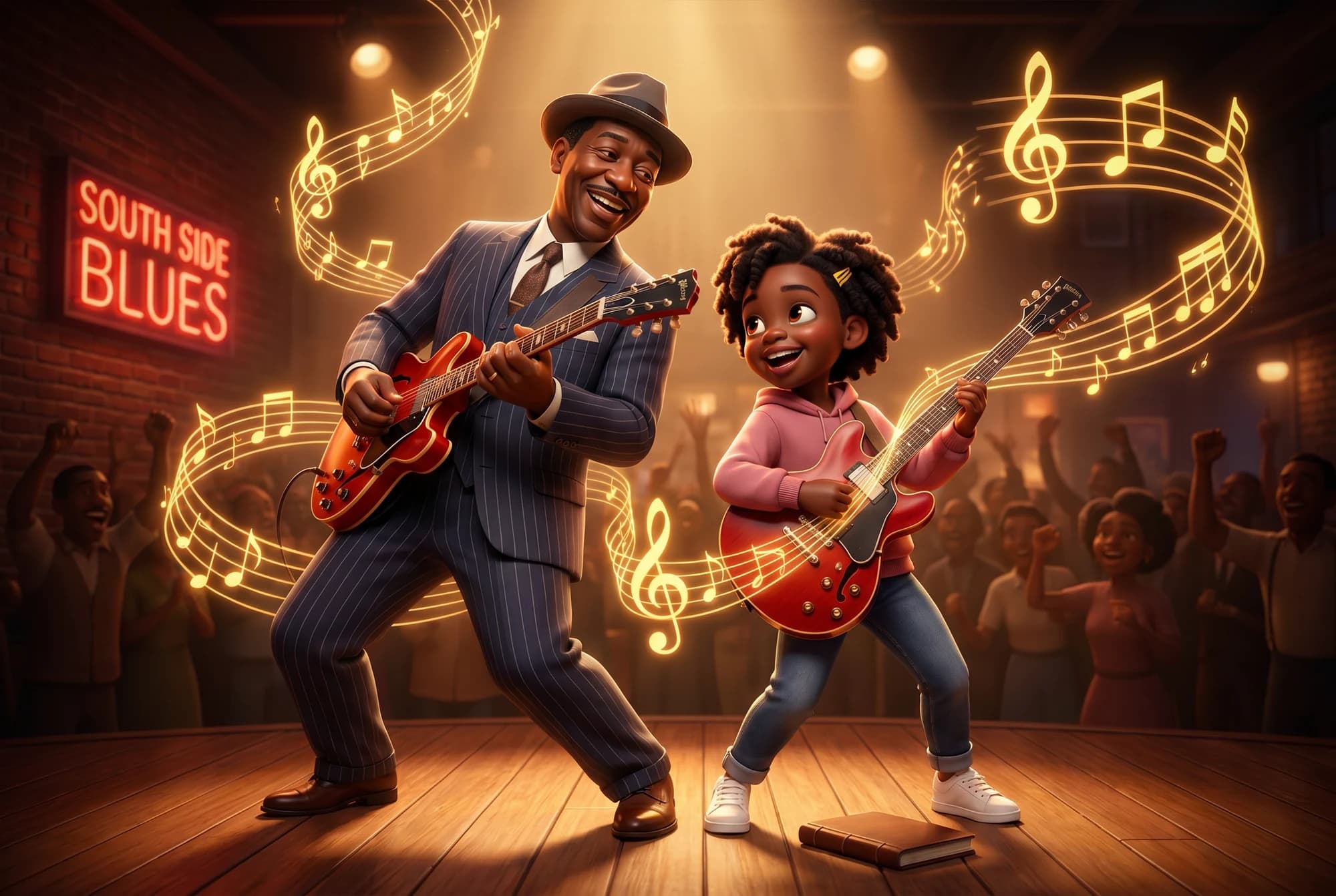
Muddy Waters He invites your child to play guitar with him until their quiet sound becomes part of the music.
-

Mae Jemison She takes your child into space, where they float weightless together.
New York: Courage
Your child has been acting like a different person with every group of friends, until a classmate asks which one is real. In New York, three Black heroes show different ways of staying yourself when other people are watching.
-
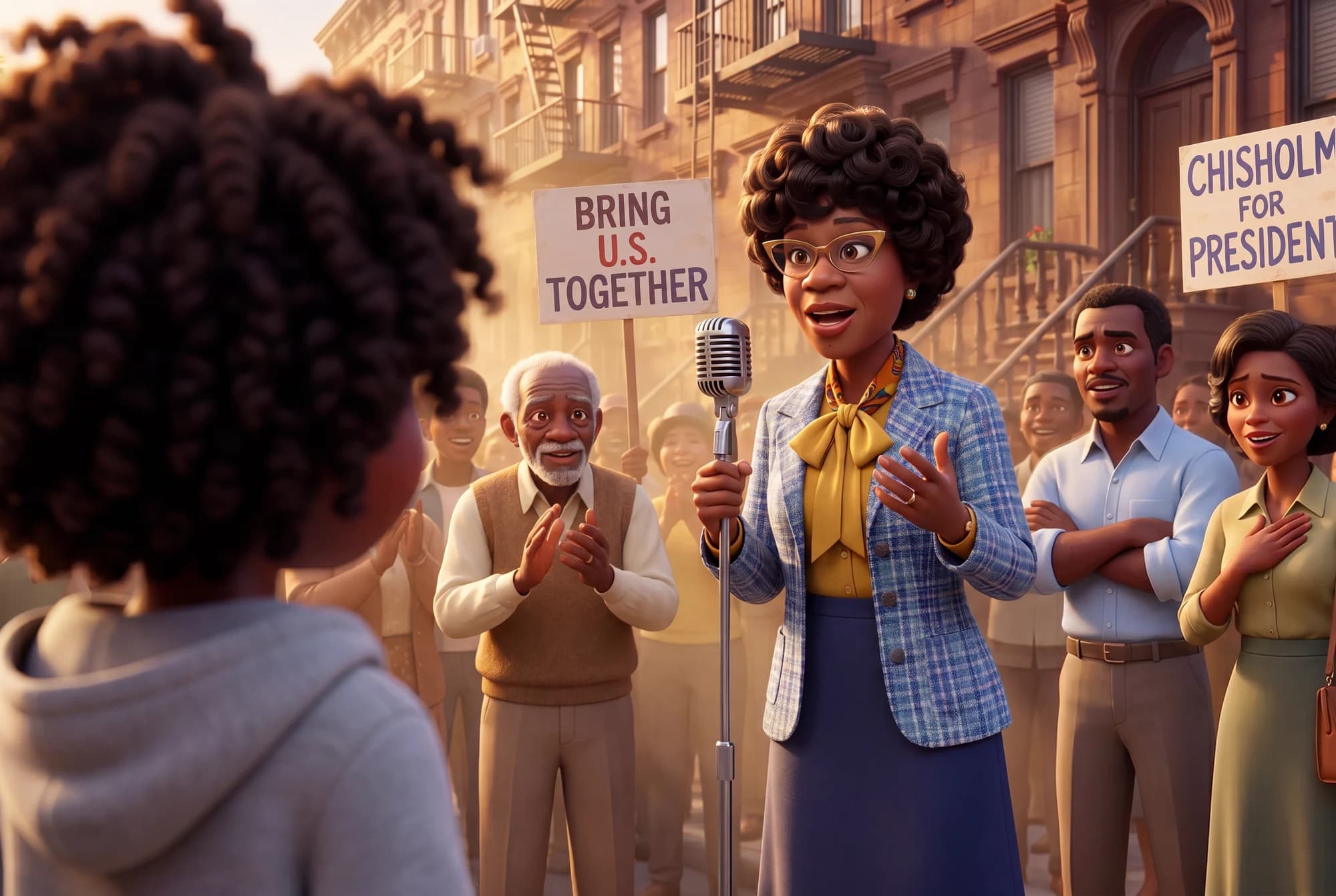
Shirley Chisholm She stands steady at a microphone and reminds your child they do not have to shrink to fit someone else’s idea of them.
-
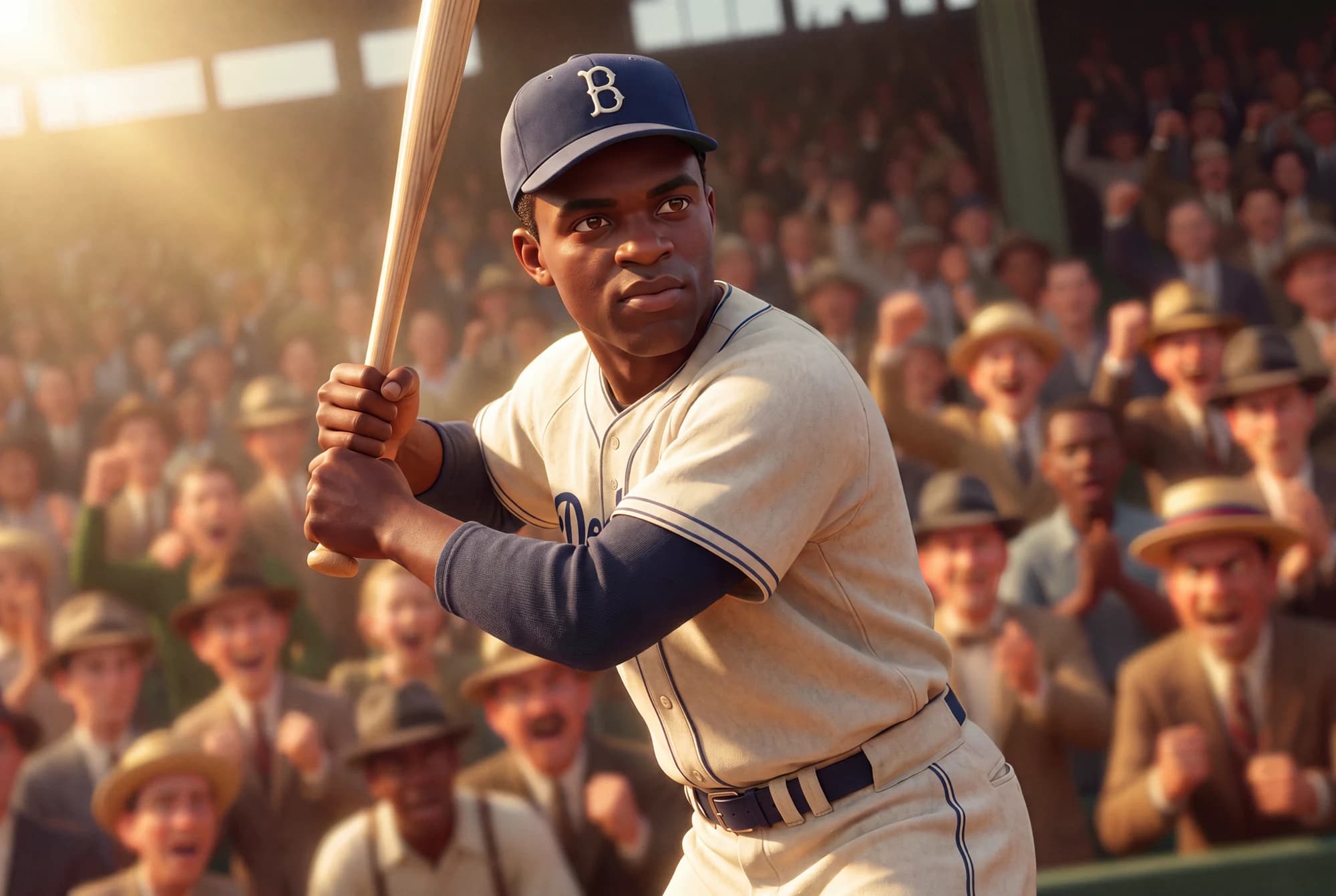
Jackie Robinson He keeps stepping forward under the crowd’s gaze while your child watches.
-
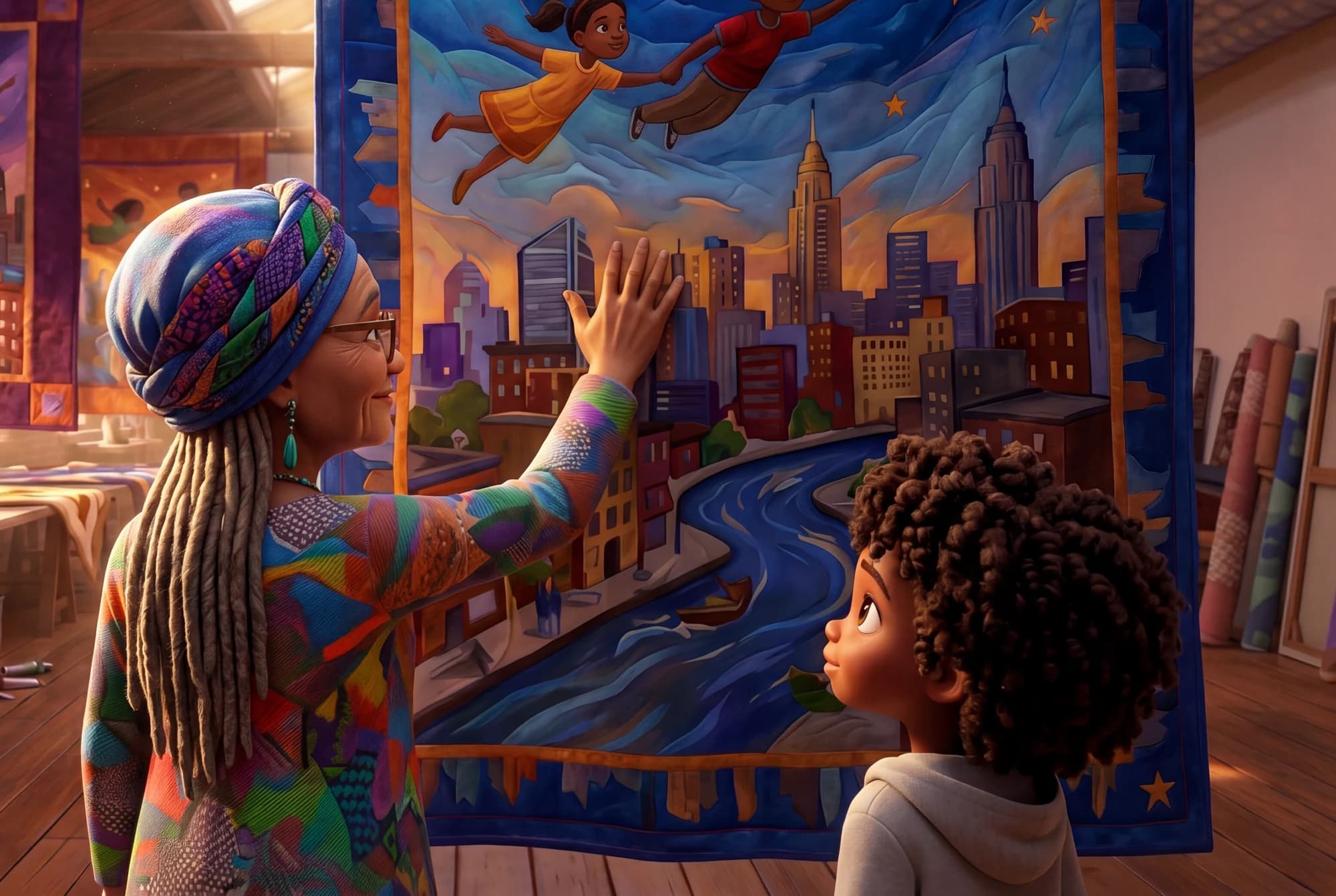
Faith Ringgold She shows your child a story quilt and makes room for their own lighthouse on a square.
New Orleans: Roots
A family tree project leaves your child with only four names while other trees overflow. In New Orleans, a courtyard, a parade and a kitchen help them find room on that tree for a kitchen, a song and a road.
-
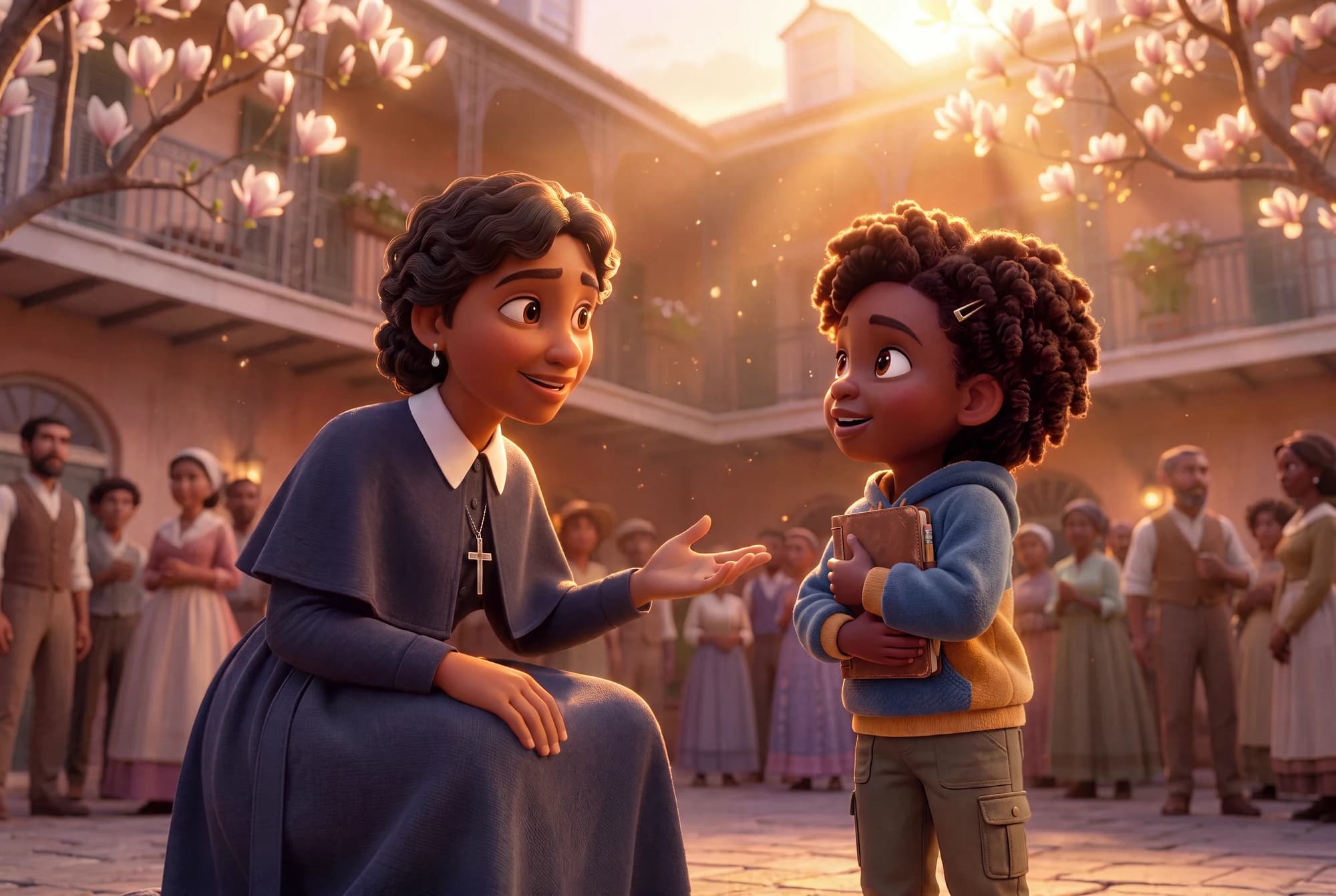
Henriette Delille She welcomes your child into a courtyard of neighbors and shows them that roots can be people.
-
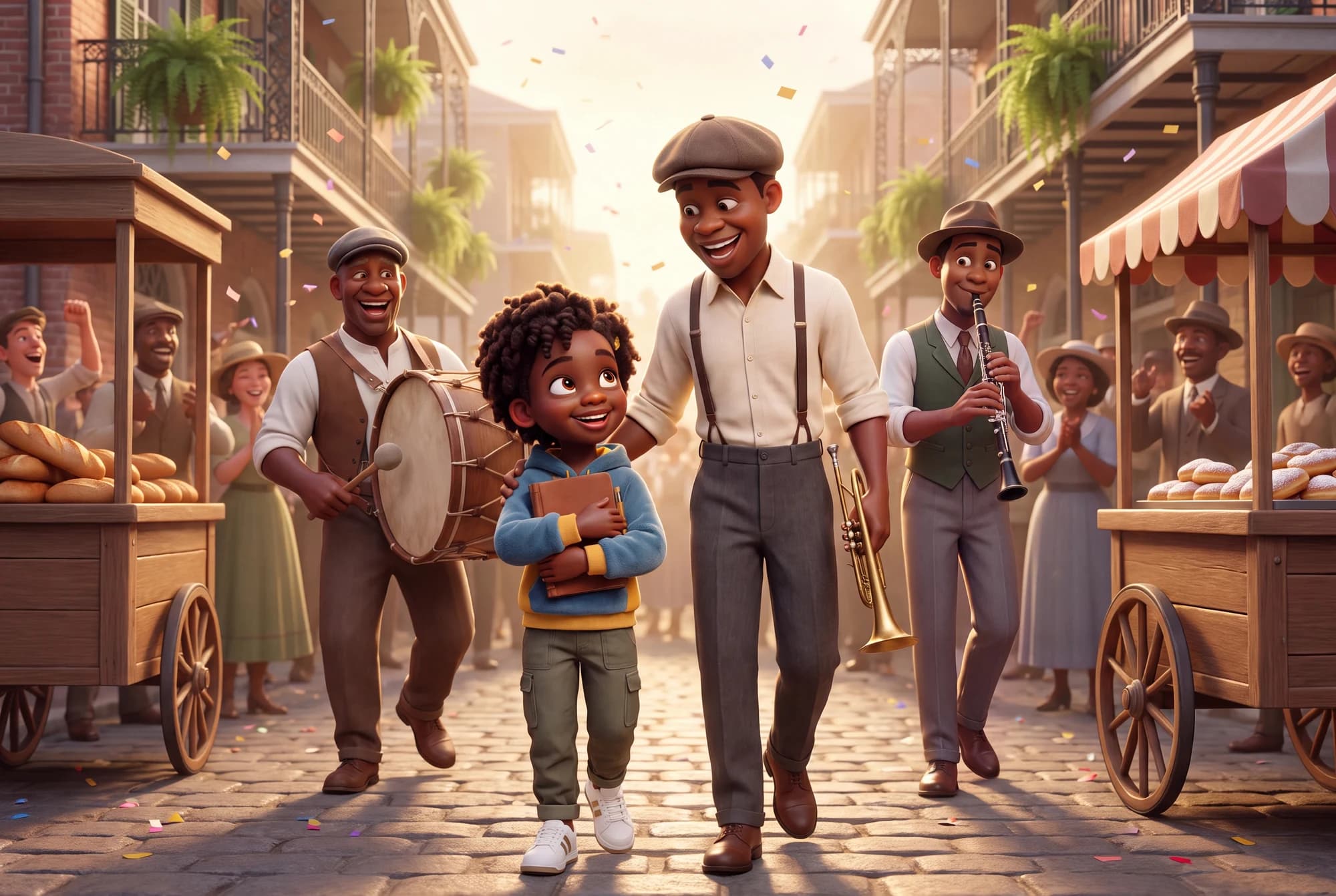
Louis Armstrong He invites your child to join a musical procession and shares how he carries New Orleans with him.
-
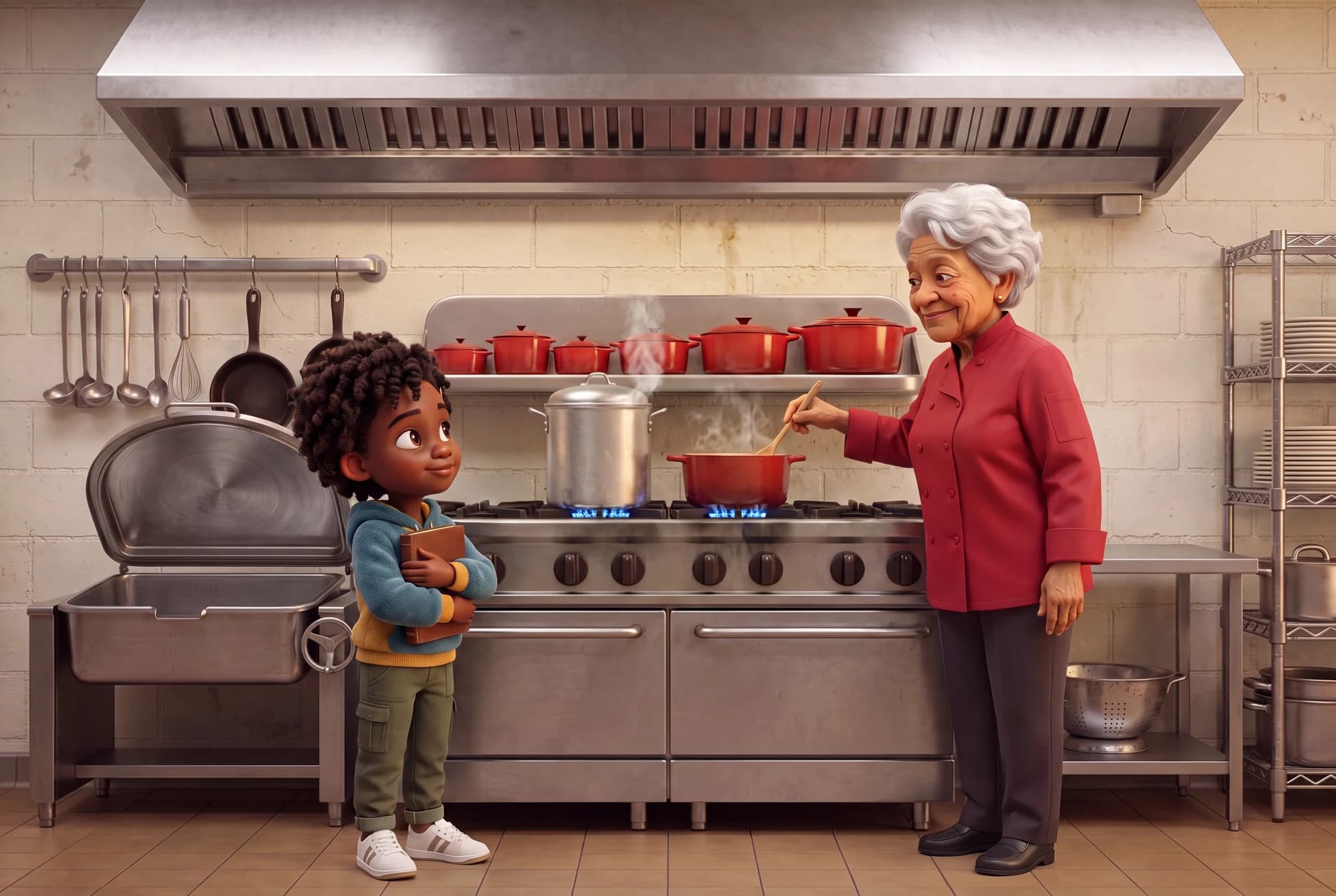
Leah Chase She invites your child to stir a pot and discover the family memories carried in a recipe.
Washington, D.C.: Justice
A bigger kid cuts the lunch line, and your child stays quiet. In Washington, D.C., three encounters with Black heroes give them words to carry back to school and the courage to speak up next time.
-
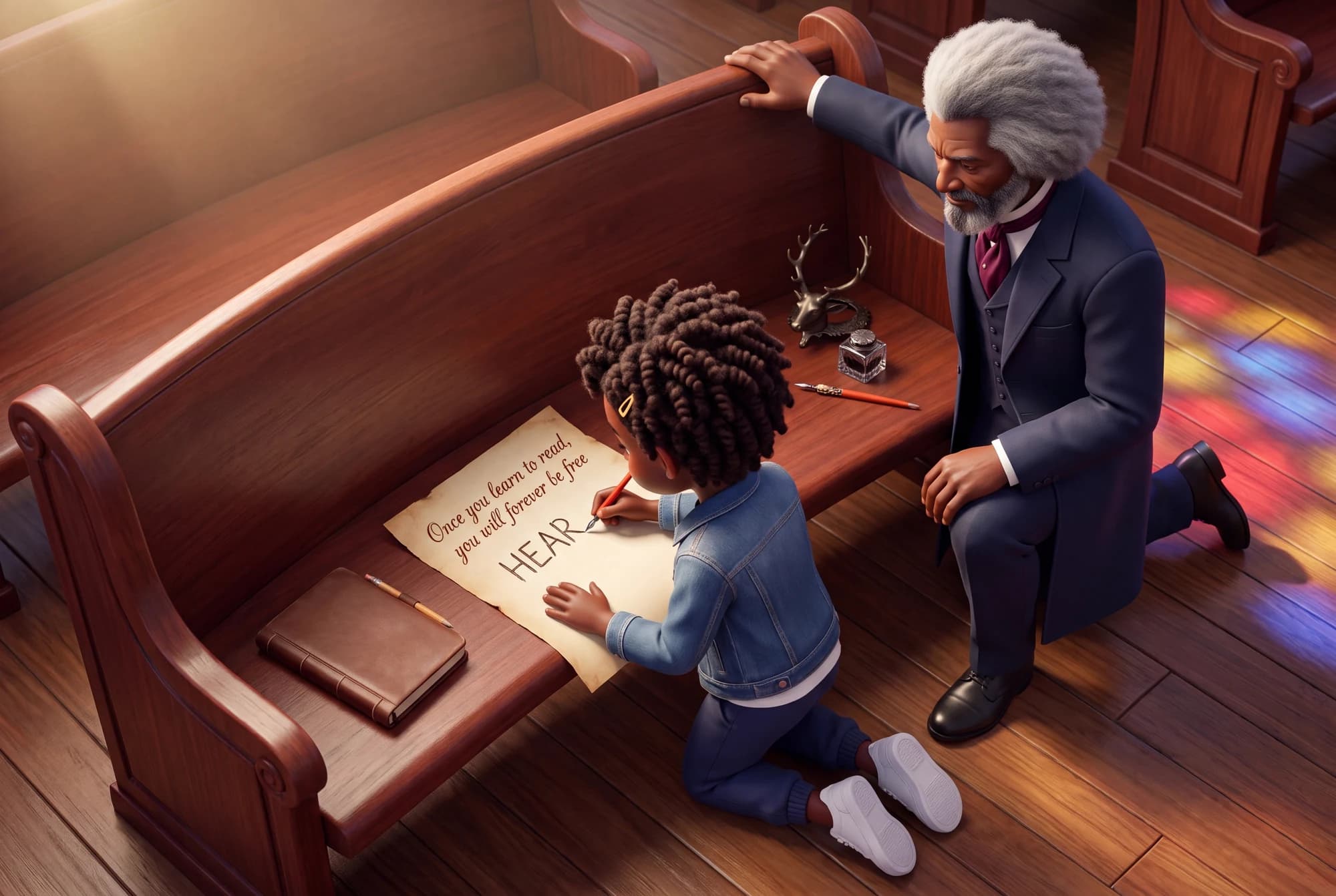
Frederick Douglass He passes your child a pen and asks them to add a word of their own.
-
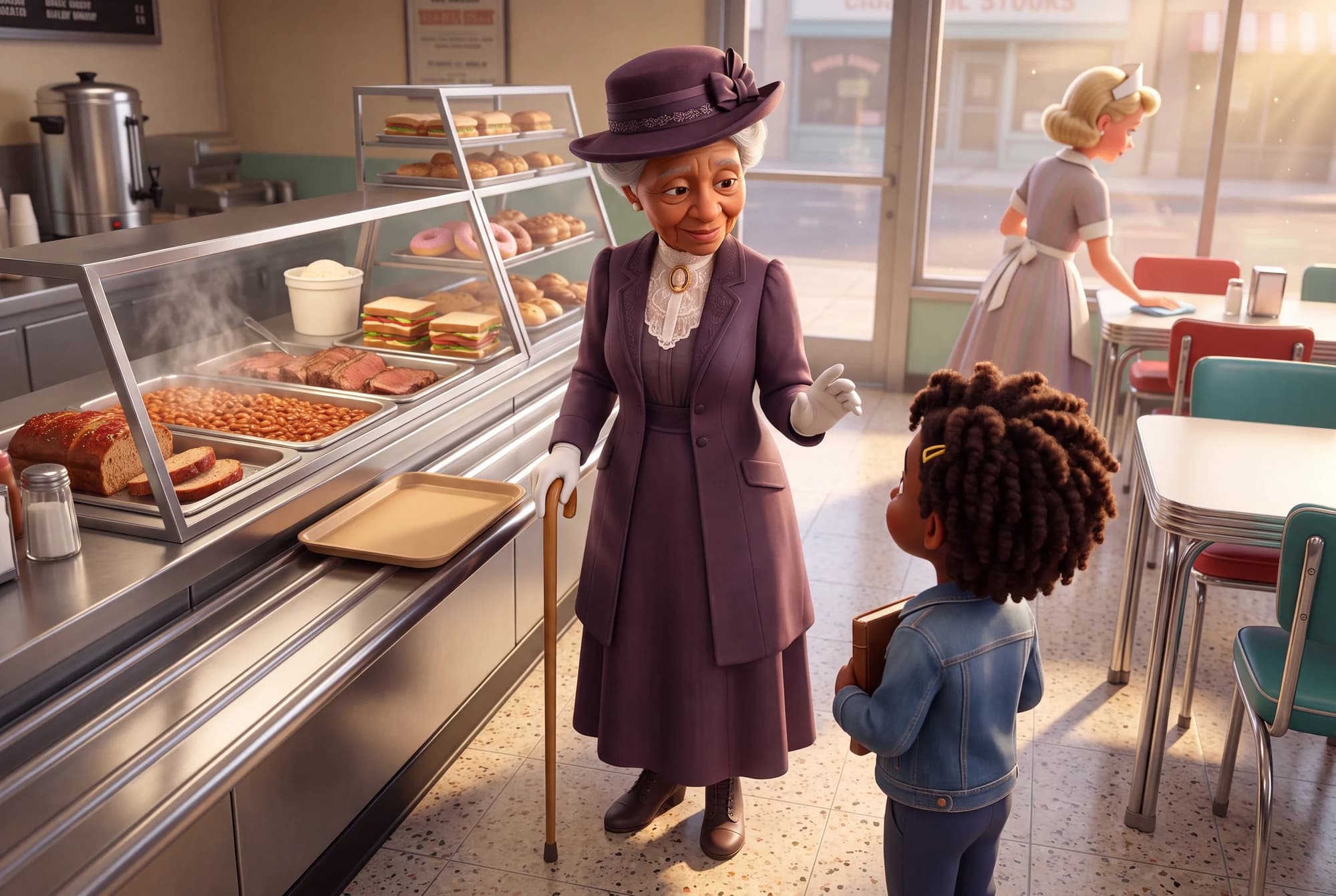
Mary Church Terrell She makes room for your child in a restaurant line and shows what it means to keep asking for justice.
-
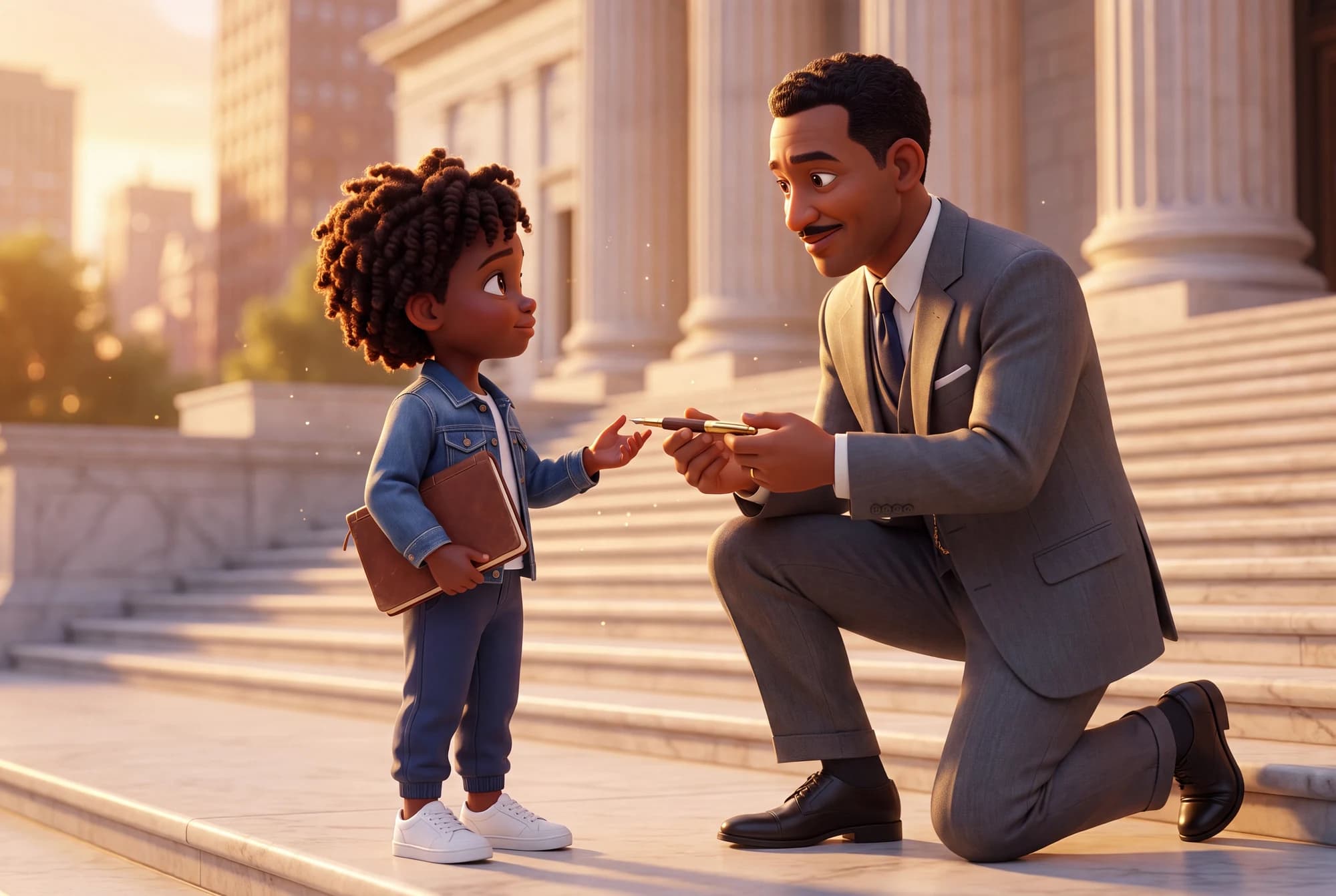
Thurgood Marshall He places a pen in your child’s hand on the courthouse steps and asks them to carry the work forward.
Atlanta: Hope
Your child’s sunflower idea gets brushed off because sunflowers grow too tall. In Atlanta, hope takes shape in chalk, a song and a set of blueprints, before your child returns with a smaller plan: one sunflower.
-
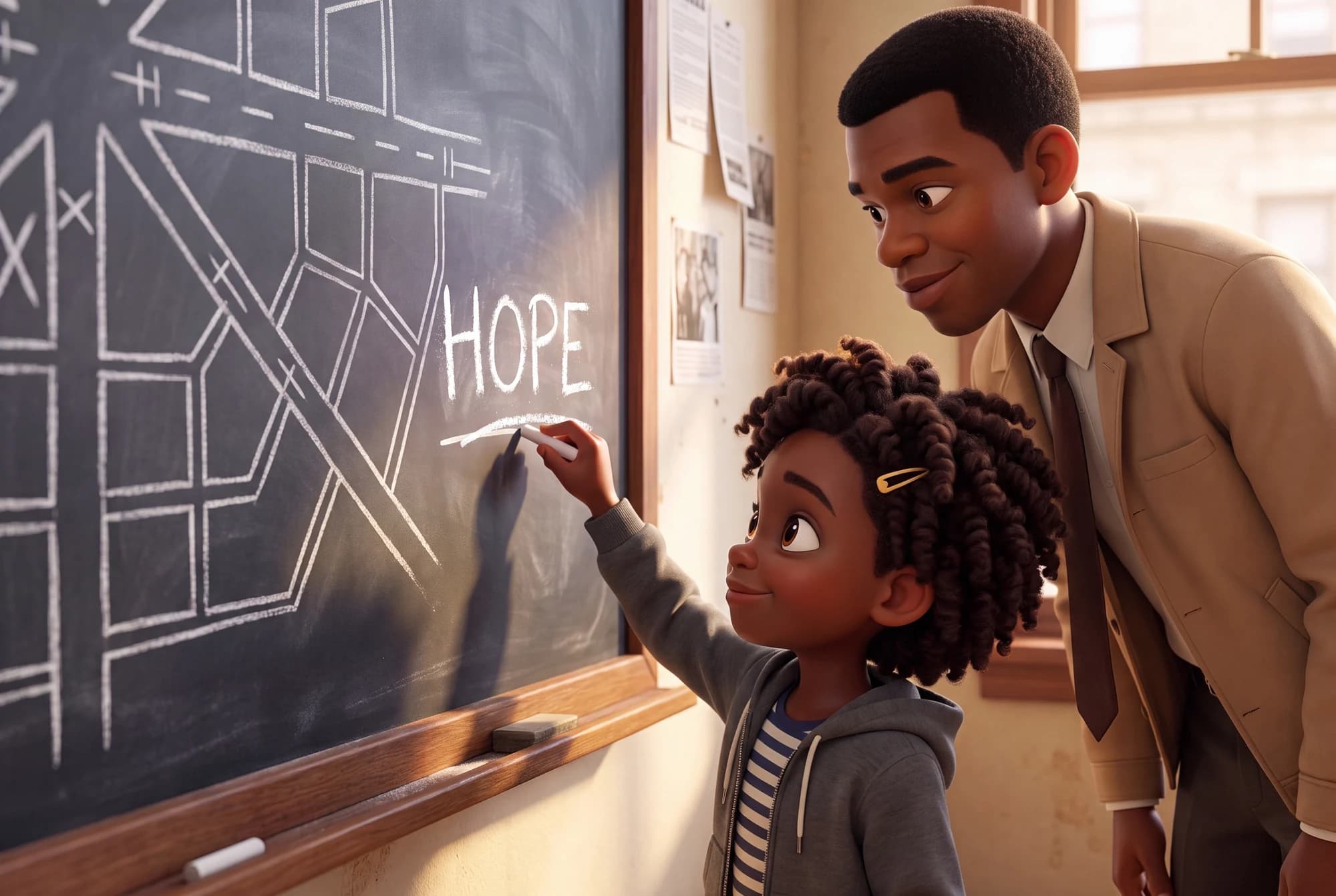
John Lewis He gives your child chalk and asks what they are marching for; your child writes HOPE.
-
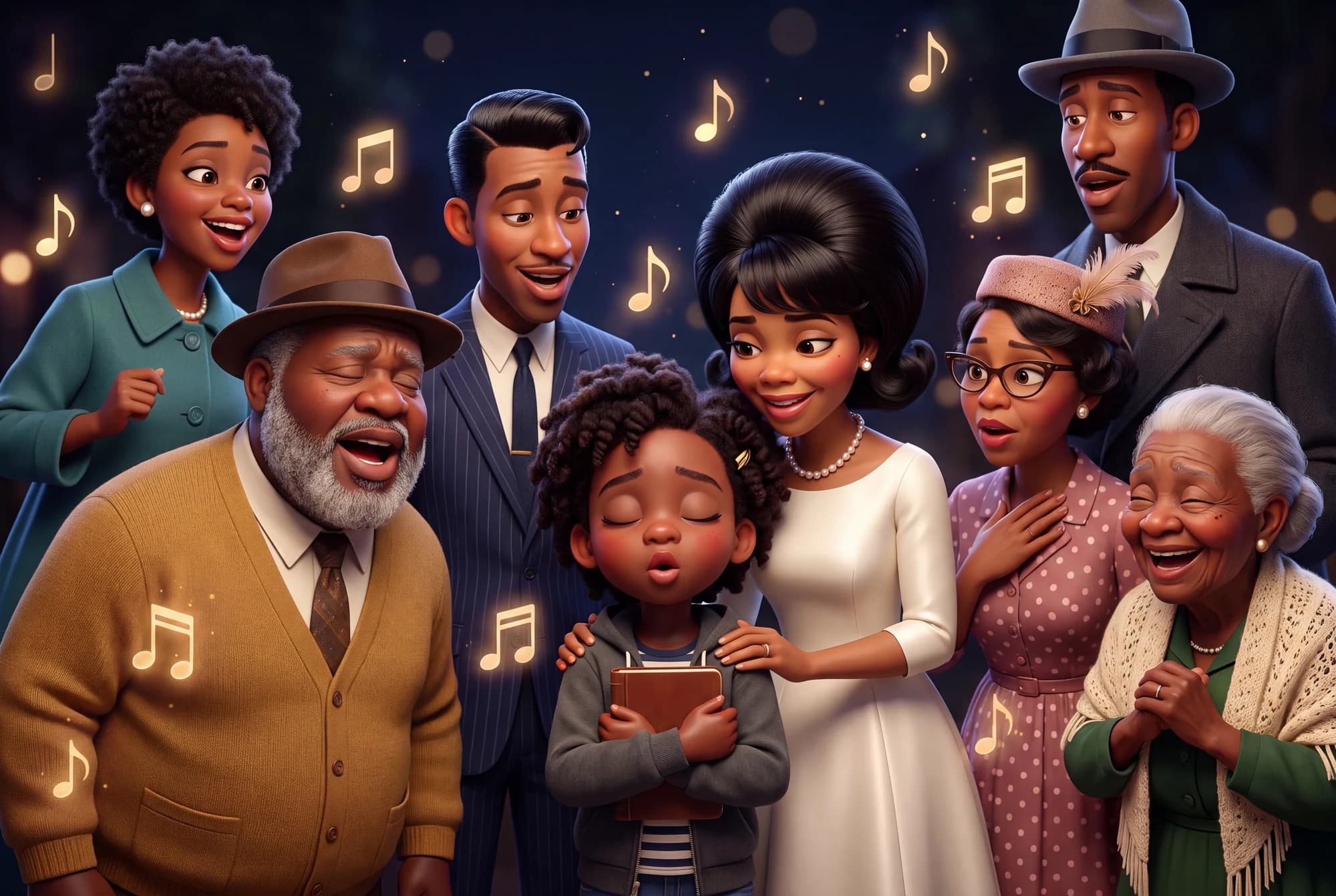
Coretta Scott King She helps your child’s small, uncertain singing voice find its place in a larger song.
-
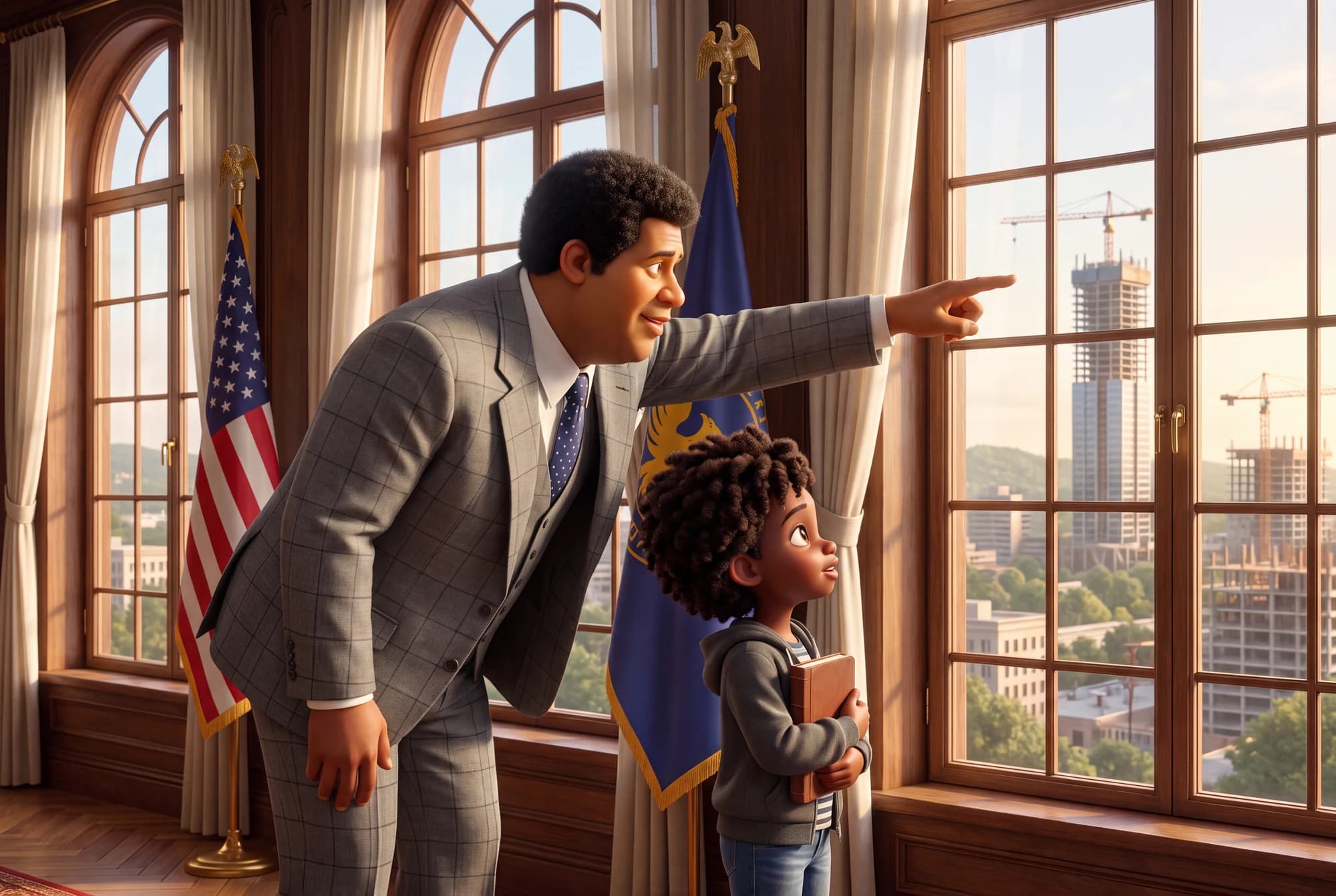
Maynard Jackson He shares his blueprints with your child and shows them a city still being built.
Los Angeles: Imagination
Your child keeps drawing a safe shape instead of the wild idea in their head. In Los Angeles, three Black heroes invite them to build, make music and write, until the idea finally reaches the page.
-
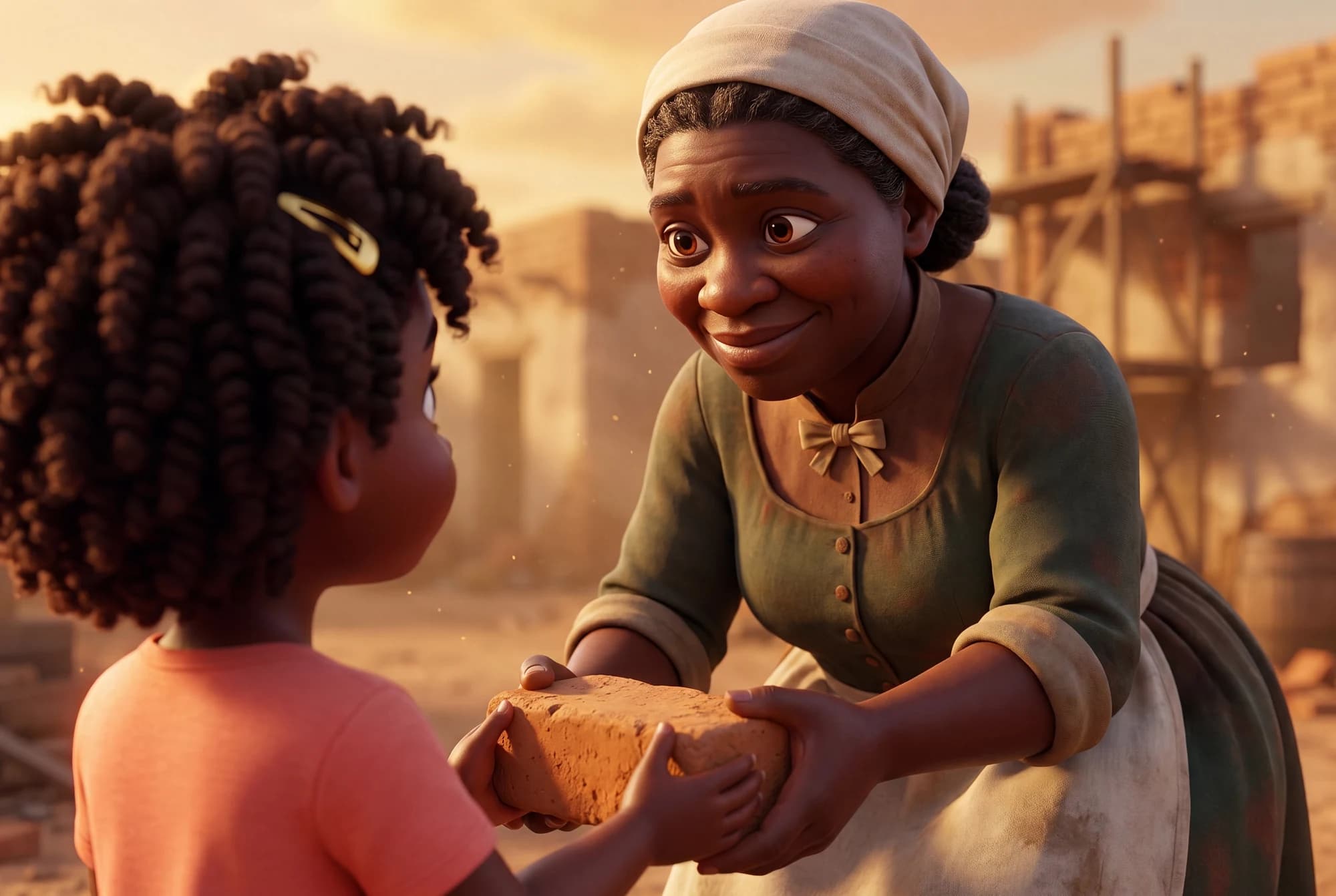
Biddy Mason She places a brick in your child’s hands and invites them to imagine what they could build.
-
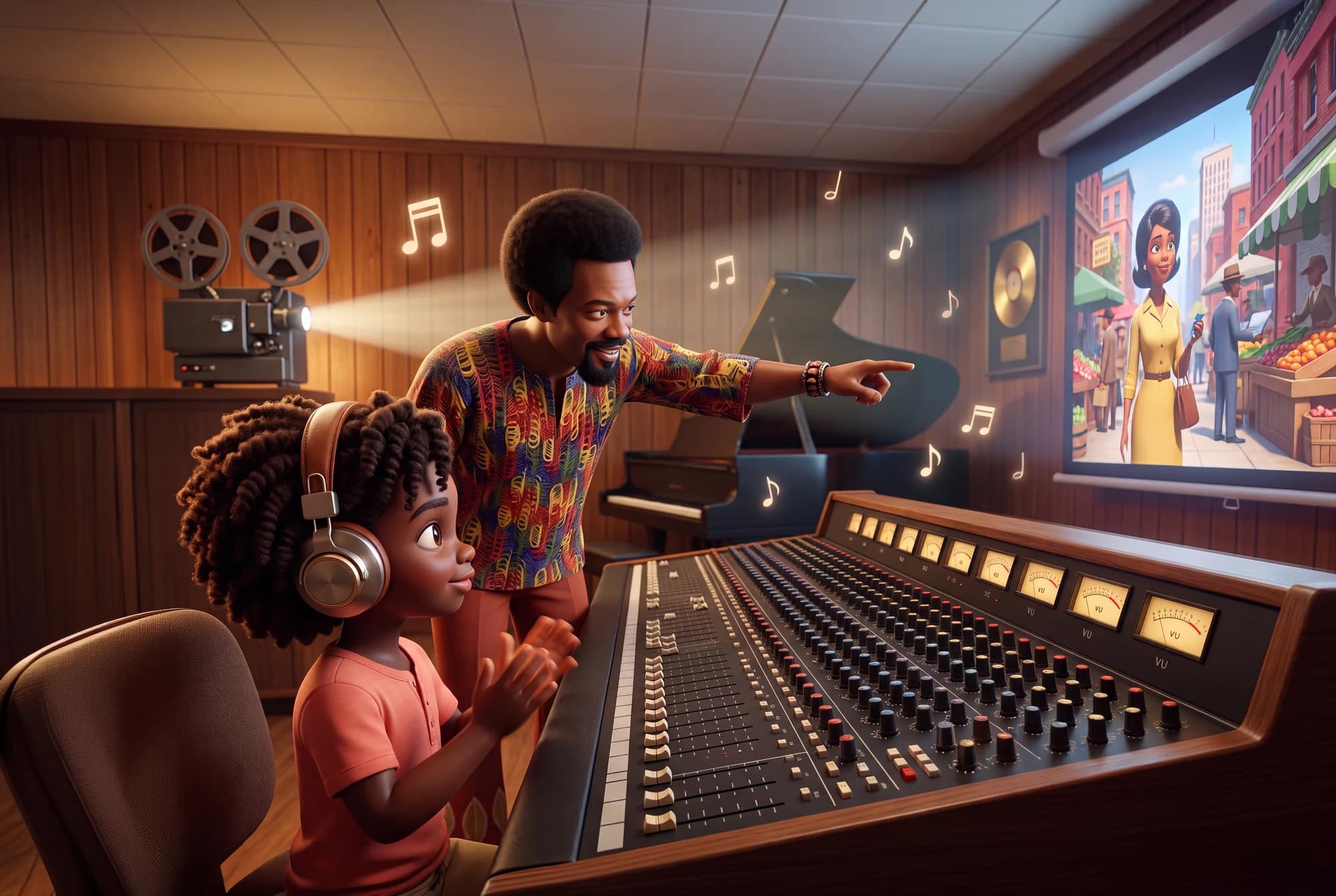
Quincy Jones He asks your child for a clapped beat and works it into the music for a film.
-
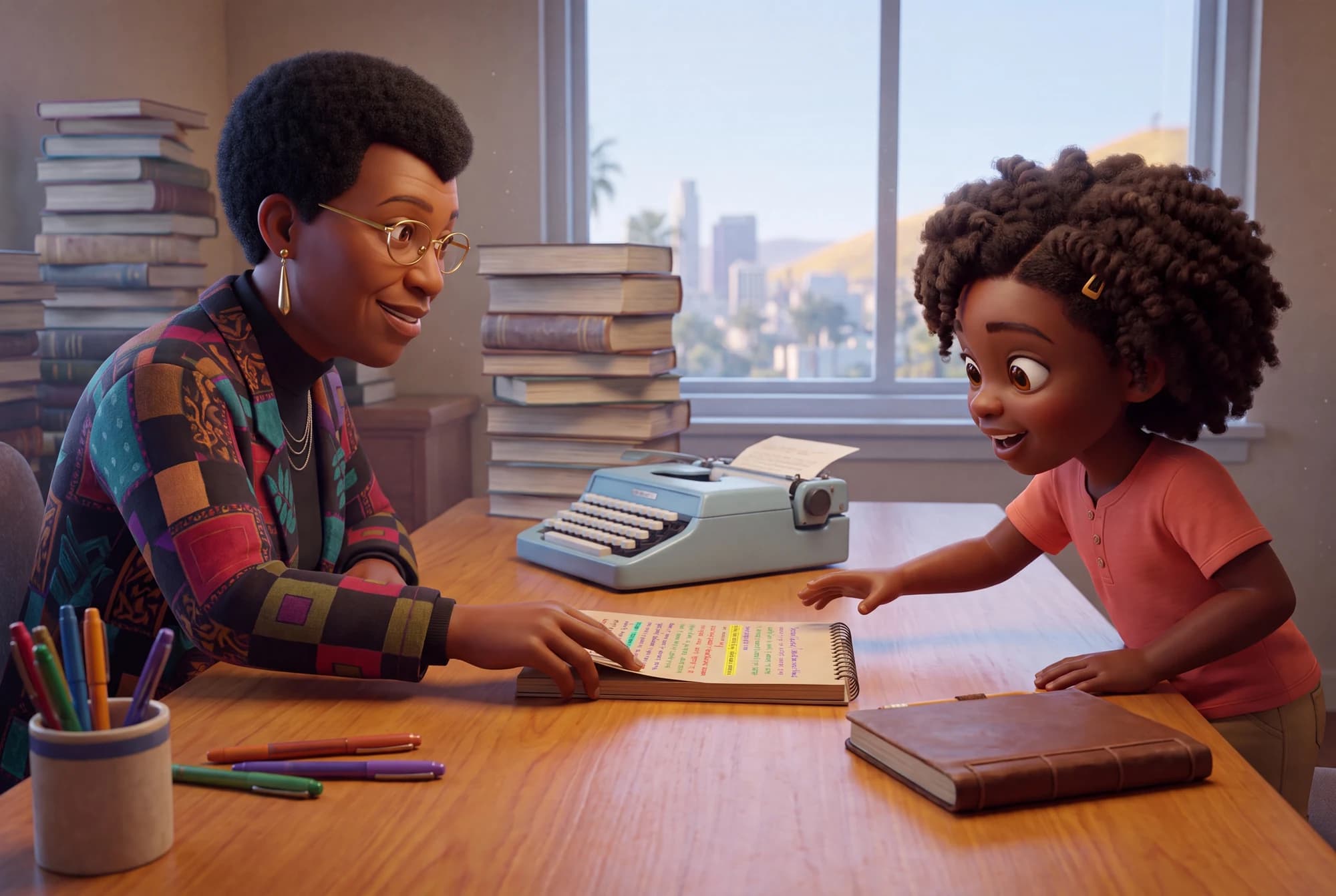
Octavia E. Butler She slides a notebook toward your child and invites them to write what they see in their imagination.
Where the story ends and history begins
The Dream Carriers is fiction. Your child's visits with du Sable and Quincy Jones are imagined. The dialogue belongs to that fictional story and should not be treated as a source of verified historical quotations.
That line is worth drawing out loud. After a book, pick one person and find something real together: a Muddy Waters recording, a photograph of a Faith Ringgold story quilt, a picture from Mae Jemison's spaceflight. Then ask, "What did the book imagine, and what really happened?" History stops being a list of names and becomes a question your child wants answered.
A series that welcomes grandparents
Some of the best follow-up conversations need someone who was there, or who remembers someone who was. Roots practically asks for it: which recipe has traveled through this family, which song, which road? A grandparent reading Justice might talk about a time they spoke up, or wished they had.
A few questions that work across generations:
- Who is in our roots, even if their names are not written down?
- When did you have to say something more than once before people listened?
- What would you build for our town if you had the blueprints?
A world to return to, not a syllabus
Nobody needs to finish this series to "complete" Black history, and there is no quiz at the end. Each book is one city, one doubt and one second try. A month between books leaves room to wonder about the next city, flip back through the notebook and ask for Belief again.
By the later books, the museum and its keeper feel like a place your child knows. That is what a series offers that a single book cannot: a world that keeps opening, with your child already at home in it.

How to start the series
With Magic Story+, the Dream Carriers series sends one personalized hardcover a month, skipping any books you already have. In the US it costs $24.99 a month plus shipping and tax, compared with $44.99 for a one-time hardcover. The later books may arrive in a slightly different sequence from the reading order above, and each one works as a complete story.
After the series, the membership continues with more personalized stories from the Magic Story library until you cancel. You can change the next book, skip a month or pause from your account, and cancel at least 24 hours before renewal to avoid the next charge.
Prefer a single book? Each title is also sold as a one-time hardcover. The original The Dream Carriers, in which a compass carries your child to Harriet Tubman, Ruby Bridges and others, is a separate book and not one of the six.
Make a free preview first, with no credit card required. Start with The Dream Carriers: Belief, or see all six on the Dream Carriers series page.
Questions parents ask
Are the Black heroes' lines real quotations?
The Dream Carriers is historical fiction. The visits and dialogue belong to the fictional story, so do not treat the dialogue as a source of verified historical quotations. Use each book as a starting point, then look up a recording, photograph or biography together to see what really happened.
Do the books need to be read in order?
Each book is a complete story with its own city and its own school moment, so any one can stand alone. Belief introduces the museum, the keeper and the notebook, which makes it a good first read. If you collect through Magic Story+, the later books may arrive in a different sequence from the recommended reading order.
What ages is the series for?
The Dream Carriers series page suggests ages 4 to 12. Younger children can follow the school story and the glowing map, while older children may want to research the real people further.
How is this different from the original The Dream Carriers book?
The original is a single adventure in which a compass carries the child to seven Black heroes, including Harriet Tubman, Katherine Johnson and Ruby Bridges. It is sold separately. The six-book series uses the museum, the map and the notebook, with a new city and three new Black heroes in each book.


