How Black History Builds Confidence in Kids (And Why It Matters Year-Round)
Help your child build real confidence through Black history. Discover how walking alongside heroes like Harriet Tubman and Ruby Bridges shapes who kids become.

11 min read | February 7, 2026 · Updated August 16, 2026

The Confidence Crisis Hiding in Your Child’s Bookshelf
Take a look at your child’s bookshelf right now. What do you see?
If you’re like most parents, you’ll notice something striking: the faces looking back at you don’t reflect the beautiful diversity of the world your child is growing up in. For decades, data tracked by the Cooperative Children's Book Center (CCBC) showed something telling: children's books with animal main characters routinely outnumbered books with characters of color.
This matters more than you might think.
When children see themselves reflected in stories - when they recognize their own face, their own heritage, their own people in the heroes and adventurers they’re reading about - something shifts inside them. As we explore in our piece on representation in children's books, research shows that representation builds self-worth, belonging, and real confidence. Kids internalize a powerful message: people who look like me do important things. People like my family can be brave, brilliant, and world-changing.
The good news? You don’t have to wait for curriculum changes or hope your child’s school teaches this. You can build confidence right now through Black history - and not just during February. Kids confidence building activities that center real heroes and their real stories work year-round. They work because they’re not abstract lessons. They’re proof.

Why Is Black History a Confidence-Building Activity for Kids?
Black history builds confidence in kids because it replaces abstract encouragement with proof: real people who faced real fear and kept going anyway. Here's something parents often miss: Black history isn't a subject to check off a list. It's one of the most powerful (and overlooked) confidence building activities for children available.
Think about what happens when your child learns that Harriet Tubman navigated by the North Star with no map, no GPS, and no guarantees. Or that a six-year-old girl named Ruby Bridges walked into a school alone, doors locked against her, and kept walking. These aren’t abstract stories about “important people.” They’re narratives about ordinary people doing extraordinary things - often when they were scared, often when the odds were against them.
Here’s the real learning: courage isn’t something you’re born with. It’s something you build. Confidence isn’t a personality trait some kids have and others don’t. It’s a skill developed by facing challenges and seeing yourself come through.
When children walk alongside Black heroes who overcame real obstacles - not in fantasy worlds, but in actual history - they absorb a message that no worksheet can teach: if they faced that and kept going, I can face this and keep going too.
That’s not inspiration. That’s confidence building through evidence.
7 Black Heroes Every Child Should Walk Alongside
The following seven figures changed the world. But more importantly, their stories teach children something concrete about confidence.
| Hero | Confidence Lesson |
|---|---|
| Harriet Tubman | Bravery is moving forward even when you're terrified |
| Madam C.J. Walker | Resourcefulness turns problems into opportunities |
| Jesse Owens | Resilience means proving doubters wrong through action, not argument |
| Katherine Johnson | Intellectual confidence — your mind and voice matter |
| Ruby Bridges | Age-appropriate courage — you don't have to be a grown-up to be brave |
| Martin Luther King Jr. | Purpose comes from naming what's wrong and working to change it |
| Barack Obama | Possibility — there are no ceilings on what hard work can achieve |

Harriet Tubman — What Freedom Teaches Kids About Bravery
Harriet Tubman escaped slavery and then returned, again and again, to help others reach freedom on the Underground Railroad. For children, her story teaches one clear lesson: real bravery means doing the hard thing even when you’re terrified. It means trusting yourself when everyone around you doubts the plan. She didn’t wait for permission or guarantees. She navigated by the North Star and led others forward. Kids learn from Harriet that courage isn’t the absence of fear - it’s moving forward anyway, and sometimes helping others find their way too.
Madam C.J. Walker — What Entrepreneurship Teaches Kids About Resourcefulness
Madam C.J. Walker was a washerwoman who saw a problem (hair care products that didn’t work for Black women), created a solution, and built a hair care empire in the process — she is widely regarded as one of America's first self-made female millionaires. For kids, this story is about resourcefulness and turning obstacles into opportunities. She didn’t wait for someone else to solve the problem. She started with what she had, tested her ideas, and built something from nothing. This teaches children that problems aren’t roadblocks - they’re invitations to think differently and create solutions.
Jesse Owens — What Competing Against the Odds Teaches Kids About Resilience
Jesse Owens won four Olympic gold medals in 1936 Berlin, breaking records and proving wrong everyone who believed Black athletes couldn’t compete at the highest level. For children, his story teaches something crucial about confidence under pressure: you can prove doubters wrong through your actions, not through argument. When you’ve prepared, when you’ve trained, when you believe in yourself, you can perform at your best even when the world is watching and hoping you’ll fail. That’s the kind of quiet confidence that matters.
Katherine Johnson — What Math and Science Teach Kids About Believing in Yourself
Katherine Johnson was a Black female mathematician at NASA whose precise calculations were critical to getting astronauts to the moon. She was brilliant, she knew it, and she didn’t need the world’s permission to believe it. For children, Katherine’s story builds intellectual confidence - the belief that your mind is capable, your work is valuable, and your voice matters even in spaces that weren’t built with you in mind. She calculated trajectories in a room full of doubt and got them right. That’s power.
Ruby Bridges — What One Small Step Teaches Kids About Courage
Ruby Bridges integrated New Orleans schools at age six. She walked into a building where doors were locked and people were angry, and she did it anyway. For children, Ruby’s story is the most relatable of all. She wasn’t an adult. She wasn’t a historical figure from centuries past. She was a child, just like them, who showed up and did the right thing even though it was scary. Kids realize: I’m the same age Ruby was. If she could be that brave then, what can I do now? This is age-appropriate heroism that children can truly connect with.
Martin Luther King Jr. — What Dreaming Big Teaches Kids About Purpose
Martin Luther King Jr. had a vision of what could be and spent his life working toward it, moving mountains through clarity and conviction. For children, his story teaches that having a big dream isn’t naive - it’s necessary. Using your voice to speak your truth matters. Believing the world can change isn’t foolish; it’s the foundation of change. Kids learn that purpose comes from seeing what’s wrong and deciding to do something about it.
Barack Obama — What Leadership Teaches Kids About Possibility
Barack Obama became the 44th President of the United States. For children, especially Black children and children of color, his presidency is proof that there are no ceilings, no limits on how far hard work and determination can take you. His story teaches kids that the highest levels of leadership are possible for people who look like them. That possibility - that representation at the very top - changes everything about what a child believes is achievable.

The Power of Seeing Yourself in the Story
Reading about heroes matters. Learning about these seven figures absolutely builds confidence in kids.
But what happens when your child doesn’t just read about the hero - when they become the hero?
Research on the "self-reference effect" in early childhood memory shows that children encode and recall information more deeply when it's tied to themselves rather than to someone else — a mechanism that helps explain why personal identification with a protagonist can deepen engagement and recall, the same principle behind how being the hero shapes kids' confidence more broadly. A child isn't just observing courage; they're rehearsing it. They're not just learning about the hero's success; they're imagining themselves achieving it too.
This is where personalized children's books change the game.
When your child sees their own face walking alongside Harriet Tubman on the Underground Railroad, the message shifts. It's no longer "she did it." It becomes "I did it. I'm doing it. I can do it."
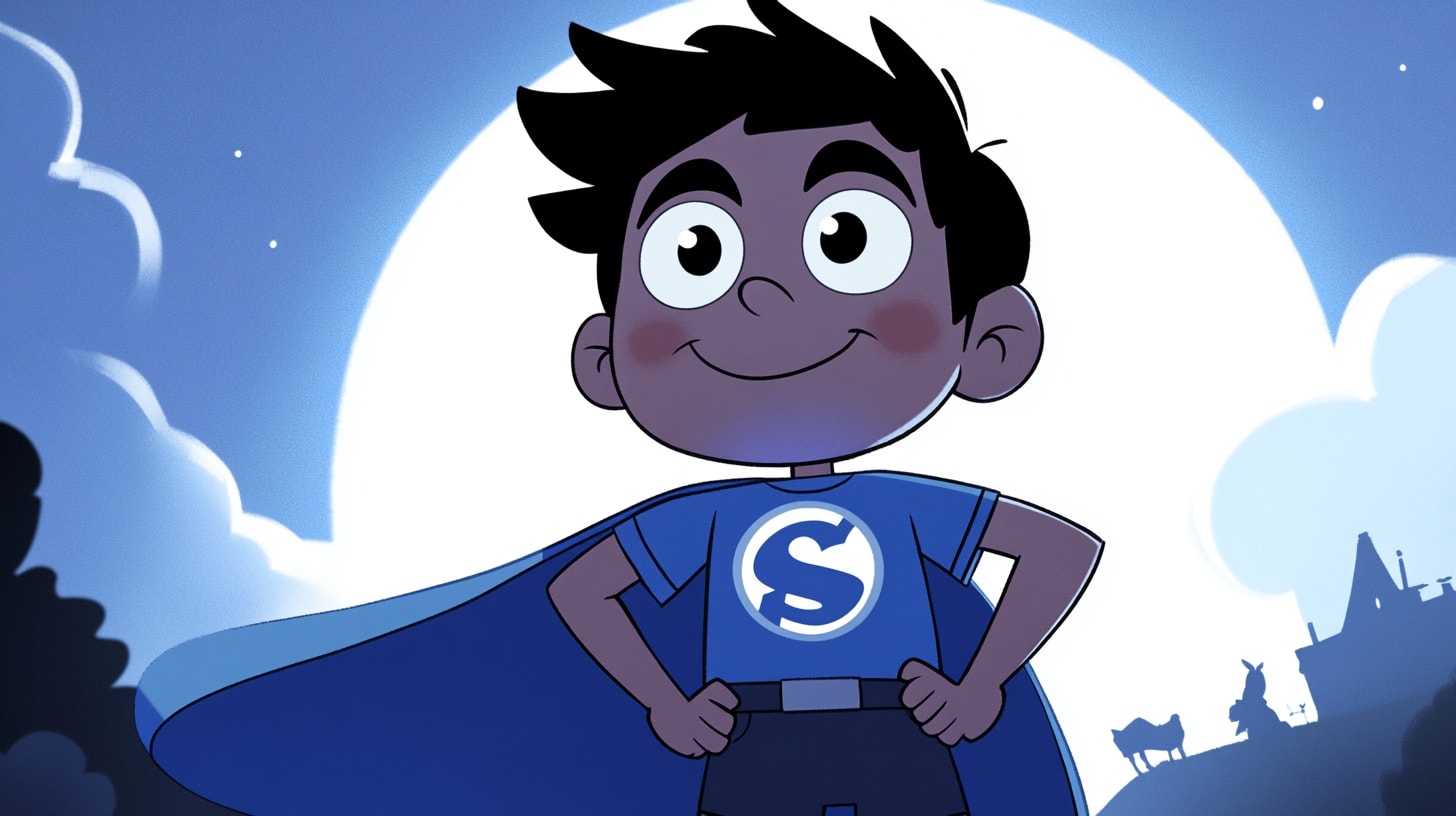
The Dream Carriers is built on this principle. Your child's recognizable likeness appears throughout the cinematic illustrations as they walk alongside seven Black American legends - from the Underground Railroad to the White House. The history stays central while the child experiences it as the story's hero.
The personalization doesn't replace the history; it amplifies it. The historical facts remain true and powerful. But now they're inseparable from your child's own sense of possibility.

5 Confidence Building Activities to Pair with Reading
After your child reads about these heroes - whether through a personalized book or traditional black history books for kids - here are five activities that deepen the learning and build real confidence (see also our guide to teaching kids history through stories that actually stick):
1. Hero Connection Conversation
After reading, ask your child: “Which hero do you feel most like? Why?” Let them explore the connection without redirecting or correcting. If they say “I’m like Ruby because I’m scared sometimes too,” you’ve just opened a conversation about recognizing courage inside themselves. Listen more than you explain.
2. Draw Yourself as a Dream Carrier
Have your child draw themselves standing next to their favorite hero. What are they doing together? Are they holding hands? Running? Creating? Drawing activates a different part of the brain than reading and makes the connection even more personal and concrete.
3. Write a Dream Carrier Letter
Your child writes a short letter to one of the seven heroes, telling them about a dream they’re carrying forward. This doesn’t have to be polished or long - even a few sentences count. The act of writing makes the connection intentional. Your child becomes an active participant in the conversation, not just a listener.
4. Role-Play a Brave Moment
Pick one scene from the book and act it out together. Let your child lead. They might be Harriet navigating by the stars, or Ruby walking through those school doors. Role-play lets kids practice courage in a safe space, building the neural pathways of bravery.
5. Create a Family Courage Timeline
Sit down with your child and map out brave moments from your own family history. When did a grandparent take a risk? When did a parent choose the harder right over the easier wrong? When did someone in your family stand up for what they believed in? Show your child that courage is in their DNA. It runs through their family line.
Their Courage Becomes Your Child’s Confidence
Look back at that bookshelf you examined at the beginning of this post.
The stories on your child’s shelf shape how they see themselves and what they believe is possible. Every picture book, every chapter book, every tale they absorb is telling them something about who people like them can be.
Every child deserves to see themselves in stories of courage, brilliance, and possibility. Not just in February. Year-round.
Representation in children’s books isn’t a nice addition to childhood. It’s essential. It’s the difference between a child who wonders if people like them can do extraordinary things and a child who knows for certain that they can.
Give your child a story where they don't just read about heroes — they walk alongside them. They become them.
Because their courage - the real, personal, lived confidence they build through seeing their own face in stories of triumph - becomes the foundation of everything they’re capable of achieving.
Frequently Asked Questions
How does learning Black history build confidence in children?
When children walk alongside real heroes who overcame real obstacles — not in fantasy worlds but in actual history — they absorb a message no worksheet can teach: if they faced that and kept going, I can too. Black history works as a confidence-building activity because it's not abstract; it's proof that courage is built, not born, and that ordinary people can do extraordinary things even when they're scared.
Why does representation in children's books matter so much?
For decades, data tracked by the Cooperative Children's Book Center (CCBC) has shown that children's books with animal main characters routinely outnumbered books with characters of color. When children see their own face, heritage, and people reflected in heroes, it builds self-worth, belonging, and real confidence, sending the message that people who look like me do important things.
Which Black history heroes help teach kids about confidence?
The article highlights seven: Harriet Tubman (bravery), Madam C.J. Walker (resourcefulness), Jesse Owens (resilience under pressure), Katherine Johnson (intellectual confidence), Ruby Bridges (age-appropriate courage), Martin Luther King Jr. (purpose and dreaming big), and Barack Obama (leadership and possibility). Each story teaches something concrete about how confidence is built.
How does a personalized book like The Dream Carriers make Black history more powerful?
Memory research on the self-reference effect suggests information tied to ourselves can be more memorable, which may help explain why identifying with a protagonist can deepen engagement. In The Dream Carriers, your child's recognizable likeness appears throughout the cinematic illustrations as they walk alongside seven Black American legends, from the Underground Railroad to the White House. The personalization supports the history rather than replacing it.
Do I have to wait until Black History Month to teach this?
No. Confidence-building activities that center real heroes work year-round. Every child deserves to see themselves in stories of courage, brilliance, and possibility — not just in February. The historical facts stay true and powerful whenever you read them.