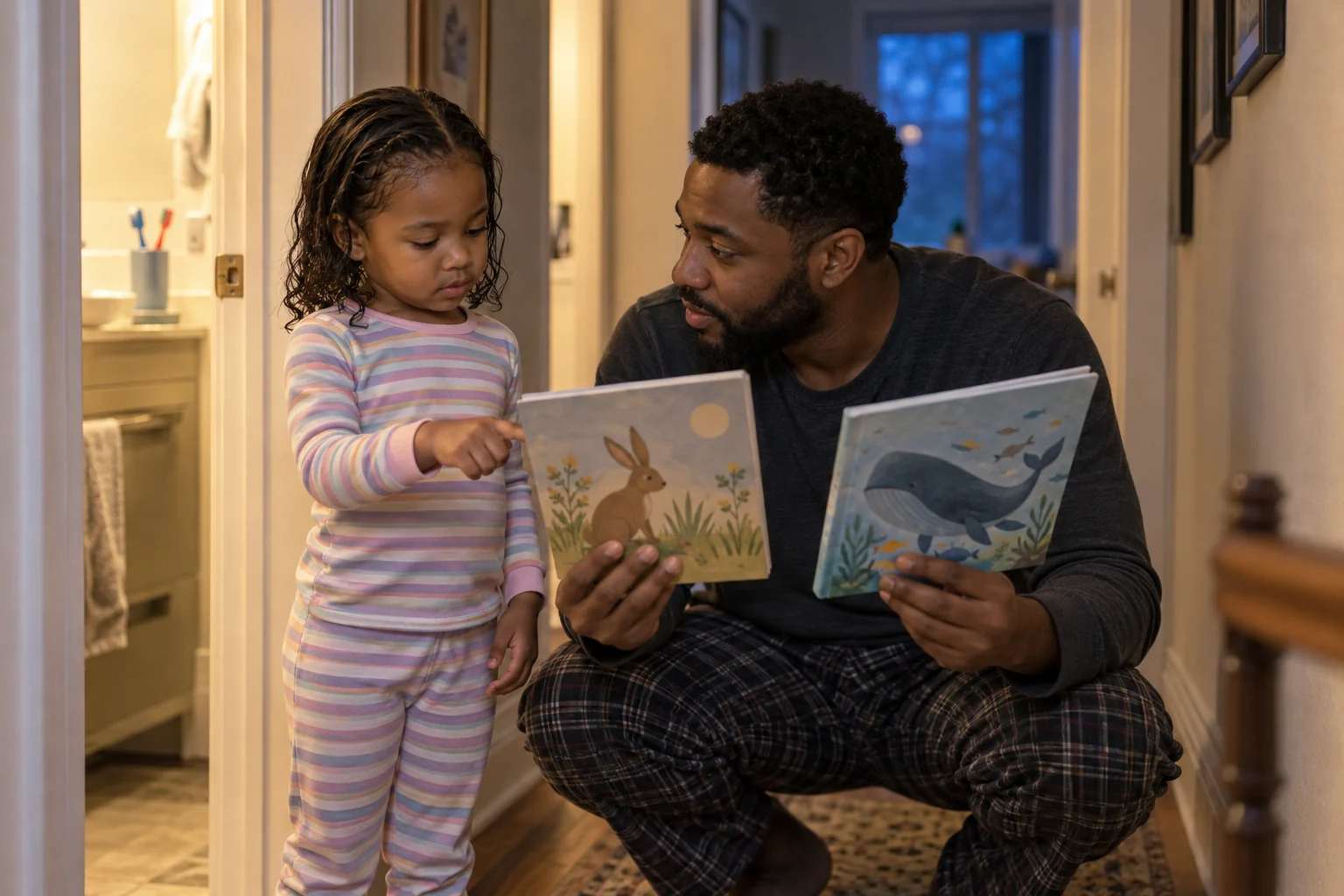
Even Whales Go to Bed: A Bedtime Book for Animal Lovers
Follow an animal-filled search for a creature that never sleeps, with simple ways to make Even Whales Go to Bed part of a family reading routine.

In this article
What if you could find an animal that never had to go to bed? That is a promising mission for a child who would rather keep the day going.
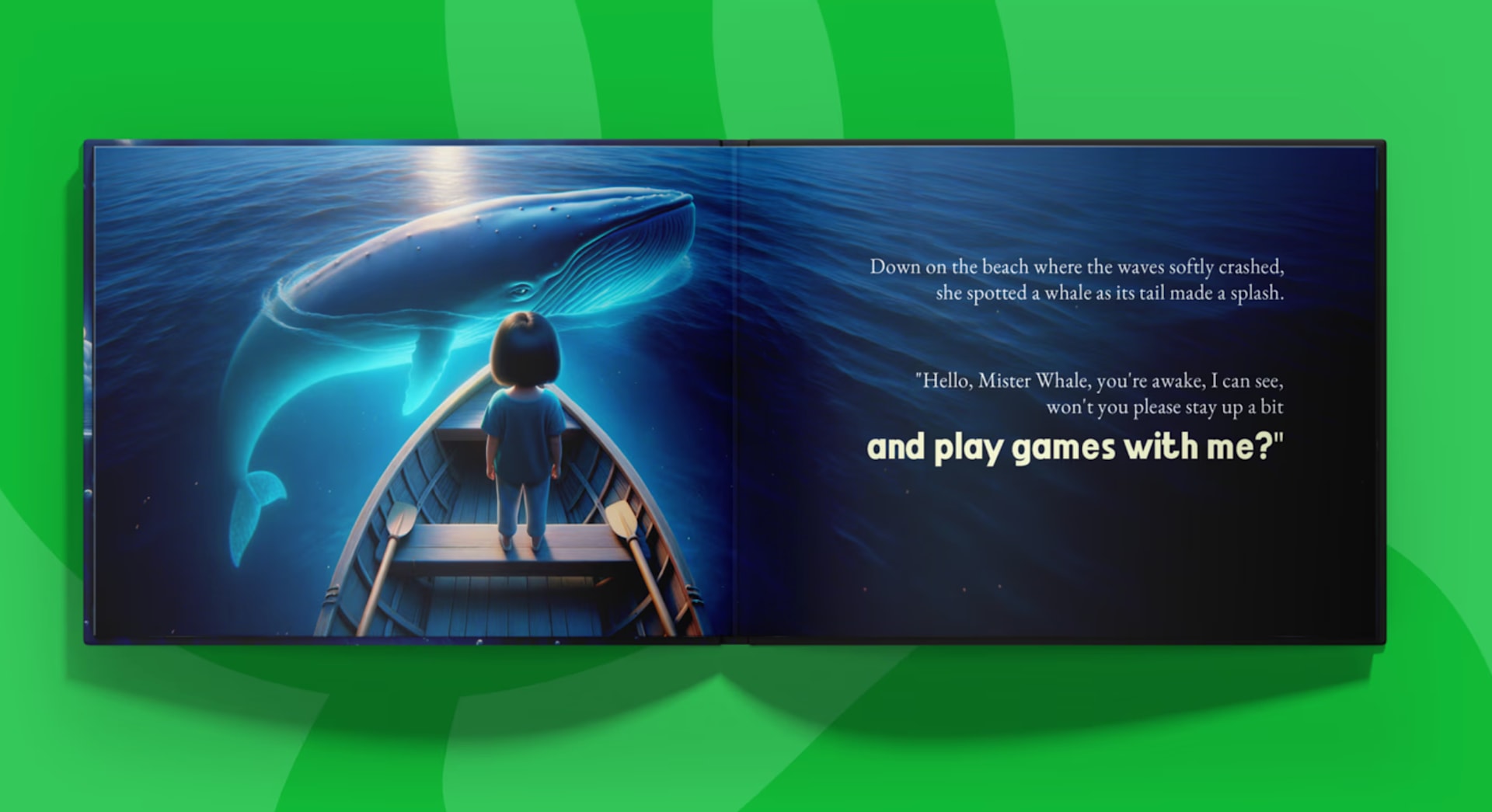
In Even Whales Go to Bed, the search leads past deer and elephants to a whale. It is an animal adventure with rest at the heart of it.
What the story offers
Even Whales Go to Bed features your child's name and illustrated likeness as the explorer. Along the way, the character discovers that other creatures need rest too.

That premise gives an animal-loving child plenty to explore, from the creatures they recognize to the one they most want to meet.
Decide where story time ends
Before opening the book, make the plan clear: "We'll read this, have our cuddle, and turn out the main light." Adapt the details to your family.
If the child wants to choose, offer options you can keep: this book or another, sitting beside you or on your lap. Avoid offering a choice about whether bedtime happens if that decision has already been made.
You can split a reading when the child is tired. A bookmark is a perfectly good ending for tonight.
Follow the animals and their questions
A younger listener might want to point out the biggest animal. An older child may ask how a whale sleeps. You can enjoy the fictional journey without treating every scene as an animal-science explanation.
When you do not know an answer, keep it: "Let's look that up tomorrow." Bedtime does not require you to deliver an impromptu lecture or invent a fact to close the conversation.
Handle "one more" with a plan you can repeat
When a child asks for more, acknowledge the wish and make the plan for tomorrow clear.
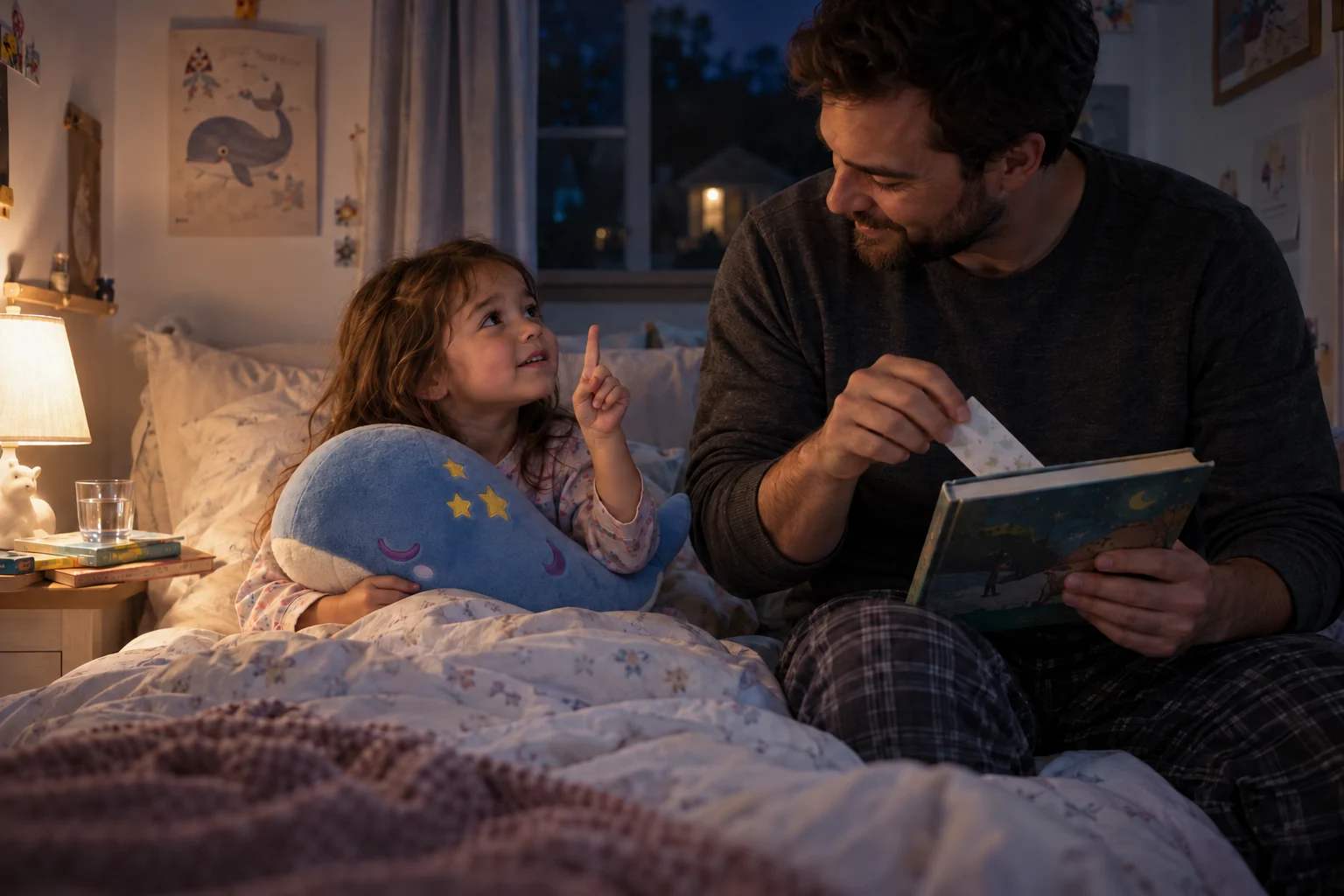
Try a warm, short answer: "You want more whale adventures. We are finished reading tonight. I'll put it here for tomorrow." A bookmark can save the next part for another evening.
For practical ways to arrange the evening, see building a bedtime reading routine.
A note for grandparents and gift-givers
Ask what the child already likes at bedtime. A new book can sit beside a familiar favorite without replacing it. If you are reading on a call, arrange a time that fits the household's evening rather than stretching bedtime to fit yours.
Before ordering, review the story pages and personalized character preview separately, then check the current delivery estimate. The gift can include something simple: a note saying, "Save this one for our next read together."
Leave the book within reach for the next evening’s animal adventure.
Questions parents ask
What happens in Even Whales Go to Bed?
The child searches for an animal that never sleeps, meeting creatures including deer, elephants, and a whale along the way.
How can we make it part of bedtime?
Choose a comfortable reading spot and agree on how much to read. Mark a place for tomorrow when it is time to finish.
Can a grandparent read it at bedtime?
Yes. Share the usual bedtime plan with them, including where story time fits and how you handle requests for more.