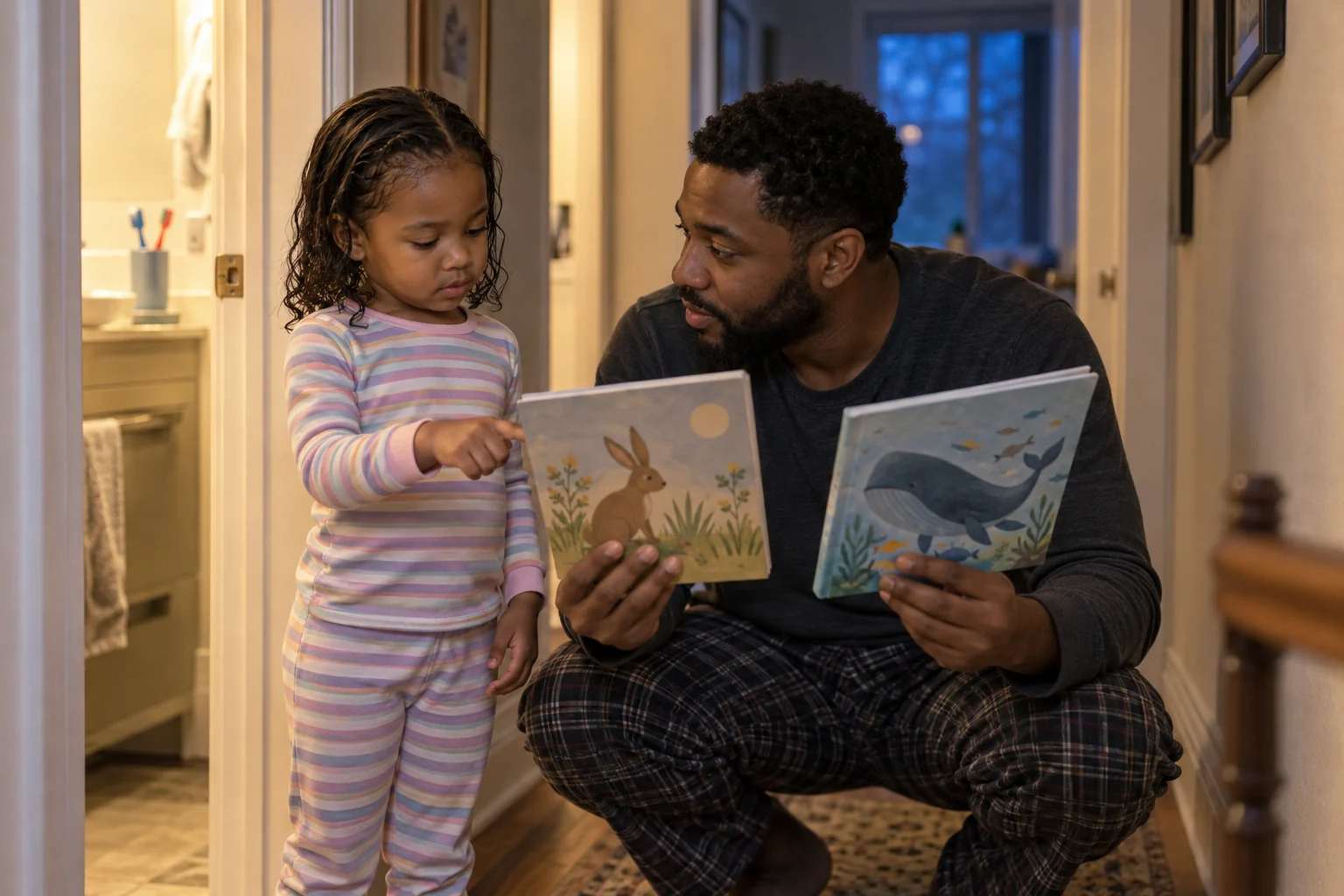
Making Room for Connection at Bedtime
Small ways to share a bedtime story, listen without pressing for answers, and keep a familiar reading routine across busy evenings and different homes.


In this article
After a day of getting everyone where they need to be, a shared book gives you a place to sit together. You do not have to invent a conversation. You can begin with the page.
Your child might want to talk about it, point out something you missed, or hear the whole story quietly. Connection can take any of those forms. It does not require a child to cuddle, answer questions, or tell you the best part of their day on request.
The American Academy of Pediatrics’ literacy guidance treats shared reading as a way to support nurturing relationships as well as language. That is a reason to make space for it, without expecting a particular response every night.
Create a small moment you can repeat
Choose a place where you can both see the book. Put aside a competing task when you can, and say what you have time for: “I’m here for one story with you.”
Use your ordinary voice. You can enjoy character voices, but they are optional. If you stumble over a word, correct yourself and carry on. Reading together does not need to sound like a recording.
The AAP’s Brush, Book, Bed sequence is one simple arrangement. If evening reading repeatedly feels rushed, choose an earlier time. A story after breakfast with a grandparent can be part of family life too.
Respond to an opening instead of searching for one
If your child says a character looks lonely, you might answer, “He’s sitting by himself while the others play.” Then pause.
They may tell you about school. They may point at the dog on the next page. You can follow either response. There is no need to turn a story about loneliness into an interview about their friendships.
For a child who wants to talk, try a simple invitation: “Tell me more.” For a child who does not, continue reading. Our guide to talking about bedtime stories offers more examples.
Let the child choose how to be close
Offer a place beside you, a chair nearby, or the chance to hold the book. You can share attention without sharing a lap.
Make room for a child’s usual way of communicating. A point toward a picture or a request to turn back is something you can respond to. If the book is hard to see or hold, adjust its position before assuming the child has lost interest.
You might ask, “Would you like me here or in the chair?” A small practical choice can make the moment more comfortable for both of you.
Give the end of the story a clear shape
Agree on the amount before reading. When you finish, use a familiar goodnight: “I liked reading with you. We’ll put the bookmark here.”
If your child is disappointed, acknowledge it without pretending they should be pleased. “You wanted longer. I understand.” You can keep the ending and still respond to a need for comfort or help.
For choosing books and handling extra-story requests, see our bedtime reading routine. Keeping the sequence manageable matters more than adding another special ritual.
Make room for repair after a difficult evening
If you lost your temper earlier, a book does not have to carry the apology for you. You can say it plainly before you begin: “I spoke sharply. I’m sorry. I’m ready to read with you now.”
Your child may still be upset. Offer the story without requiring a hug or forgiveness in return. You can also sit quietly together or try again later.
Avoid using reading as a reward that disappears whenever the evening has been difficult. If you need to shorten it because it is late, explain the practical reason and choose a brief story.
Share the routine with another caregiver
When parents alternate bedtime, pass along the book and the bookmark. A child can hear the same story in different voices without needing each reader to copy the other.
For an overnight visit, grandparents can ask which book is familiar and how bedtime usually ends. They may also have a favorite that becomes part of visits. Leave room for both familiarity and their own relationship with the child.
A note inside a gifted book can be simple and specific: “I chose this because you always want to see the moon before bed.”
Some nights will feel warm and easy. Some will feel ordinary, and some will be difficult. You can keep offering a shared story without judging the strength of your relationship by how one bedtime goes.
Sources
Questions parents ask
Does my child need to talk about the story for reading together to matter?
No. Some children want a conversation and others want to listen. Respond to openings when they happen without requiring an answer or a discussion of the day.
Can a grandparent use a different bedtime routine?
Share the parts that matter to the child, such as the familiar book and the usual ending. The grandparent can read in their own voice and use a comfortable place in their home.
What if we have had a difficult evening?
You can offer a short story without expecting it to resolve the whole day. Apologize directly if needed, and let the child choose whether to sit close or have a little space.