How to Build a Bedtime Reading Routine Kids Love
A bedtime reading routine doesn’t have to be a battle. Here’s how to make story time the part of the night your kids actually look forward to.

6 min read | April 4, 2026 · Updated August 16, 2026
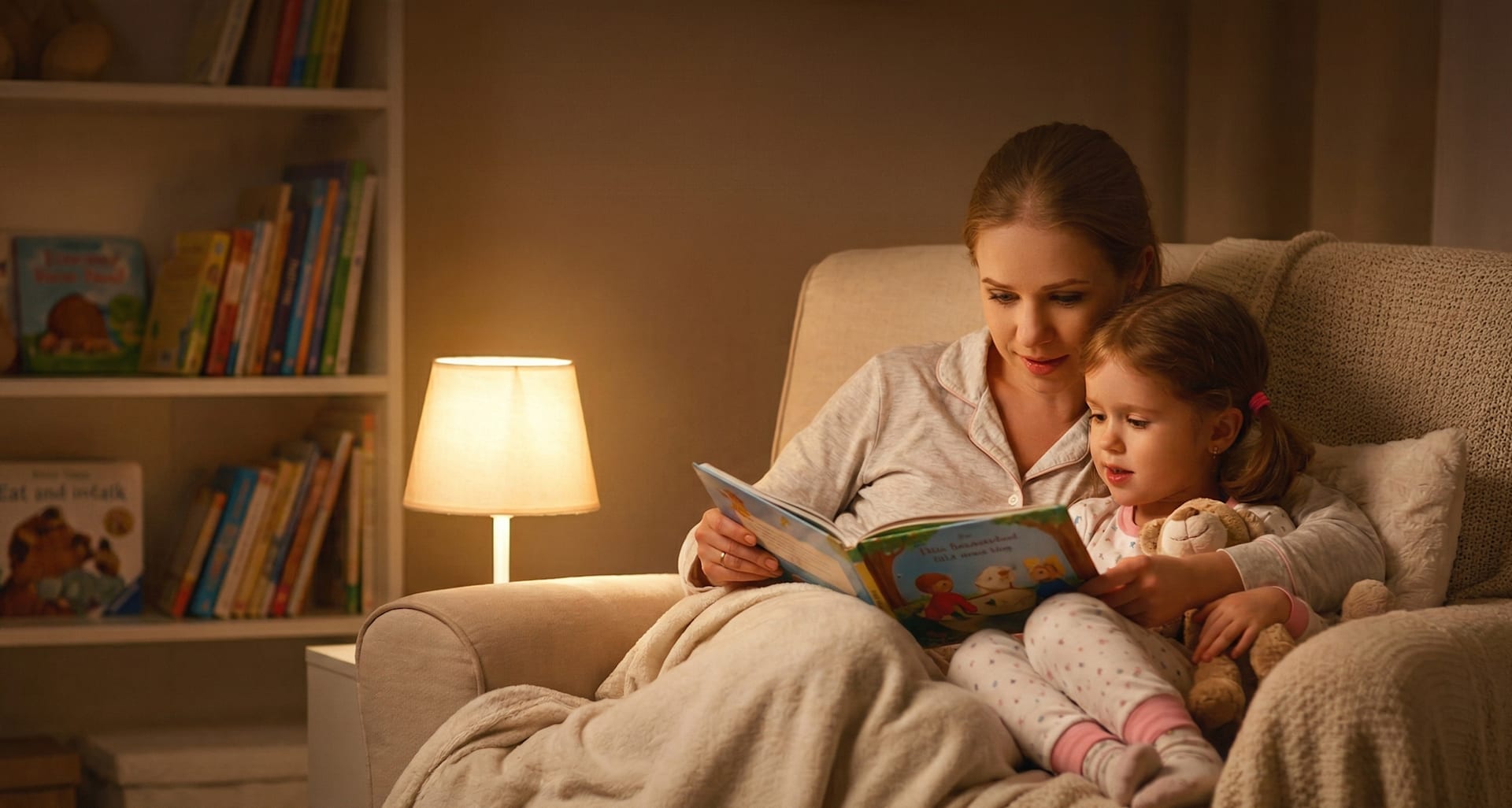
Why Bedtime Is the Hardest Sell (And Why Stories Fix It)
Bedtime is a negotiation. You know it, your kid knows it, and somehow they always have the upper hand. One more glass of water. One more trip to the bathroom. One more question about whether dinosaurs could swim.
But here’s what most parents discover almost by accident: when there’s a story waiting at the end of the bedtime gauntlet, kids stop fighting and start moving. A bedtime reading routine doesn’t work because it’s educational or enriching (though it is both). It works because it gives your child something to look forward to — a reward that doesn’t involve sugar or screen time.
Research from the American Academy of Pediatrics backs this up: reading aloud to children strengthens the parent-child bond, builds language skills, and creates positive associations with bedtime — we dig into why bedtime stories matter so much in more depth elsewhere. But honestly? You don’t need a study to know that a kid curled up with a book is calmer than a kid negotiating for five more minutes of iPad.
Start Smaller Than You Think
The biggest mistake parents make with a bedtime reading routine is going too big too fast. Thirty minutes of reading sounds beautiful on a parenting blog, but on a Tuesday when you’re exhausted and dinner ran late, it feels impossible. So you skip it. Then you skip it again. And the “routine” is already dead.
Start with five minutes. That’s it. One short book or a few pages of a longer one. The goal isn’t to log reading hours — it’s to make reading the thing that happens every single night without exception. Five consistent minutes will do more for your child’s relationship with books than thirty sporadic ones.
Once the habit sticks (give it two to three weeks), you’ll notice something: your kid starts asking for more. That’s when you extend naturally. Ten minutes. Fifteen. Eventually, the reading becomes the bedtime routine, not just a piece of it.
Let Them Choose the Book
This is the part that changes everything. When a child picks the story, they’re not being read to — they’re participating. They have ownership over this moment. And that sense of control matters enormously to a kid who just spent the entire day being told what to do.
Yes, this means you might read the same book fourteen nights in a row. That’s normal. Repetition is how kids process stories and build comprehension. Resist the urge to override their choice, even when you can recite the whole thing from memory with your eyes closed.
If you want to introduce variety without taking away their autonomy, try offering a choice of three. Pull three books off the shelf and let them pick. This works especially well with personalized books — when a child sees their own name on the cover, that book becomes the obvious choice every time. There’s something powerful about a kid selecting a story where they’re already the hero.
The 3-Step Routine That Actually Sticks
Complicated routines collapse. Simple ones survive. Here’s a three-step framework you can start tonight:
Step 1: The Wind-Down Signal
Pick one consistent cue that means “we’re heading toward books.” It could be dimming the lights, turning on a specific lamp, or playing quiet music. The signal itself doesn’t matter — what matters is that it’s the same every night. Kids’ brains are wired for patterns, and a reliable cue tells their nervous system it’s time to slow down.
Step 2: The Book Selection
Let your child choose. Keep the options accessible — a small basket of books by the bed or a low shelf they can reach on their own. Rotate the selection every week or two, and borrow a few interactive story-time tips to keep it fresh without overwhelming them with choices.
Step 3: Read Together
Sit close. Go slow. Use voices if you want to, but don’t force it — reading in a calm, steady tone works just as well. The warmth of being next to you matters more than your performance. When the story ends, that’s it. Lights out, goodnight. No second act.
The beauty of three steps is that there’s nothing to forget, nothing to skip, and nothing that takes so long you start dreading it yourself.
What to Do When They Want “One More”
“One more book” is the bedtime equivalent of “five more minutes at the park.” Every parent has heard it, and every parent has caved at least once.
Here’s the reframe: if your kid is asking for one more book, your routine is working. They’re not stalling — they’re engaged. They want more of this thing you built together. That’s a win.
But boundaries still matter. The most effective approach is to set the number before you start. “Tonight is a two-book night.” Say it before the first page opens, not after the second book closes. When they inevitably ask for a third, you can say, “We already picked two tonight. Tomorrow we’ll pick two more.” No argument, no negotiation, just a clear boundary with a built-in promise.
Some parents use a “bonus book” system for weekends — Friday and Saturday are three-book nights. This gives kids something to anticipate and teaches them that special occasions exist within the routine, not outside it.
Not sure whether your routine has actually settled in yet? Here's what to look for:
| Signs the routine is working | Signs to adjust |
|---|---|
| Your child asks for "one more" some nights | Negotiations start before you've even reached the books |
| They pick a book without much fuss | They stall trying to avoid picking one at all |
| The wind-down cue visibly settles them | The cue doesn't change their energy or behavior |
| Story time usually ends without a meltdown | Nearly every session ends in tears or arguing |
If you're seeing more of the right column than the left, it's not a sign to quit — it's a sign to shrink the routine further (fewer minutes, fewer choices) before trying to build it back up.
Make Story Time Theirs
A bedtime reading routine isn’t really about reading. It’s about creating a moment that belongs to you and your child — a reliable pocket of calm in a chaotic day, and one of the simplest ways bedtime story routines strengthen bonds. The books are the vehicle, but the connection is the destination.
And the more personal that vehicle is, the easier it can be to connect with the story. When their name and recognizable character appear throughout the adventure, families gain a familiar bedtime story they can revisit together.
Frequently Asked Questions
How long should a bedtime reading routine be when you're starting out?
Start with just five minutes — one short book or a few pages of a longer one. The goal isn't to log reading hours; it's to make reading the thing that happens every single night without exception. Five consistent minutes will do more for your child's relationship with books than thirty sporadic ones. Once the habit sticks, usually after two to three weeks, you can extend naturally as your child starts asking for more.
Should I let my child choose the bedtime book every night?
Yes. When a child picks the story, they're not just being read to — they're participating, and that sense of ownership matters enormously to a kid who spent all day being told what to do. If you want variety without taking away their autonomy, pull three books off the shelf and let them choose one. Personalized books tend to become the obvious pick, since a child loves seeing their own name on the cover.
Is it okay to read the same book over and over at bedtime?
Completely. You might read the same book fourteen nights in a row, and that's normal — repetition is how kids process stories and build comprehension. Resist the urge to override their choice, even when you can recite the whole thing with your eyes closed.
What's a simple bedtime reading routine that actually sticks?
Use a three-step framework: a consistent wind-down signal (dimming the lights, a specific lamp, or quiet music) that tells your child's brain it's time to slow down; book selection, letting your child choose from an accessible basket or low shelf; and reading together, sitting close and going slow, then lights out with no second act. Simple routines survive where complicated ones collapse.
How do I handle my child asking for 'one more book'?
If your child asks for one more, your routine is working — they're engaged, not just stalling. Set the number before you start (Tonight is a two-book night), so when they ask for a third you can say, We already picked two tonight; tomorrow we'll pick two more. Some families use a bonus-book system on weekends, which teaches that special occasions exist within the routine, not outside it.