Outdoor Adventure Books for Children That Spark Wonder

Magic Story
6 min read | April 21, 2026

It usually starts with a pillbug.
A toddler crouches in the garden, lifts a leaf, and gasps at the tiny armored creature rolling into a ball. Three minutes later she is back inside, face pressed against the window, waiting for rain to return so she can "see where it goes." That small, unscripted wonder is the thing we want to protect — and the right outdoor adventure books for children are one of the best tools we have to do it.
This post is for the parent looking for stories that don't just describe nature, but draw kids into it. The kind that turn a rainy afternoon into a water-cycle quest, or a full moon into a conversation about orbits. Below, we'll cover what makes a nature book actually work for young kids, why personalization turns those books into something closer to a first-person adventure, and four of our favorite titles to start with.

Why Outdoor Adventure Books Matter More Than Ever
Children today spend less time outside than any generation before them. Journalist Richard Louv coined the phrase "nature-deficit disorder" to describe what happens when kids grow up disconnected from the natural world — attention suffers, stress rises, and the sense of wonder that fuels curiosity gets quieter. You can read more about the research at the Children & Nature Network.
Books can't replace dirt, wind, and puddles. But they can be the bridge. A story about where the rain goes gives a three-year-old a reason to watch the next downpour differently. A story about the moon gives a five-year-old a question to bring to the backyard after dinner. That's the job of a great outdoor adventure book for children: not to sit on the shelf, but to send kids back outside.
What Makes a Great Outdoor Adventure Book for Children
After reading hundreds of nature-themed picture books with our own kids — and hearing from thousands of MagicStory families — we've noticed the standouts share a few traits.
They answer a question a child actually has. Where does the rain go? Why is the moon chasing us home? What happens to the sun at night? Good nature books start where a child's wonder already lives.
They take one idea seriously. A book that tries to explain everything about weather, space, and biology in 24 pages explains nothing. The best titles pick a single phenomenon — a raindrop, a phase of the moon, a gust of wind — and follow it all the way through.
They respect the science without lecturing. Young kids don't need dumbed-down facts; they need accurate facts wrapped in a story. The water cycle, orbits, and weather systems are genuinely magical when told well.
They end with a nudge outside. The best outdoor adventure books close with the child looking up, leaning into the window, or asking for their rain boots. The story isn't the endpoint — it's the invitation.
Why Personalization Turns Nature Books Into First-Person Adventures
Here's a small experiment. Read your child a picture book about a generic kid exploring a forest. Then read them one where they are the one crouched by the mushroom, feet on the same ground, hair the same color. Watch what happens to their eyes.
There's a reason for that shift. Cognitive psychologists call it the self-reference effect: information processed in relation to oneself is retained better and felt more deeply. When a four-year-old sees their own face on the character who chases a raindrop across a pond, the science lesson lands differently. It isn't "a kid learned about the water cycle." It's "I followed the rain."

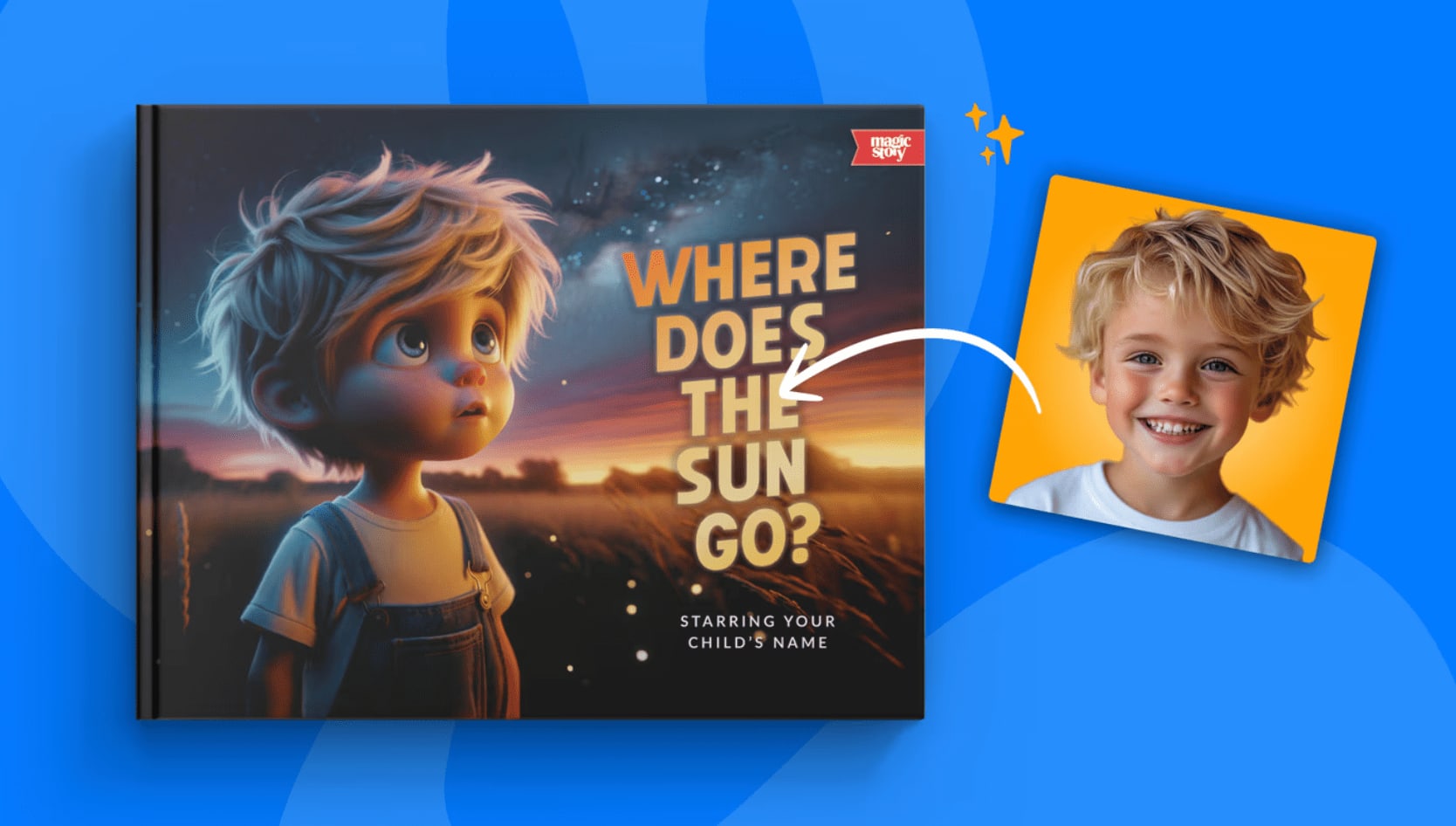
This is the thing MagicStory was built around. Upload one photo, enter your child's name, and every page of the book shows them — not a stand-in — as the hero of a nature adventure. That small shift changes how often the book gets re-read, how much of the science sticks, and how eagerly kids carry the story outside.
4 Outdoor Adventure Books That Turn Weather and Sky Into Wonder
MagicStory's Exploring Nature collection is built around four of the biggest, oldest questions kids ask about the world: where does the rain go, where does the moon go, where does the sun go, and where does the wind go? Each one is a personalized story that your child stars in, with Pixar-quality illustrations built from a single photo.
Where Does the Rain Go?
Your child watches raindrops slide off the window and sets off to follow them — through gutters, puddles, rivers, and up into the clouds again. It's the water cycle taught the way it should be taught: as an actual journey, not a diagram. Pairs beautifully with the next rainy afternoon and a pair of rain boots.
Where Does the Moon Go?
A wise moth becomes your child's guide through one of childhood's best questions: why does the moon keep changing shape, and where does it hide during the day? Phases and orbits get introduced in a way that feels like discovery, not memorization.

Where Does the Sun Go?
What happens when the sun disappears behind the hills each night? Your child travels with it — around the Earth, through time zones, and into the rhythms that shape every day. It's a quiet, wondrous way to introduce the idea of a spinning planet.
Where Does the Wind Go?
Wind is the hardest kind of nature to explain because you can't see it. This book solves that by putting your child on a chase — through fields, over rooftops, across the sea — following a wind that's always just a little ahead of them. It's a gorgeous introduction to air pressure, weather systems, and why tree branches bend.
Turn the Story Into an Adventure: 5 Nature Activities to Pair With the Book
A book is a doorway, not a destination. Pair each read with a small, do-outside-today activity and the story starts to live in the real world.
1. The "Follow the Raindrop" walk. After reading Where Does the Rain Go?, head out in boots during or right after a rain. Pick one puddle and try to trace, out loud together, where its water probably came from and where it might go next. No right answers needed — just noticing.
2. A 28-day moon journal. After Where Does the Moon Go?, tape a sheet of paper to the fridge. Each night, draw the shape of the moon. By week three, your child will notice the pattern before you mention it.
3. Shadow racing at two times of day. After Where Does the Sun Go?, trace your child's shadow on the driveway with sidewalk chalk in the morning, and again after lunch. Watching their own shadow move is the kindest introduction to Earth's rotation there is.
4. A wind-catcher hunt. After Where Does the Wind Go?, tie a long ribbon to a stick and walk the yard or park hunting for wind. Windy spots, still spots, why the gap between buildings is so gusty. Great for preschoolers who need to move while they learn.
5. A "what lives here?" sit spot. Pick a square meter of yard, park grass, or forest floor. Sit for five minutes. Count every living thing you see. Do it again a week later. You'll be amazed how much shows up once the kids get quiet.
How to Pick the Right Book for Your Child
If your child asks "why" about the sky: start with Where Does the Moon Go? or Where Does the Sun Go?
If your child is weather-obsessed: Where Does the Rain Go? or Where Does the Wind Go?
If your child is two to four: any of the four work beautifully as a bedtime story with the added bonus of real science quietly doing its job in the background.
If your child is five to eight: read the book once for story, and again a few nights later with more of the "how does that actually work?" questions on the table. The science holds up either way.
Start Your Child's First Nature Adventure
The world is wilder and more interesting than any screen will admit, and kids know it — they just need the occasional nudge back toward it. A good outdoor adventure book for children is one of the easiest nudges there is.
If you'd like to see your child as the hero of one, the full Exploring Nature collection is the place to start. Upload a photo, choose a title, and see a Pixar-quality preview of your child chasing rain, chasing wind, or chasing the moon in a matter of seconds.