Sports Books for Kids: Personalized Stories for Game Day and the Nerves
The best sports books for kids put them in the big moment. Three personalized picks: a baseball story for first-game nerves, dinosaur sports and a race.

In this article
- Quick picks: sports books that star your child
- The Magic Baseball: a baseball book for first-game nerves
- You Should Never Play Tennis With a T-Rex: a funny sports book for dinosaur fans
- The Brickyard Dream: a racing book for kids who feel small
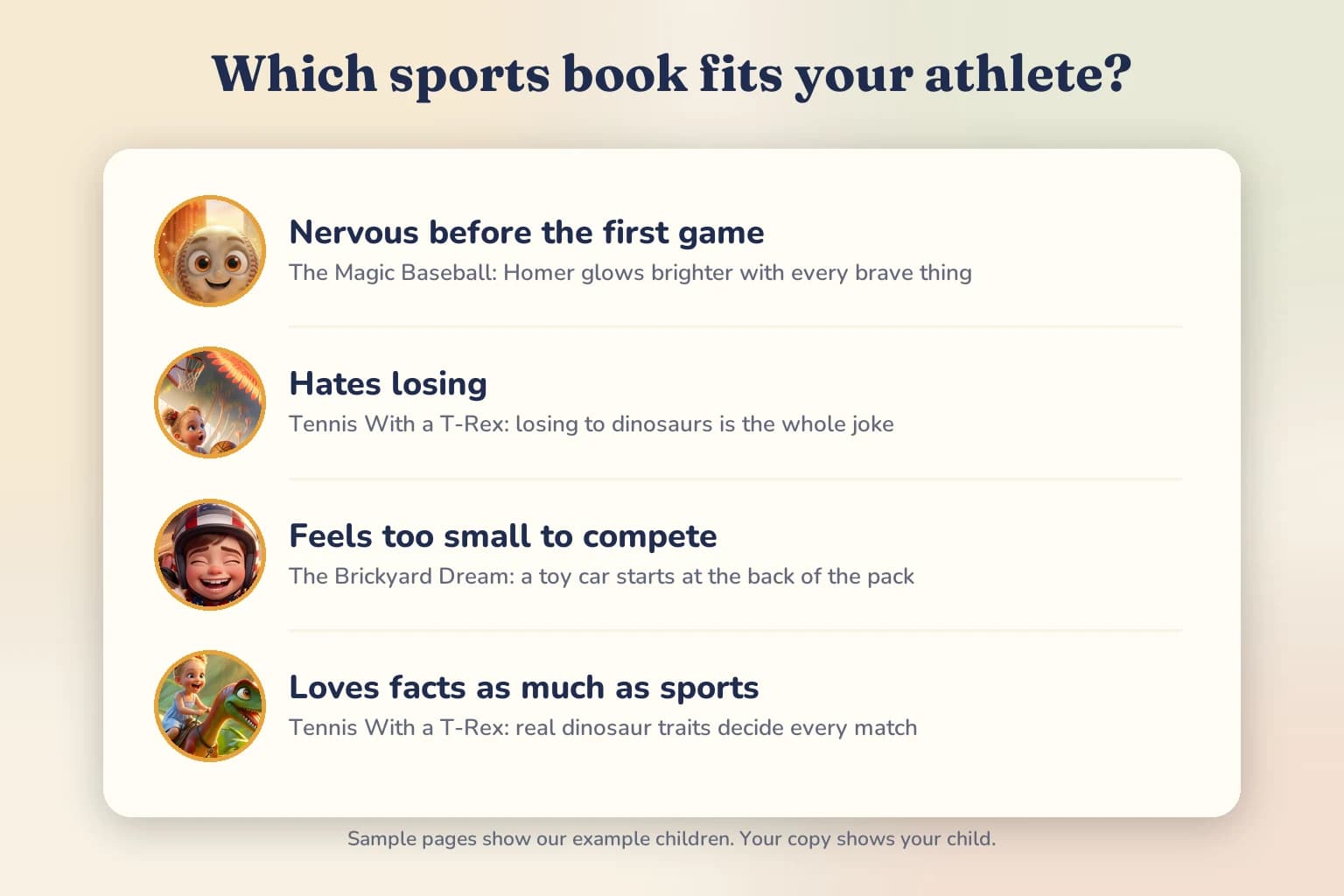
- Which sports book fits your athlete?
- What books help a nervous young athlete?
- What should I say after a strikeout or a loss?
- Sports books with girl athletes
- Sports books for 8 to 10 year olds
- When are kids ready for organized sports?
- A sports book as a gift
- How a personalized sports book works
- Find your child's sports book
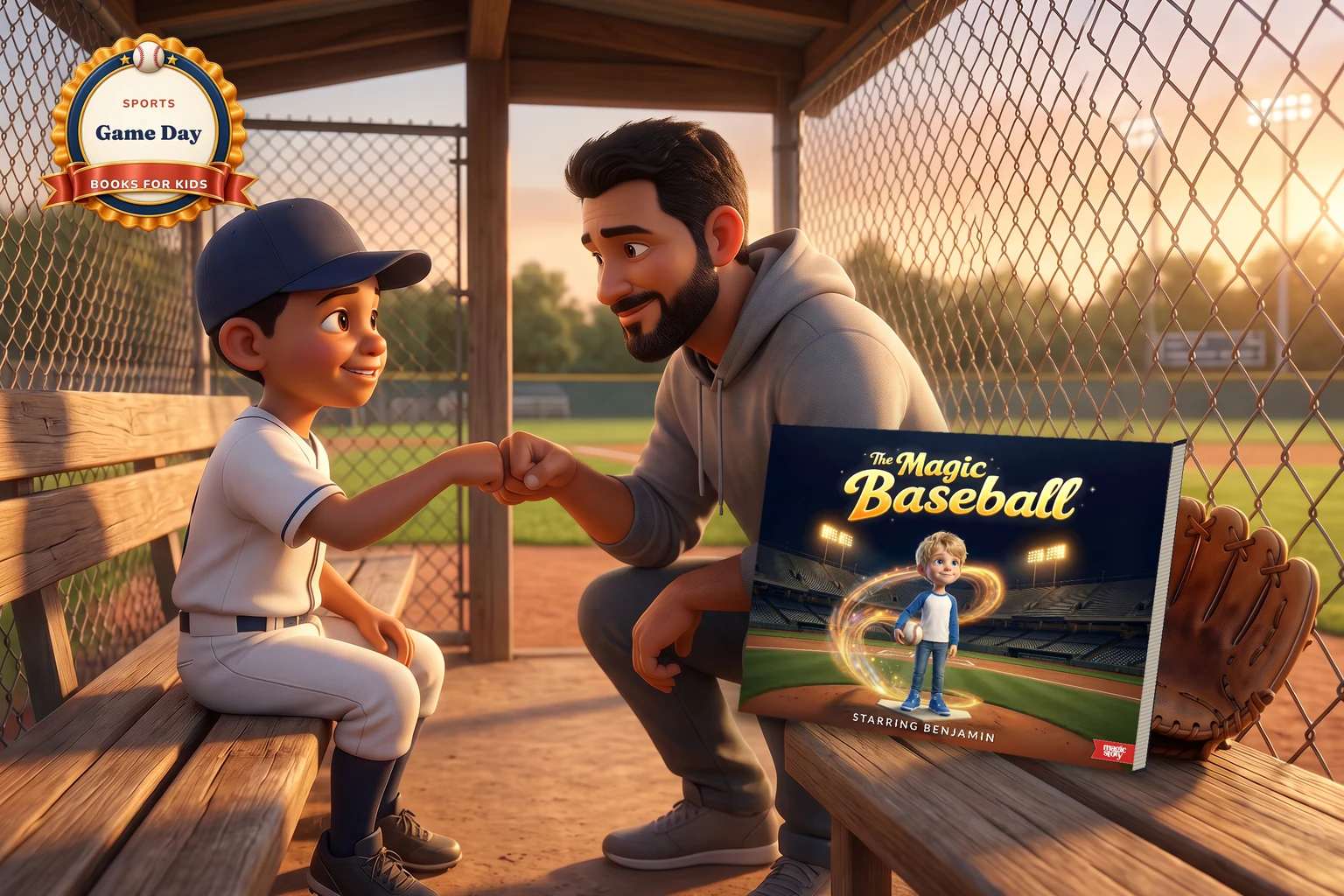
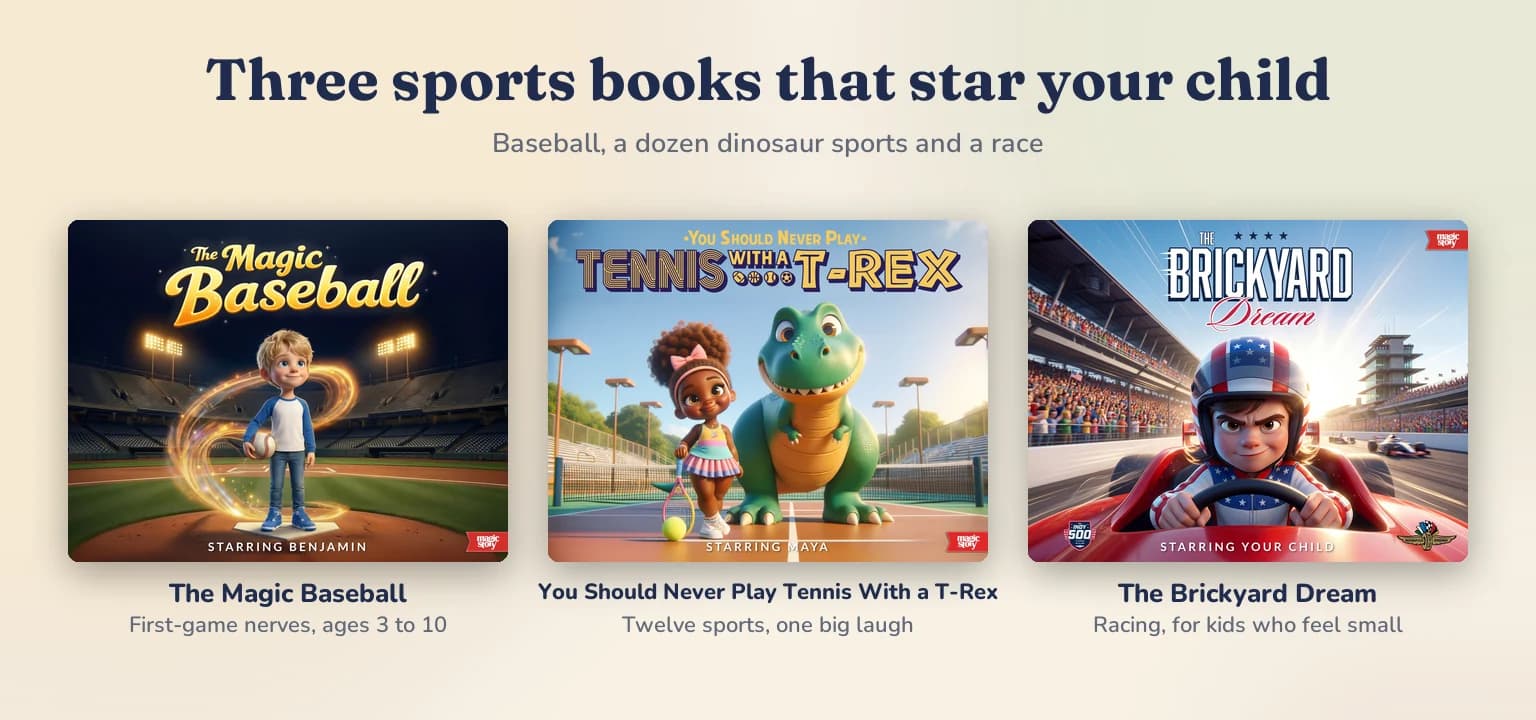
The best sports books for kids put a young athlete in the middle of the moment they care about, the first game, the big swing, the last lap, and show that nerves, mistakes and practice are part of playing. Magic Story makes three personalized sports books where your child is the athlete: The Magic Baseball, about a talking baseball who helps your child find their brave before their first game (ages 3 to 10); You Should Never Play Tennis With a T-Rex, a funny run through a dozen sports against dinosaurs; and The Brickyard Dream, about a driveway racer who dreams of winning at the Indianapolis Motor Speedway. In each one, your child's name and illustrated likeness are in the story.
This guide walks through all three, then answers what parents ask us about sports and nerves: what helps a nervous young athlete, what to say after a strikeout, sports books for girls and for 8 to 10 year olds, and when children are ready for organized sports.
Quick picks: sports books that star your child
| Book | The sport | Best for | Ages |
|---|---|---|---|
| The Magic Baseball | Baseball | First-game nerves and fear of striking out | 3 to 10 |
| You Should Never Play Tennis With a T-Rex | Tennis, volleyball, soccer and nine more | Laughing about losing, and dinosaur fans | 2 to 10 |
| The Brickyard Dream | Racing | Kids who feel too small to compete | 2 to 10 |
Each one is a personalized hardcover. The standard US one-time hardcover price is $44.99, plus shipping and tax, and shoppers in other countries see their own price at checkout.
The Magic Baseball: a baseball book for first-game nerves
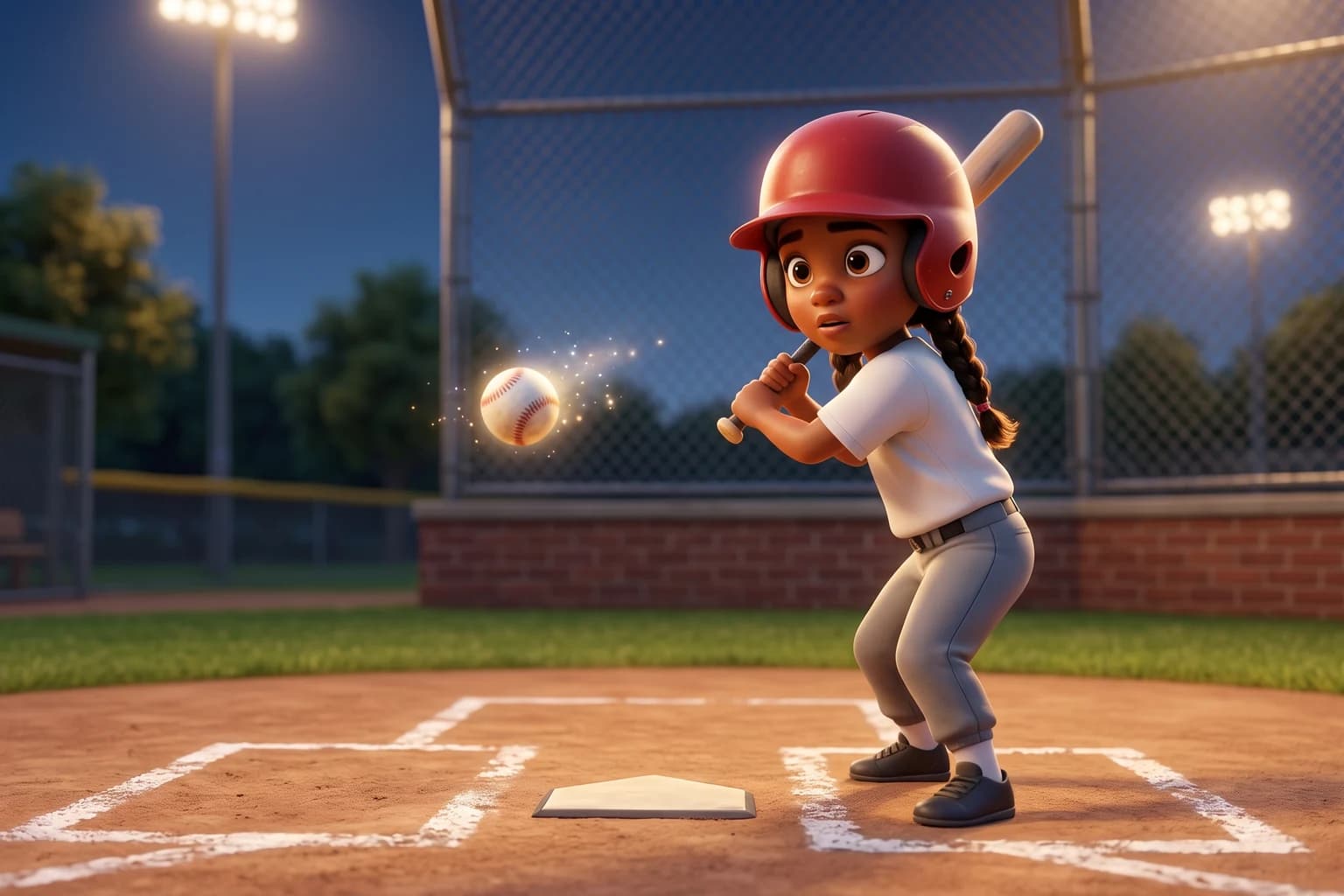
It's the night before your child's first game, and their tummy is doing flip-flops. What if nobody wants to play with them? Under the bed they find a dusty baseball with bright blue and orange stitches. It feels warm. "I wish I knew how to be brave," your child whispers, and the ball answers in a voice "like a mix of popcorn popping and a roaring crowd."
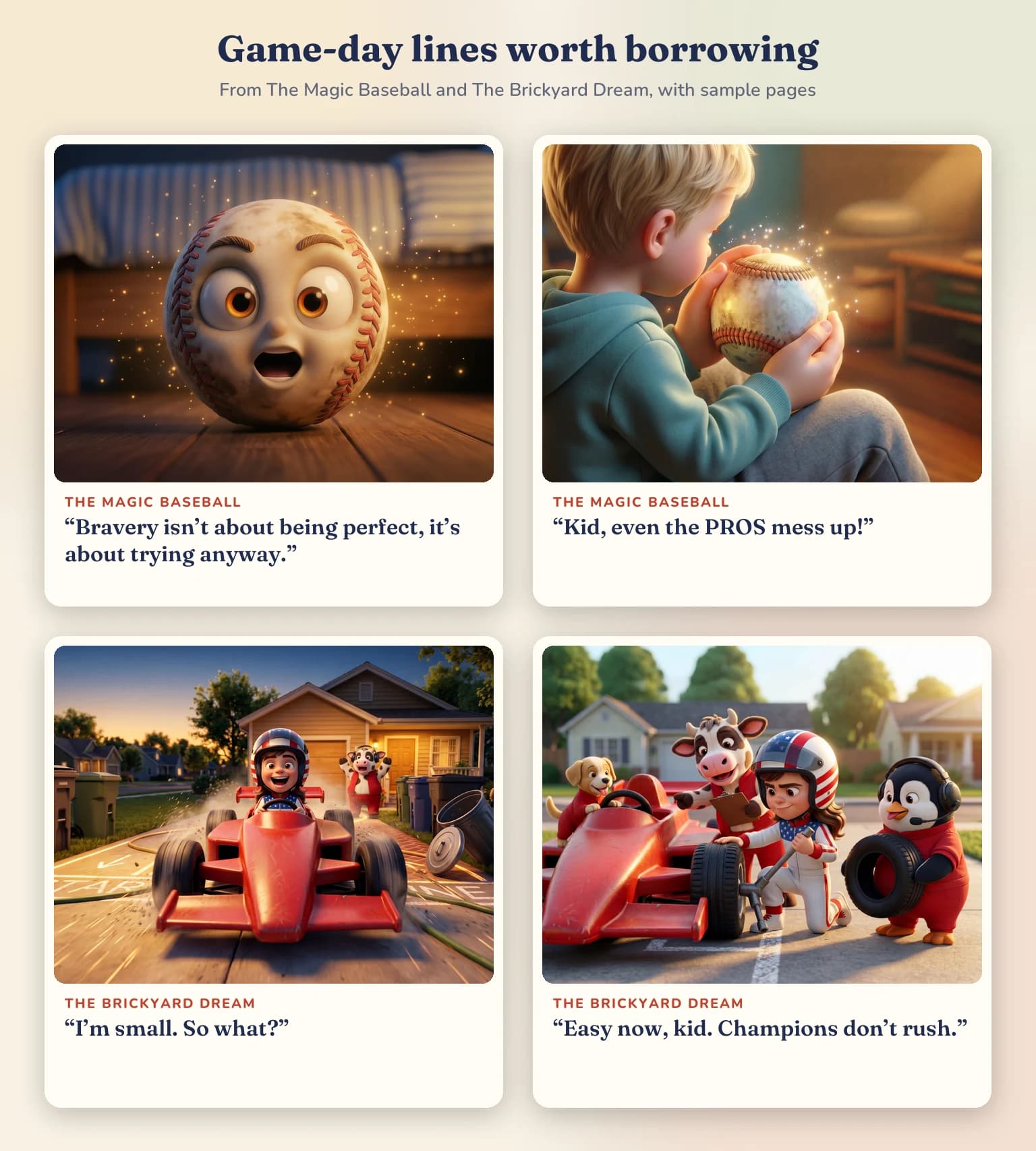
The ball is Homer, a former practice ball for the pros, and he makes a deal: every time your child does something brave, even something small, he'll glow a little brighter. "But what if I mess up?" your child asks. "Mess up? Kid, even the PROS mess up!" says Homer. "Bravery isn't about being perfect, it's about trying anyway."
-
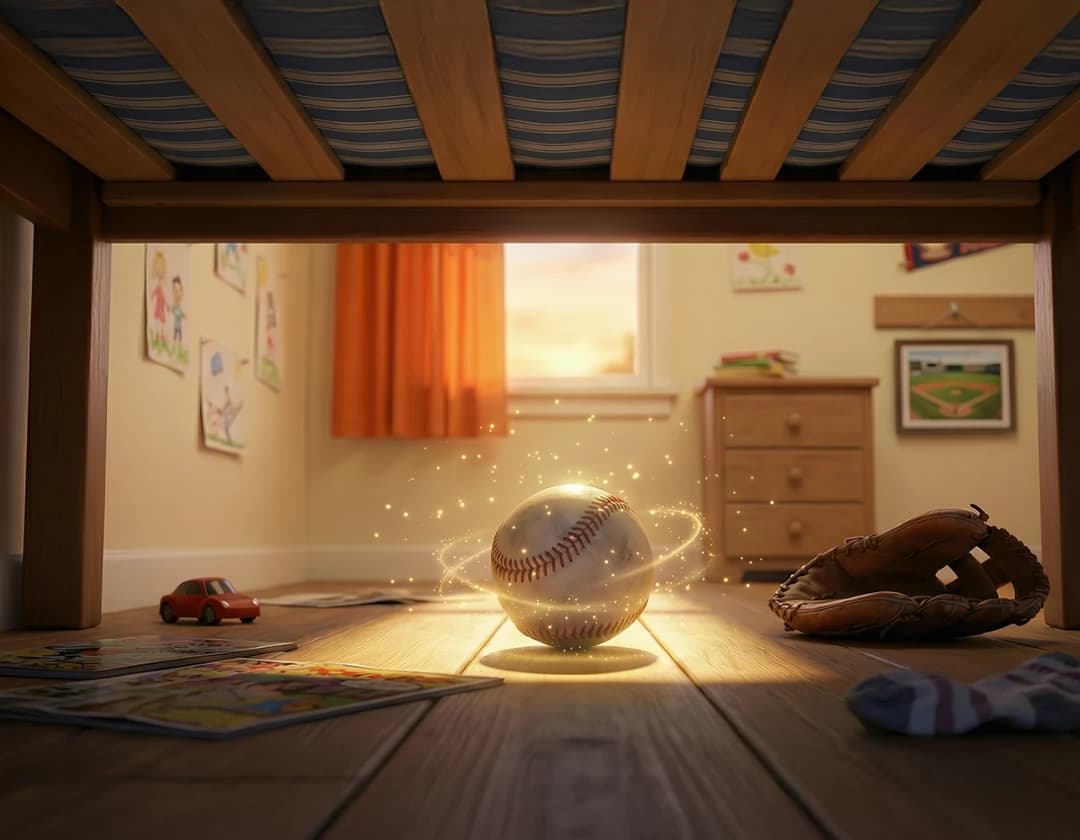
Under the bed A dusty baseball with bright blue and orange stitches.
-
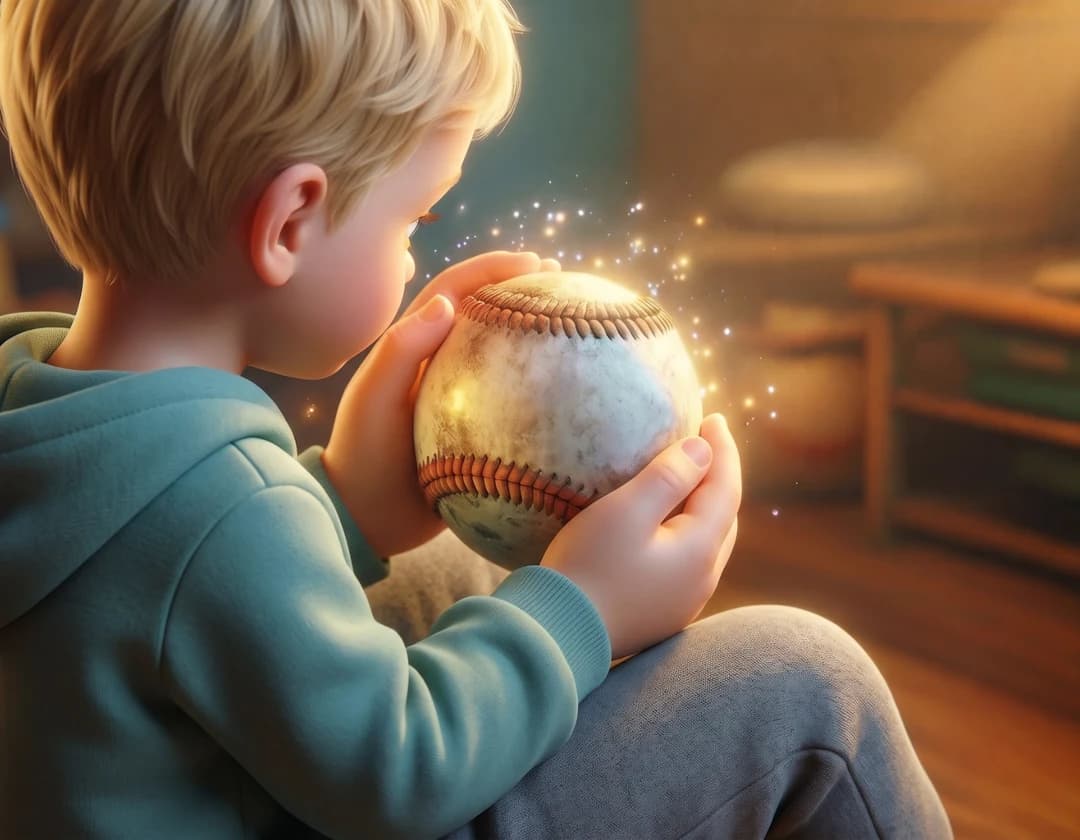
"I wish I knew how to be brave" The ball feels warm in your child's hands.
-
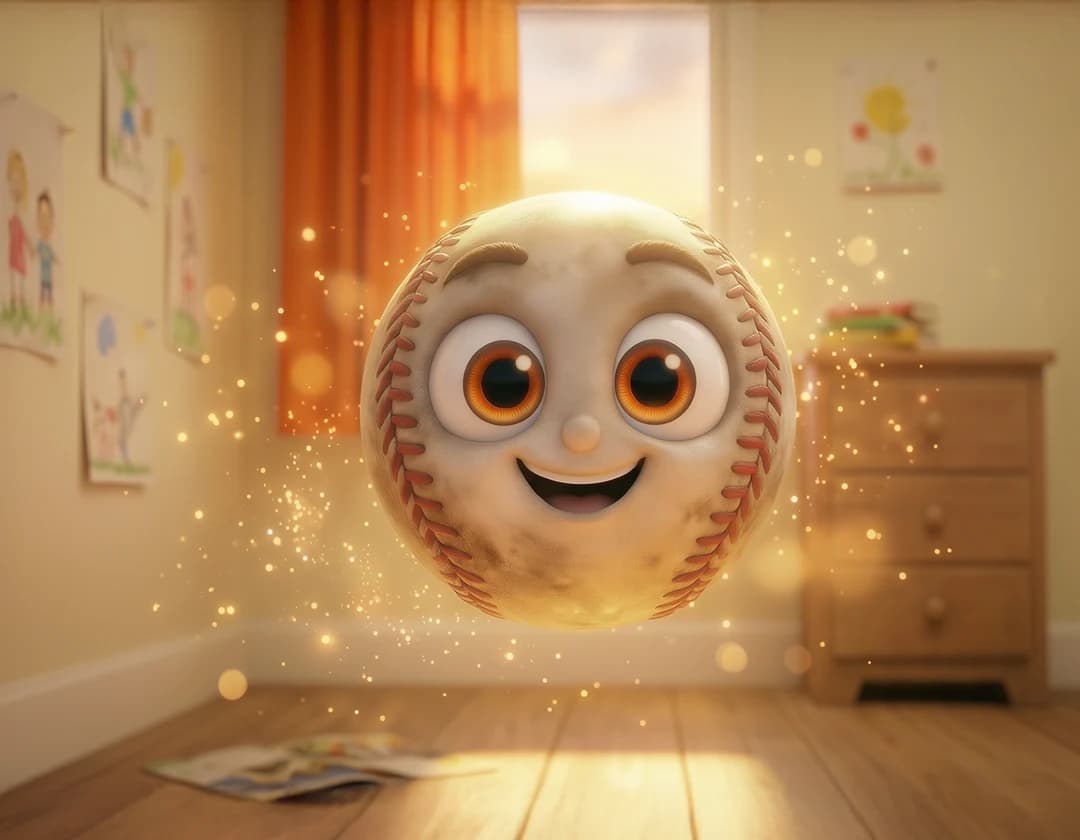
"Name's Homer" A former practice ball for the pros, here to help kids find their brave.
Sample pages show our example child. Your copy shows your child.
At the field the next morning, the brave things are small ones. Your child helps a boy who's fumbling with his cleats, warms up with a girl who needs "like a hundred throws" before she feels ready, and notices that when someone misses a catch, nobody cares. Homer glows warmer with each one. When it's their turn to bat, their hands tremble, and then: CRACK. Back in bed that night your child asks whether the magic was in Homer or in them. "The brave stuff? That's all you," says Homer. "I'm just the sparkle."
It's a good book for a child who loves baseball but worries about striking out, letting the team down or not being good enough yet, and it's written for ages 3 to 10. We wrote more about it in our guide to The Magic Baseball.
You Should Never Play Tennis With a T-Rex: a funny sports book for dinosaur fans
Some children need a sports book that's mostly about laughing. "Never play tennis with a T-Rex," your child learns. "His arms are too short, and after he misses, he'll roar and stomp away!" From there it's one ridiculous mismatch after another, each built on a real dinosaur trait.
Your child plays volleyball with a Stegosaurus, who loves to spike the ball ("they literally love to use their spikes. POP!"), races a Velociraptor and wisely asks it for a ride instead, and plays hide and seek with a Brachiosaurus who is nearly 40 feet tall. A Pterodactyl eats the birdie at badminton, a Gallimimus dunks at basketball, an Ankylosaurus sends the golf ball off the course with its tail, and a feathered Deinonychus leaves your child red-faced at soccer. The last page sums it up: "Maybe it's best the dinos lived way back in the ancient past. For if they roamed the Earth today we'd always come in last!"
-
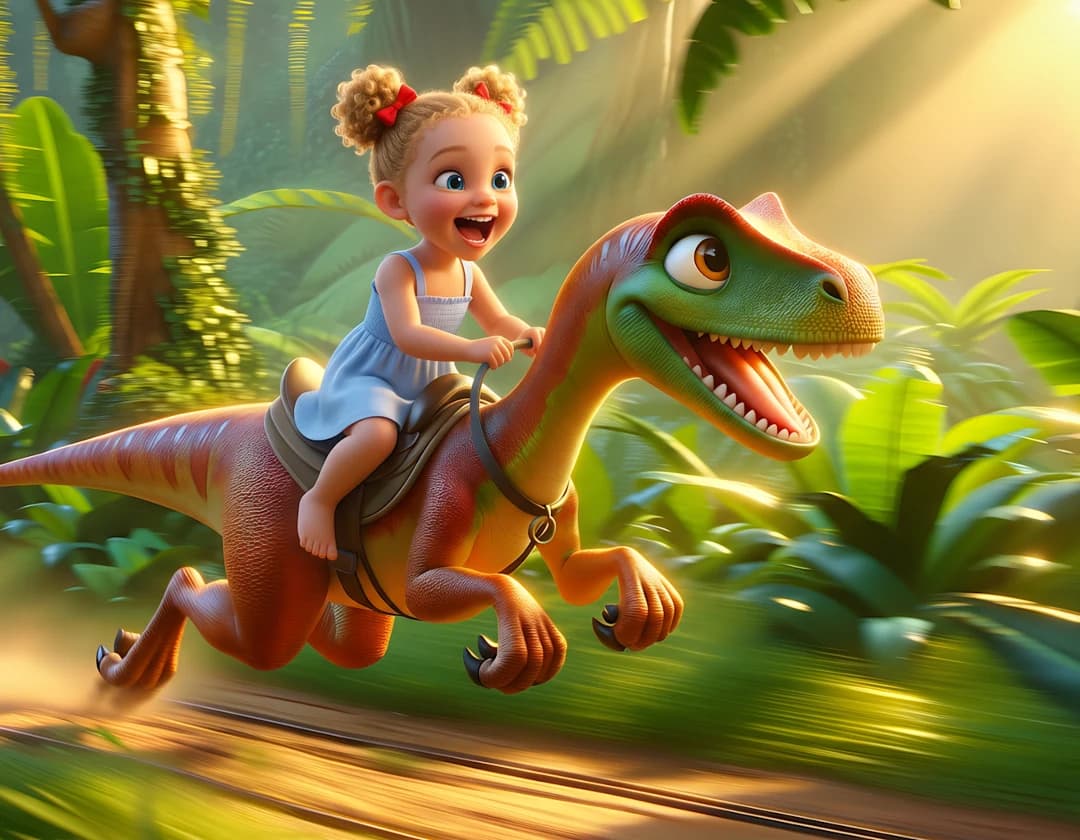
Never race a Velociraptor Ask one for a ride instead.
-
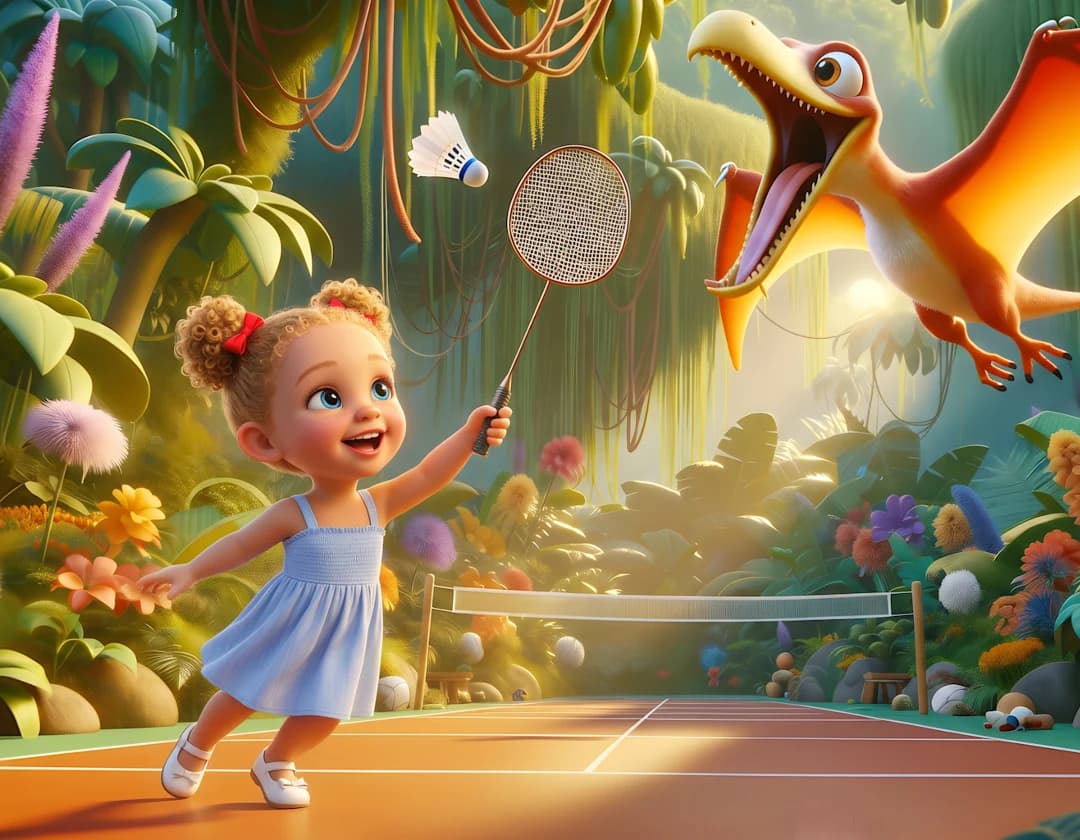
Never play badminton with a Pterodactyl They'll probably eat the birdie.
-
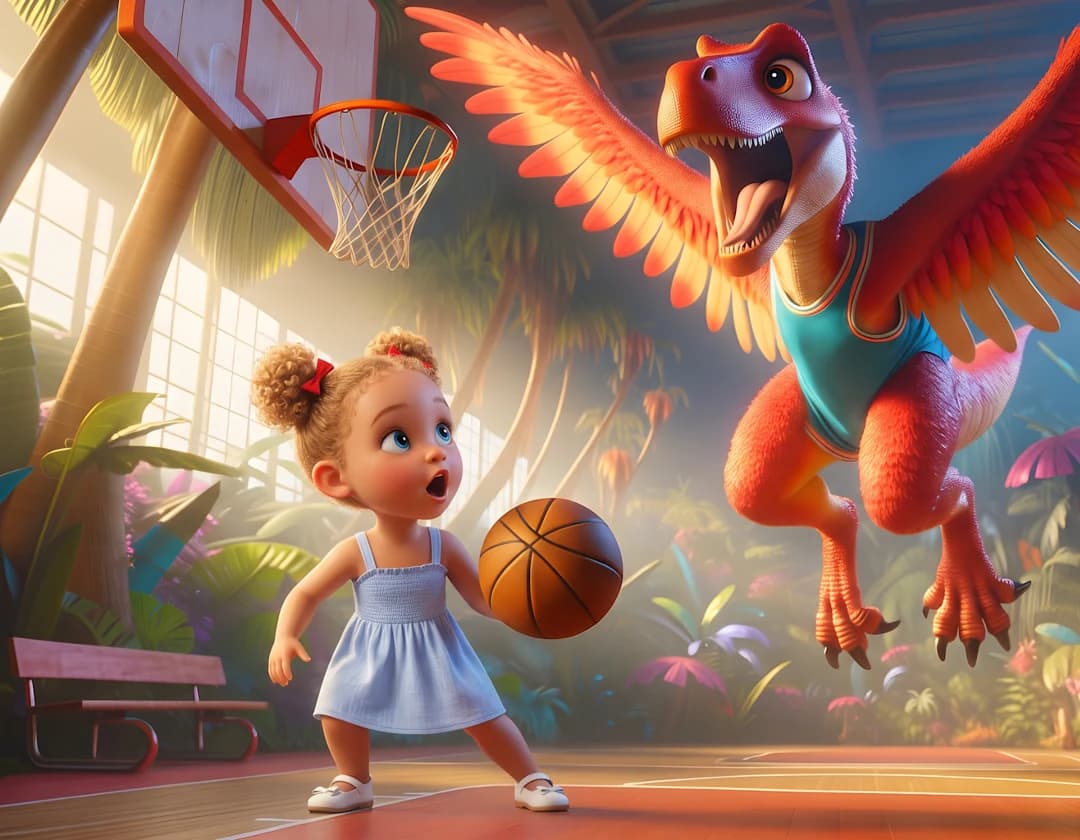
Never play basketball with a Gallimimus Your child even sees him dunk.
Why it suits a young athlete: losing to a dinosaur is the whole joke. A child who melts down after a loss can laugh at a book where losing is guaranteed, and the dinosaur facts arrive inside the jokes. It's a natural pick for the child who loves both movement and prehistoric creatures.
The Brickyard Dream: a racing book for kids who feel small
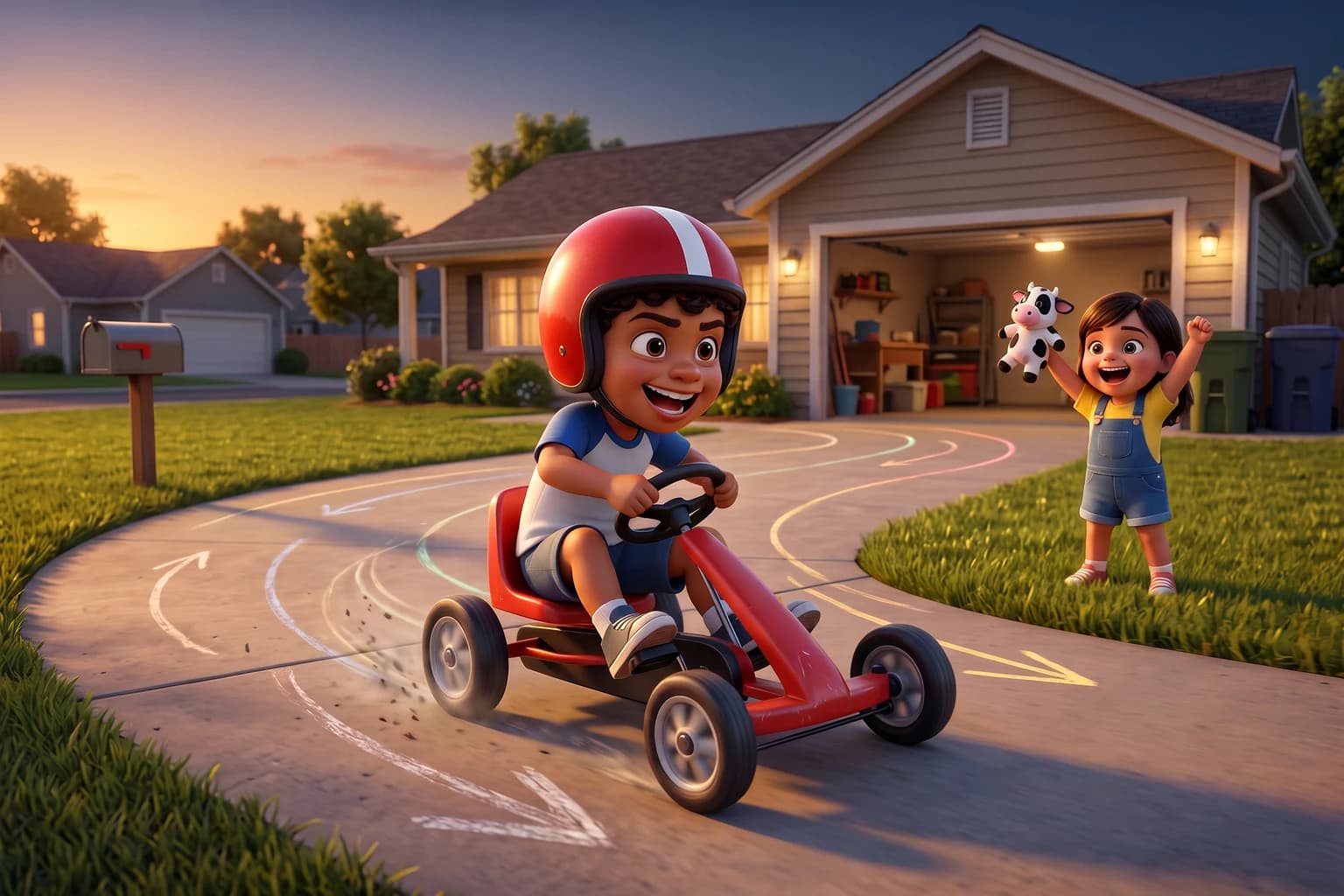
Before the sun is up, your child is in the driveway in a bright red toy car called the Bright Red Beast. "It doesn't need gas or gears. It runs on full-throttle imagination." Today, they've decided, is the day they win the big race. The neighbors call it cute. Jimmy from across the street is a doubter. "Forget it," he scoffs. Your child grips the wheel: "I'm small. So what?"
Every champion needs a team, so your child recruits one: Buttermilk the Cow as crew chief, Ralph the Penguin for tires and Lucky the dog for cheers. They practice cornering and pit stops on a chalk track (tires and fuel in 7.4 seconds), and when the neighborhood kids say starting 33rd is impossible, your child only speeds up. Then the dream comes true in the story: the Beast rolls through the gates of the Indianapolis Motor Speedway, starts at the back of the pack, fights through a flat tire, and crosses the famous Yard of Bricks in first place. Buttermilk brings a bottle of cold milk.
-
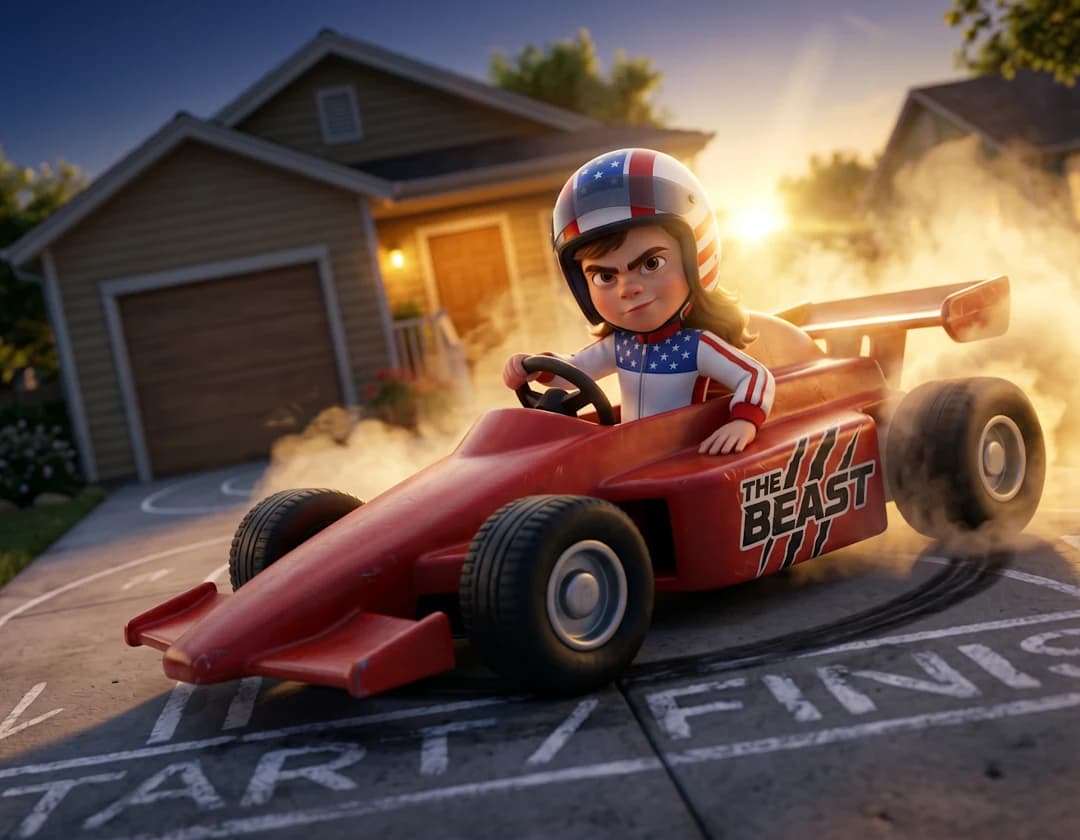
The Bright Red Beast Small, loud and very, very fast.
-
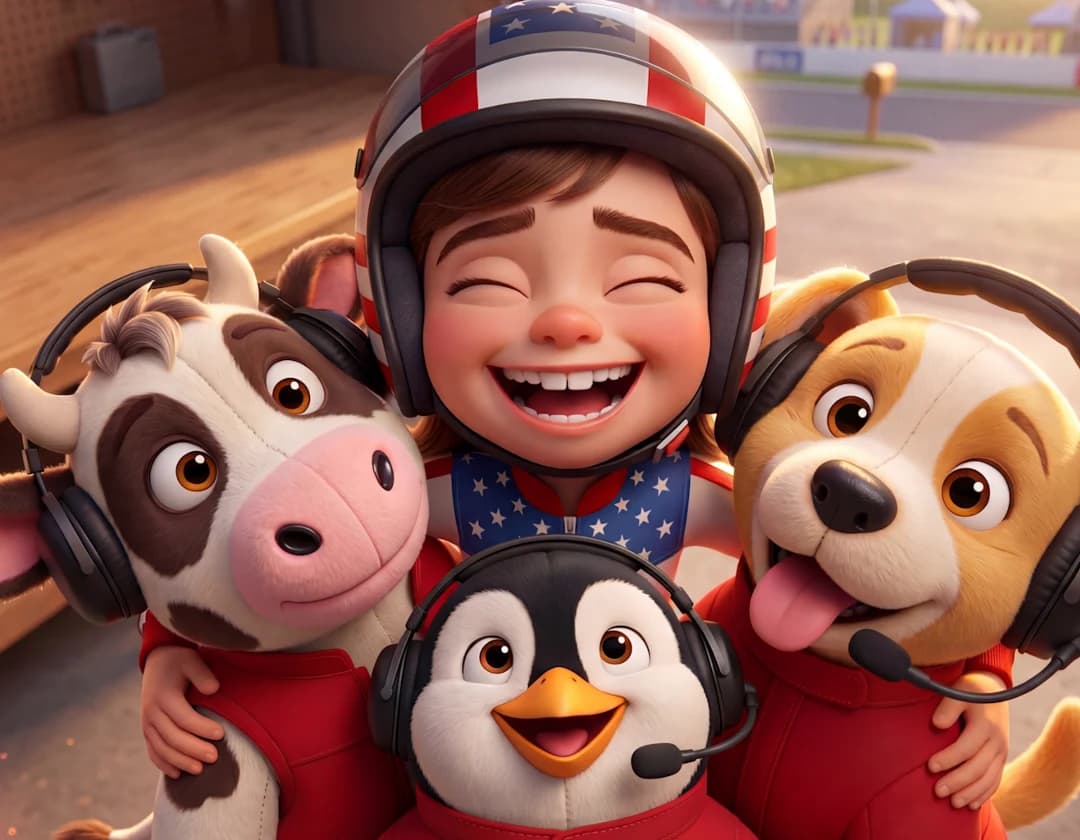
Every champion needs a team Buttermilk, Ralph and Lucky.
-
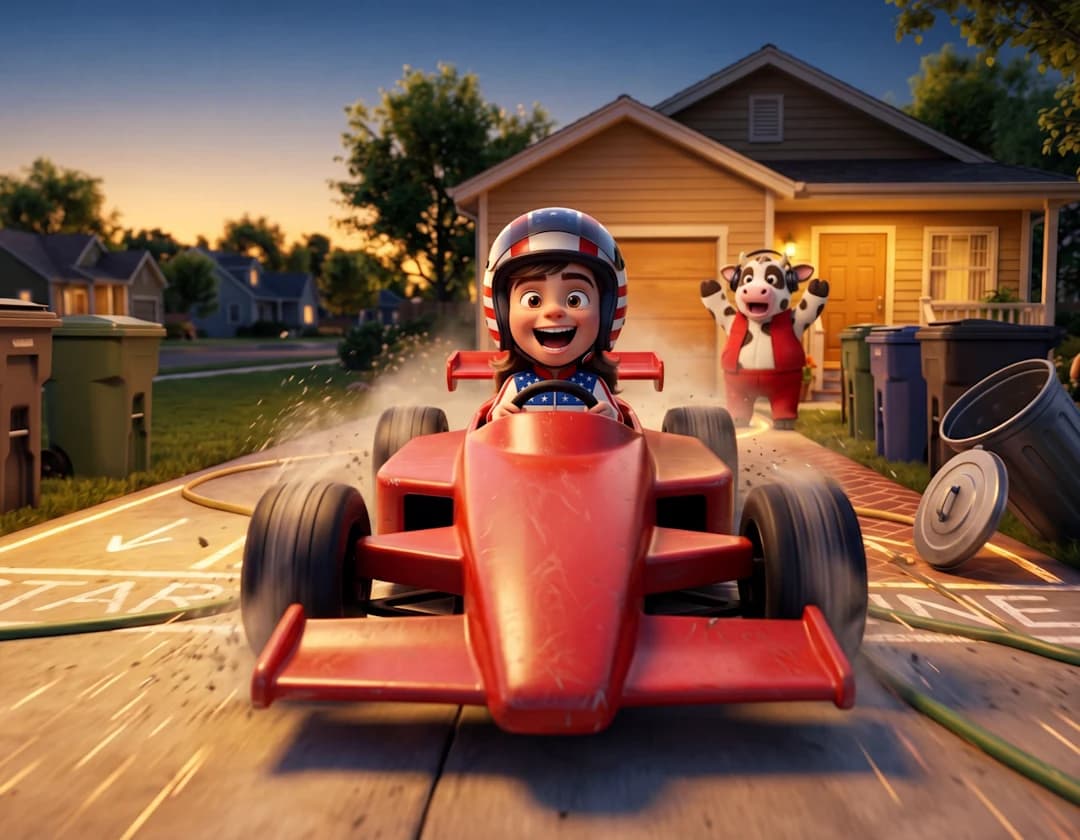
The driveway straightaway Chalk lines become the Yard of Bricks.
Its product page describes it as a story that "puts a young fan inside the atmosphere of The Greatest Spectacle in Racing." Choose it for the child who loves speed, or for any child who's been told they're too little to keep up. The next morning, the last page shows your child back in the driveway, drawing an even longer track: "We're just getting warmed up."
Which sports book fits your athlete?
If you're choosing for a team or a set of cousins, mix and match: each book is personalized separately, so every child gets their own copy with their own face and name.
What books help a nervous young athlete?
Look for a story whose hero feels exactly what your child feels, the queasy stomach, the trembling hands, and then plays anyway. That's the arc of The Magic Baseball. It starts on the night before a first game, so try reading it the night before your child's own first game, tryout or big match, and use it to talk about the nerves. Your child watches themselves go from "what if I mess up?" to the crack of the bat.
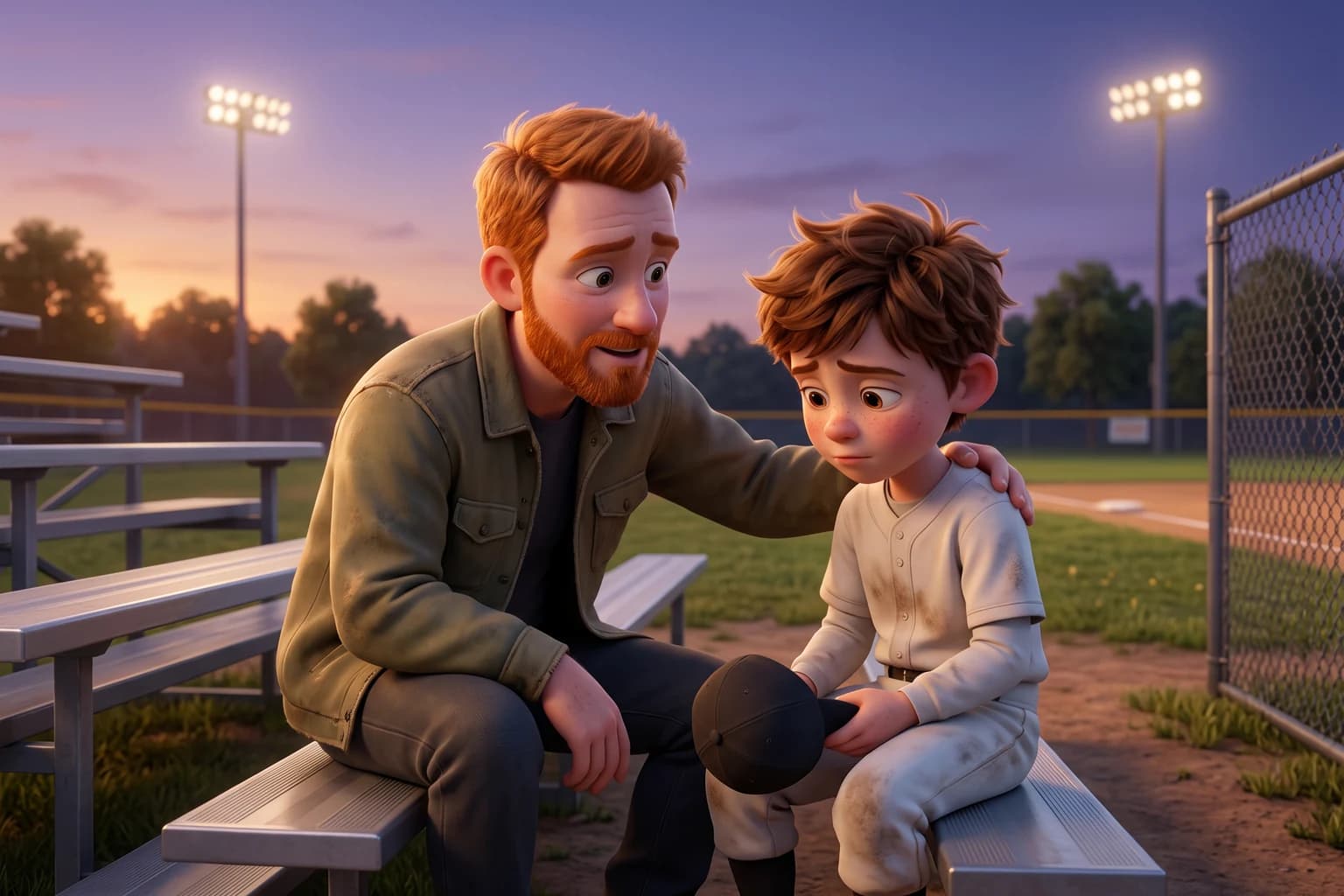
Guidance from the American Academy of Pediatrics points the same way. In its advice on parenting a young athlete, it says support "must be unconditional," and asks parents to "redefine success and make sure performance disappointments are not seen as failures that the child might take personally." Its article on mental skills for sports adds that children need to know "a bad game does not mean that they are a bad or worthless person," and suggests talking about how role models handle the hard parts. A story is an easy way to start that conversation, because the role model is your child.
What should I say after a strikeout or a loss?
Less than you think. A few things that help:
- Lead with love, not the score. "I love watching you play" works after a win or a loss.
- Name one thing they did well. A good throw, a hustle down the line, a kind word to a teammate.
- Save the coaching. The car ride home is rarely the moment for it.
- Normalize the miss. "Even the pros mess up," as Homer says. Every hitter strikes out.
- Ask about fun. "What was the best part?" tells your child the game is about more than results.
For more on helping children who are afraid to fail, read our guide to helping kids overcome fear of failure in sports.
Sports books with girl athletes
Every Magic Story book is personalized, so if your daughter plays, she's the athlete: the batter stepping up in The Magic Baseball, the player taking on a dozen dinosaurs in Tennis With a T-Rex, or the driver in The Brickyard Dream. You upload her photo, she appears on the illustrated pages, and her name is in the story. The sample cover of Tennis With a T-Rex shows our example girl, Maya, on the court.
Sports books for 8 to 10 year olds
Eight is not too old for a picture book, especially one with real facts or jokes that reward a close read. Older children tend to like Tennis With a T-Rex for its dinosaur details (a Brachiosaurus "nearly 40 feet tall") and The Brickyard Dream for its racing facts: a 2.5-mile track, the Yard of Bricks at the start-finish line, a pit stop in 7.4 seconds. The Magic Baseball is written for ages 3 to 10, and many 8 to 10 year olds enjoy reading it aloud to a younger brother or sister who's just starting tee ball.
When are kids ready for organized sports?
The American Academy of Pediatrics says that before age 6, most children do not have the basic motor skills for organized sports, and suggests active play that builds running, throwing and catching instead. By about 6, most children are ready for simple organized sports such as soccer, baseball and tennis, with flexible rules and a focus on learning new skills rather than winning.
That makes a story a nice bridge for a preschooler who wants to play like the big kids: they can be the batter or the tennis player on the page while they're still learning to catch.

A sports book as a gift
A personalized sports book makes a good gift for a season opener, an end-of-season party or a birthday, and it's an easy one for grandparents who never miss a game. Pair The Magic Baseball with a new glove, or Tennis With a T-Rex with a child-size racket.
Buying for a child who isn't yours? Ask their parent or guardian for permission to use a photo, and check how the family spells the name. Our Help article on buying a book as a gift walks through it, and our gift wrap guide explains when wrapping is offered at checkout.
How a personalized sports book works

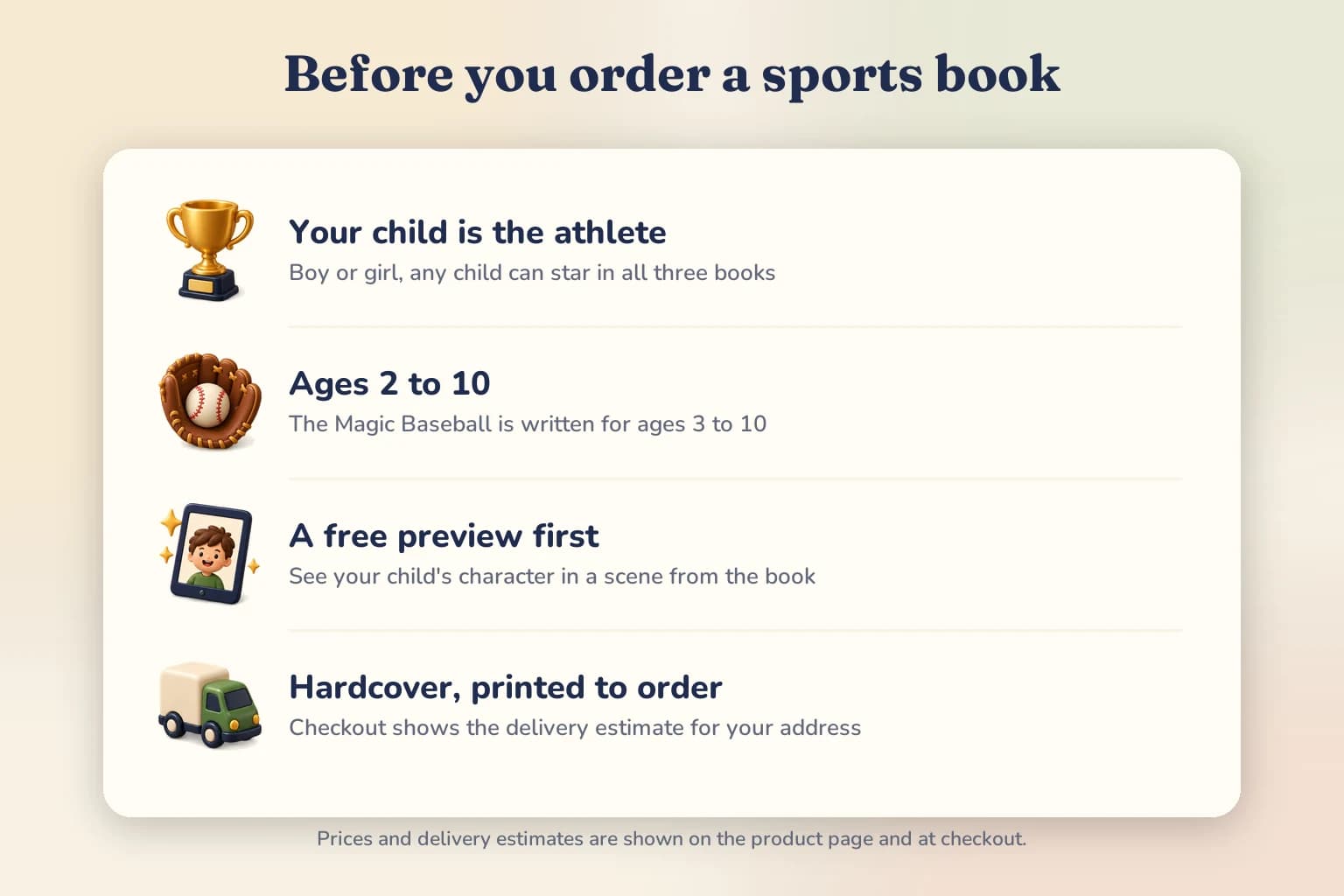
- Add a photo and your child's name. One clear photo is enough. Your child becomes the illustrated athlete, and the text uses their name.
- See a free preview. Creating your child's character and preview needs no account or credit card. The preview shows your child in a scene from the book, not every page, so look through the sample pages in this guide too. Read more about the free preview.
- Get the hardcover. Each book is printed to order after you buy. In the US, printing takes 3 to 5 business days, and Standard delivery arrives 5 to 10 business days after you order. Checkout shows the estimate for your address.
Find your child's sports book
- The Magic Baseball, for first-game nerves.
- You Should Never Play Tennis With a T-Rex, for laughing about losing.
- The Brickyard Dream, for the child who feels too small to compete.
- Read more about how being the hero shapes kids' confidence.
Questions parents ask
What are the best sports books for kids?
The best sports books put a young athlete inside the moment they care about, like the first game, the big swing or the last lap, and show that nerves, mistakes and practice are part of it. Magic Story makes three personalized sports books where your child is the athlete: The Magic Baseball, You Should Never Play Tennis With a T-Rex and The Brickyard Dream.
What is a good baseball book for kids?
The Magic Baseball is a personalized baseball story for children who love the game but worry about it. The night before their first game, your child finds a talking baseball named Homer, who glows brighter every time they do something brave. It is written for ages 3 to 10.
What books help a nervous young athlete?
Look for a story where the hero feels nervous, makes a mistake and keeps going, so your child sees that worry doesn't mean they can't play. In The Magic Baseball, Homer tells your child that even the pros mess up and that bravery means trying anyway. Read it the night before a first game or tryout.
Are there sports books with girl athletes?
Yes. Every Magic Story book is personalized, so your daughter is the athlete in any of them: the batter in The Magic Baseball, the player taking on dinosaurs in Tennis With a T-Rex, or the driver in The Brickyard Dream. You upload her photo, and she appears in the illustrations with her name in the story.
What are good sports books for 8 to 10 year olds?
At 8 to 10, children like books with real facts, a fast plot or jokes that reward a close read. You Should Never Play Tennis With a T-Rex mixes a dozen sports with real dinosaur traits, and The Brickyard Dream is full of racing details like a 2.5-mile track and a 7.4-second pit stop. Many children this age also enjoy reading a personalized book aloud to a younger sibling.
Is there a tennis book for kids?
Yes. You Should Never Play Tennis With a T-Rex starts on a tennis court, where a T-Rex's short arms keep missing the ball, then moves through volleyball, badminton, basketball, soccer, golf and more. It's a funny book about losing to dinosaurs, starring your child.
Is there a race car book for kids?
The Brickyard Dream is a personalized racing story set at the Indianapolis Motor Speedway. Your child practices in a bright red toy car on the driveway with a crew of stuffed animals, starts at the back of the pack and dreams big anyway. It suits children who love speed, or who feel too small to compete.
What should I say to my child after they strike out?
Keep it short and warm. Tell them you love watching them play, notice something they did well, and save any coaching for another day. The American Academy of Pediatrics advises that support be unconditional and that disappointments not be treated as failures a child takes personally. A line from The Magic Baseball works too: even the pros mess up.