How Nature Books Spark Curiosity and Build Young Scientists
How nature books and personalized children's books spark curiosity and build young scientists — and nurture your child's wonder about the natural world.

10 min read | February 8, 2026 · Updated August 16, 2026

Your child points at the sky and asks, "Where does the moon go during the day?" You pause. You know the answer — sort of — but how do you explain lunar phases to a four-year-old in a way that actually lands? How do you honor that beautiful, fleeting moment of curiosity without turning it into a lecture?
If you've been there — fumbling for words while your kid stares up at the clouds, the sunset, or a rainstorm with wide, wondering eyes — you already know something researchers have been documenting for years (and something we dig into further in the questions that start at bedtime): young children are natural scientists. They observe, they question, they hypothesize. And the way we respond to those questions shapes whether that curiosity grows into a lifelong love of learning or quietly fades away.
The good news is you don't need a science degree to nurture your child's sense of wonder about the natural world. You just need the right tools — and sometimes, the right story. Personalized children's books that feature your child as the protagonist are particularly effective at sparking and sustaining curiosity about science.
Why Are Children Hardwired to Wonder About Nature?
Children are hardwired to wonder about nature because question-asking is a core part of how young brains develop — and a disproportionate share of those questions are about the natural world: where the sun goes at night, why the wind blows, what happens to the rain after it falls. Between ages two and five, children ask an extraordinary number of questions; research published in the journal Frontiers in Psychology found that young children can ask more than 100 questions per hour.
This isn't random. Ask any preschool teacher and they'll tell you the same thing researchers observe: young children's scientific curiosity clusters around astronomical and weather phenomena — the sun, the moon, the stars, and the sky. These are the things they can see, feel, and wonder about every single day.
What's remarkable is that this curiosity isn't just endearing — it's developmentally critical. Developmental researchers widely describe curiosity-driven questioning as the foundation of scientific thinking. The National Research Council even identifies question-asking as the first of eight scientific and engineering practices that span all grade levels. When your child asks "where does the rain go?", they're not just making conversation. They're practicing the very skills that will serve them in school, in problem-solving, and in understanding the world around them.
But here's the part that should give every parent pause: this curiosity has an expiration date. Studies show that children's natural inclination to ask questions drops significantly by first grade and is nearly absent by fifth grade. The window in which your child is most open to wondering about the world is right now.

How Does Storytelling Help Kids Learn Science?
Storytelling helps kids learn science because narrative gives facts a structure young brains already know how to hold onto: a beginning, a challenge, a journey of discovery, and a resolution. You could explain the water cycle at the dinner table, or pull up a video about why the wind blows — but embedding the same information inside a story tends to hold a child's attention longer and make the facts easier to recall later.
Early-literacy researchers have found that when scientific information is embedded within a compelling story, children engage with it more deeply than when the same facts are presented as a list. Stories don't just convey facts — they transform passive listeners into active thinkers and curious explorers.
This is why the best children's science books don't read like textbooks. They read like adventures. And when a child sees themselves at the center of that adventure — when they're the one holding the telescope, chasing the wind, or catching raindrops — the learning becomes personal. It sticks.
Researchers who study science storytelling suggest a reason: presenting science through narrative helps children see the characters as real, relatable people rather than exceptional super-humans. That framing promotes inclusivity in science and can inspire children's pursuit of future learning. Now imagine what happens when the character in that story isn't a fictional scientist — it's your child, with their own face illustrated throughout the adventure.
A Collection That Turns Questions Into Adventures
This is exactly what Magic Story's Exploring Nature collection was designed to do. Four personalized science books for kids, each one built around the kind of question children actually ask — and each one turning your child into the hero of a scientific adventure.
| Book | The question it answers | Science concept |
|---|---|---|
| Where Does the Moon Go? | Why does the moon look different every night? | Lunar phases |
| Where Does the Sun Go? | What happens when the sun disappears at night? | Earth's rotation, day and night |
| Where Does the Wind Go? | Where does wind come from, and where does it go? | Air movement and weather |
| Where Does the Rain Go? | What happens to rain after it falls? | The water cycle |
Where Does the Moon Go? follows your child as they wonder why the moon looks different every night. With a telescope in the backyard and a wise moth as their guide, they discover the beauty of lunar phases — not through memorization, but through wonder. They travel through the night sky, watch the moon wax and wane, and come away understanding something about the universe that many adults struggle to explain.
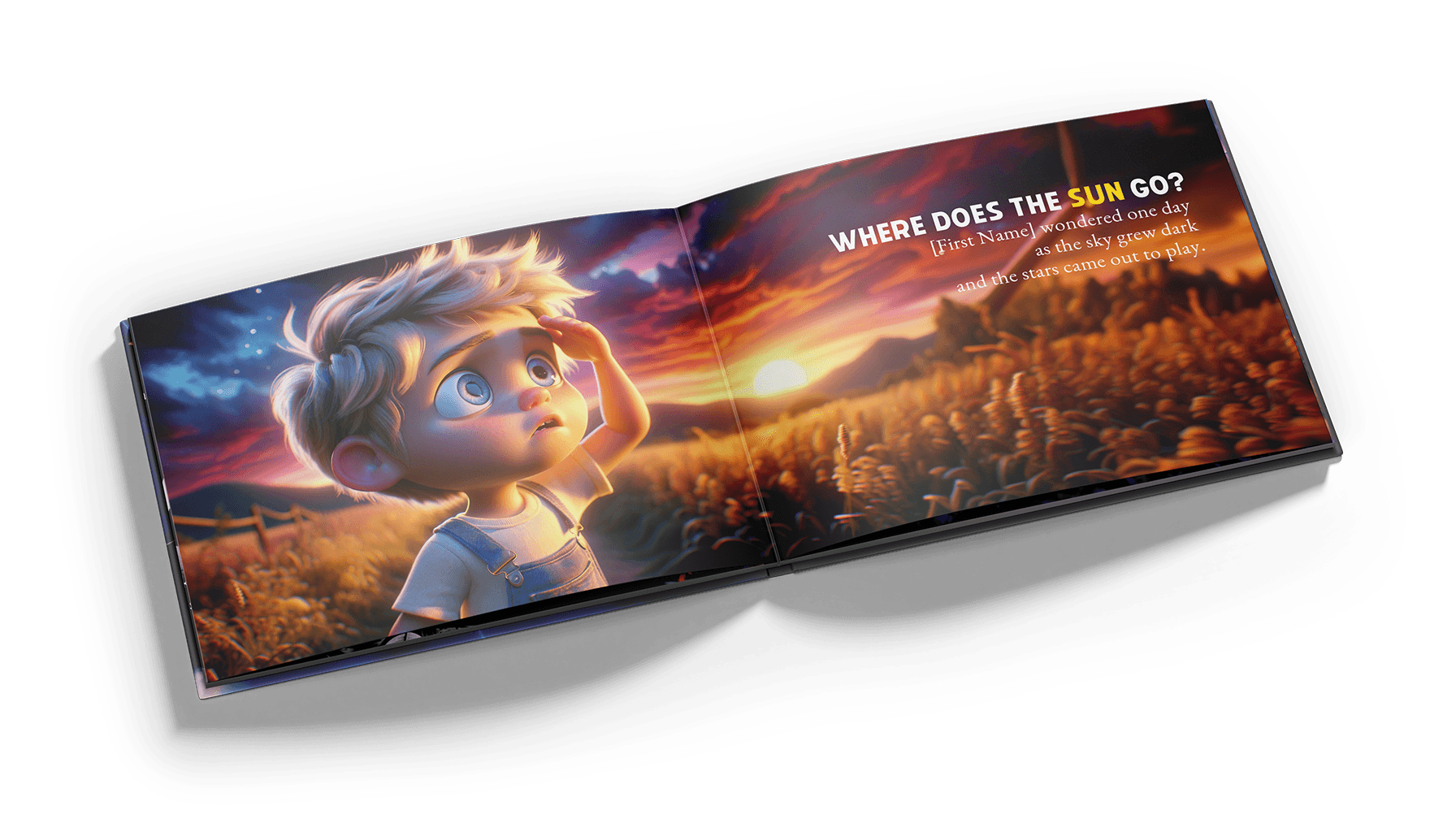
Where Does the Sun Go? takes on one of childhood's most universal questions: what happens when the sun disappears at night? Your child learns about Earth's rotation and the journey of sunlight across the sky — but through a story so vivid and personal that the science feels like magic.
Where Does the Wind Go? invites your child to explore weather patterns and air movement. Wind is invisible, mysterious, and a little bit wild — the perfect subject for an adventure. Through playful encounters with wind characters, your child begins to understand a force of nature they can feel but can't see.
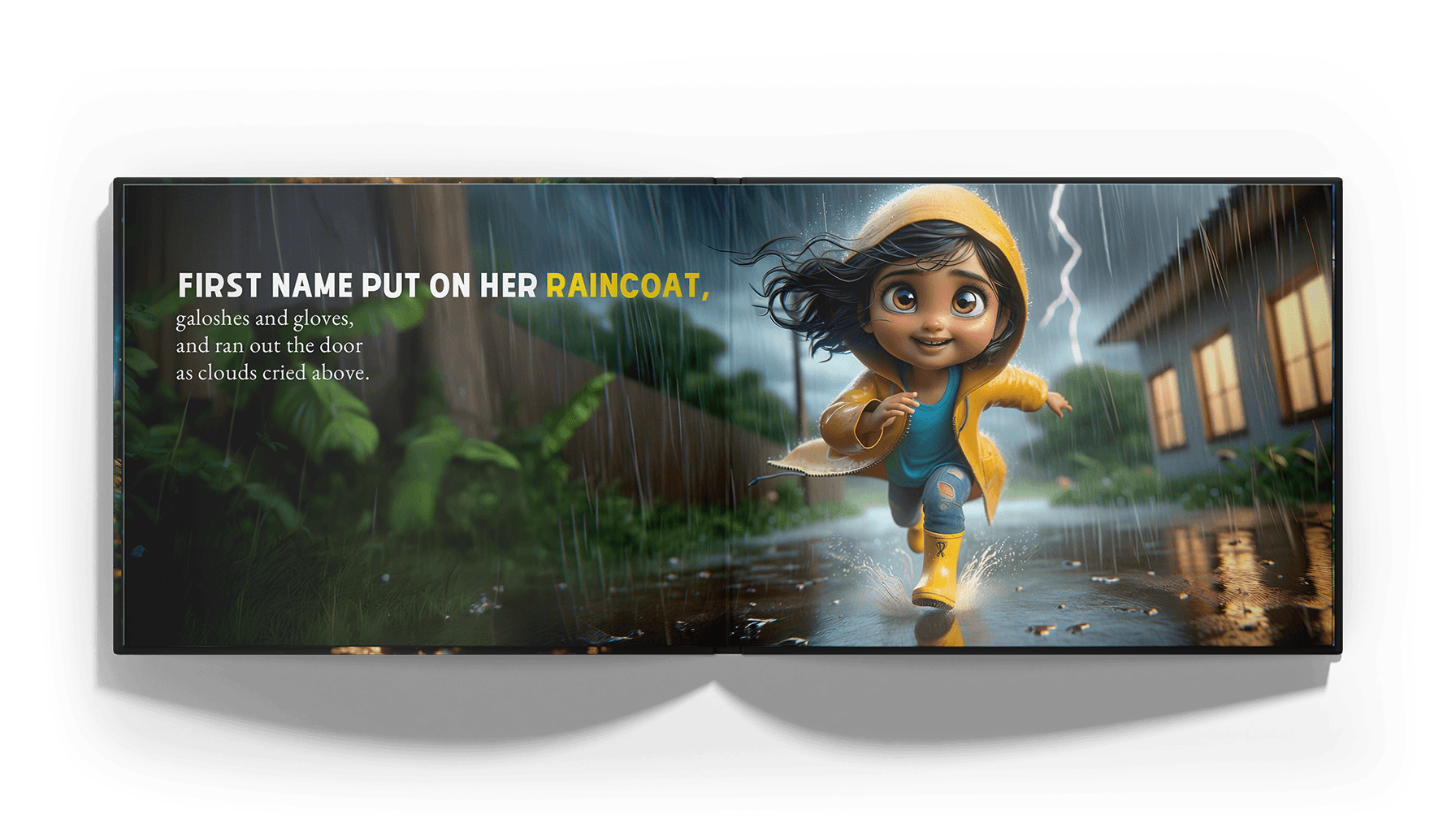
And Where Does the Rain Go? walks your child through the water cycle — evaporation, condensation, precipitation — not as vocabulary words on a worksheet, but as stops on an incredible journey they get to take themselves. It turns one of science's most elegant systems into a story your child will want to read again and again.
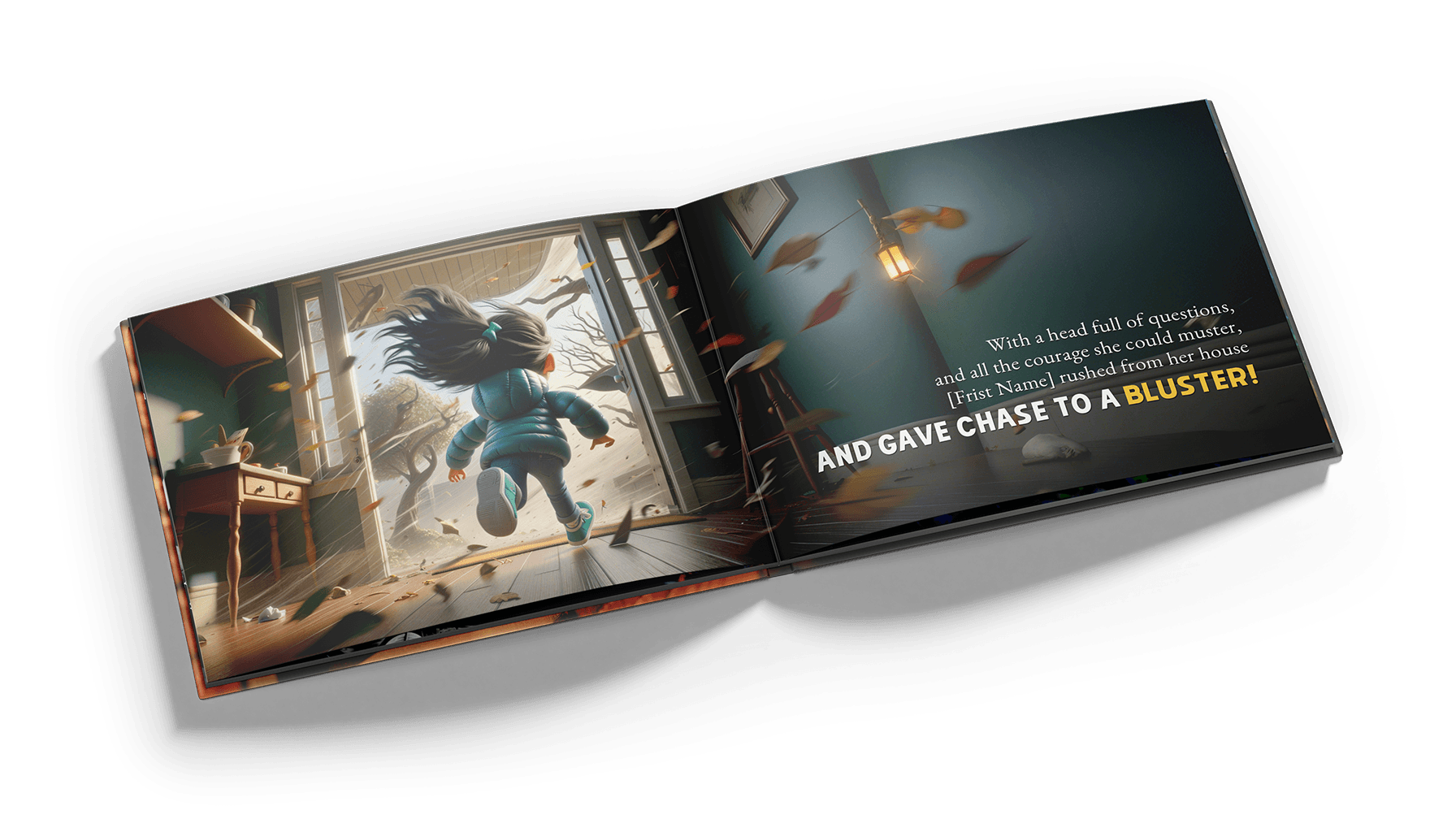
What makes these books different from a typical nature book for kids is the personalization. Every page features your child's face and name rendered in Pixar-quality illustrations. They're not reading about some other kid's adventure. They're living their own. And that distinction matters — when children see themselves as the protagonist of a scientific story, they internalize something powerful: I am someone who explores. I am someone who asks questions. I am someone who understands the world.
Why Does Nature Education Matter More Than Ever?
Nature education matters more than ever because the alternative — heavier screen time in early childhood — carries measurable costs. Research summarized by the Children & Nature Network links more than an hour a day of screen time in toddlerhood with weaker communication and daily-living skills a few years later, and broader reviews of the nature-and-health literature connect time spent outdoors with psychological stability, academic agility, and more prosocial behavior among students.
The National Wildlife Federation recommends that children get at least one hour per day of nature play and learning through its Green Hour program. But for many families, daily outdoor exploration isn't always possible. Weather, schedules, and urban living all create barriers.
This is where nature-themed stories become a bridge. A book about where the rain goes doesn't replace splashing in puddles — but it can be the spark that makes your child want to go outside and look for puddles in the first place. It creates a vocabulary for what they're seeing. It gives them a story to connect to the experience.
How Do You Nurture Your Child's Nature Curiosity?
You nurture your child's nature curiosity by following their questions instead of a script, choosing stories that frame science as an adventure, and connecting what they read to something they can go touch, watch, or collect outside. Here's what that looks like in practice:
Follow their questions, not a curriculum. When your child asks why the sky is blue or where puddles go, resist the urge to give a textbook answer. Instead, explore together. "I wonder that too — what do you think happens?" is one of the most powerful things a parent can say.
Read stories that invite wonder. Children remember facts better when they encounter them inside a narrative. Choose books that frame science as an adventure rather than a lesson — books where your child is the one doing the discovering. Try it tonight: before you turn each page, ask "What do you think happens next?" so your child predicts before the story reveals the answer.
Go outside and connect the dots. After reading about where the moon goes, step outside that evening and look for it together, then ask, "Does it look the same as it did last night?" After a story about rain, set a bowl outside during the next storm and talk about where the water might go once it drains away. The magic is in the connection between the story and the real world — see our roundup of outdoor adventure books for children for more ways to bring stories outside.
Don't worry about getting it perfect. You don't need to know every detail about lunar phases or the water cycle. What matters is that you're curious alongside your child. Say "let's find out together" instead of guessing at an answer — a parent's willingness to wonder alongside a child tends to matter more than supplying the correct answer on the spot.
Raising a Child Who Sees the World With Wonder
The questions won't last forever. The window in which your child looks at the sky and genuinely wants to know where the moon goes — that's a gift with a timeline. But what you build during that window can last a lifetime: a sense of curiosity, a comfort with not knowing, a belief that the world is endlessly interesting and that they're capable of understanding it.
Every rainstorm, every sunset, every gust of wind is an invitation. And sometimes, the best way to accept that invitation is to curl up together with a personalized children's book where your child is the one who follows the moon, chases the sun, rides the wind, and discovers where the rain goes.
Frequently Asked Questions
What are the best nature books for curious kids ages 2-6?
The best nature books for young children combine accurate science with engaging storytelling and beautiful illustrations. Look for books that answer a specific why or how question — like where the moon goes during the day or what makes the wind blow — rather than generic nature encyclopedias. Personalized books that place your child into the story, like Magic Story's Exploring Nature collection, are especially effective because children engage more deeply when they see themselves as the explorer.
At what age should I start teaching my child about science?
Children are natural scientists from birth — they observe, test, and draw conclusions about the world constantly. Formal teaching isn't necessary for toddlers and preschoolers; what matters is nurturing and responding to their natural curiosity. Reading nature-themed books together, going on observation walks, and answering their why questions thoughtfully all build a science foundation starting as early as age 2.
Do personalized science books help kids learn more than regular science books?
Research on personalized storybooks shows that children acquire vocabulary faster and engage more deeply when they see themselves as the protagonist. The self-reference effect — a well-documented phenomenon in cognitive psychology — means children encode information better when it relates to themselves. A personalized science book where your child is the explorer gives the science a personal anchor generic books can't replicate.
How do I encourage my child's curiosity about nature without screens?
Start with real-world experiences: nature walks, backyard observations, cloud-watching, and hands-on experiments like growing seeds. Pair these with high-quality picture books that extend what they've observed. Personalized books work especially well because the child sees themselves as the scientist or explorer, reinforcing the identity of someone who is curious about nature rather than a passive consumer of information.
Why does my child keep asking why about everything in nature?
The constant why phase — which typically peaks between ages 3 and 5 — is one of the most important stages in cognitive development. Research shows children's natural curiosity begins to fade by first grade, making this window critical. Every why is your child practicing the scientific method. Rather than giving quick answers, try turning their questions back to them: Why do you think the moon changes shape? This builds reasoning skills alongside knowledge.


