The Questions That Start at Bedtime: Introducing The Exploring Nature Collection
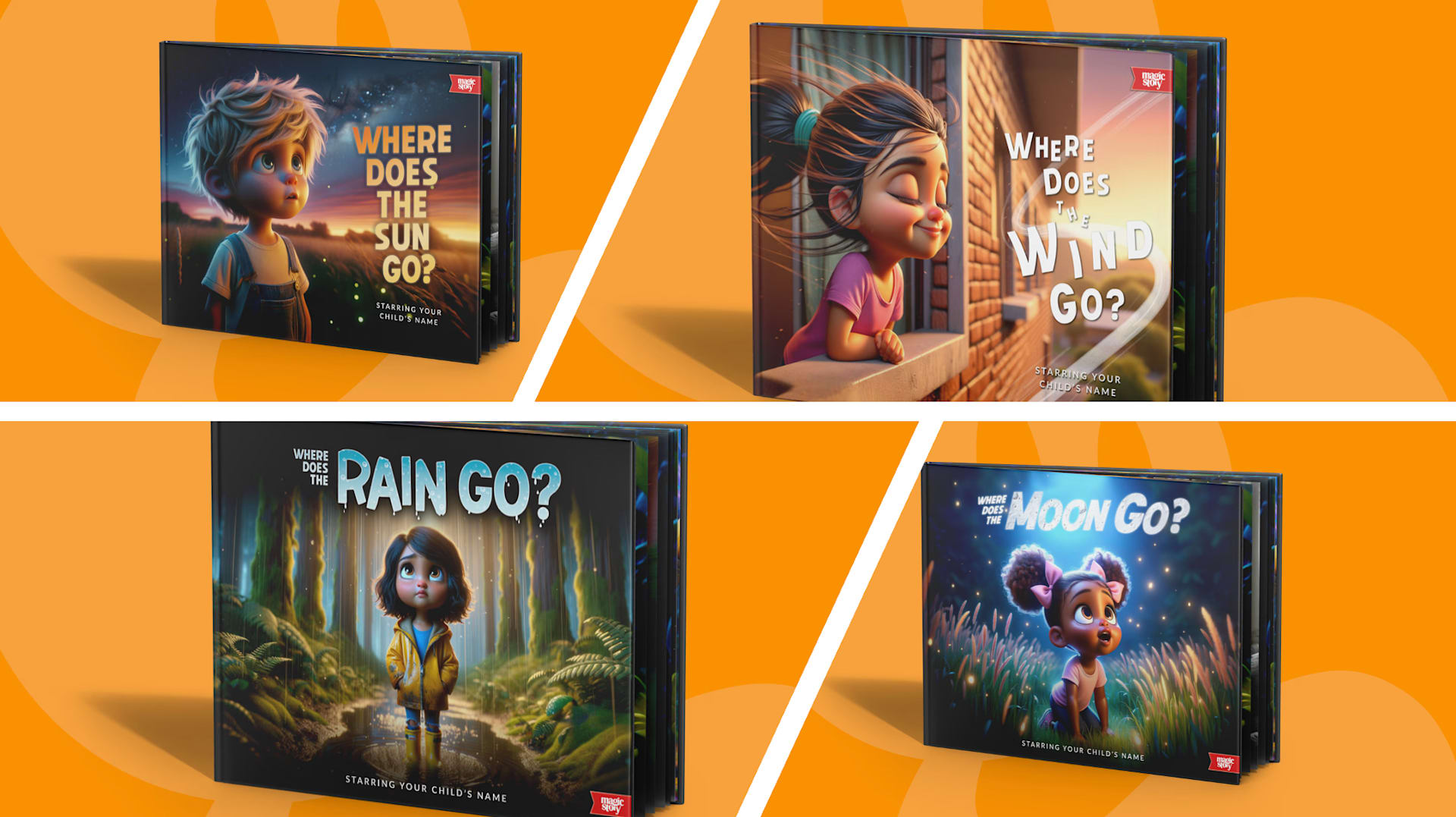
Discover The Exploring Nature Collection - four personalized children's books about the moon, sun, wind, and rain that turn bedtime questions into science

9 min read | February 17, 2026 · Updated August 16, 2026
Every parent knows it. That quiet window between the last page of a book and the closing of eyes — when little minds, instead of drifting off, suddenly burst open.
"Where does the moon go during the day?"
"Why does the sun disappear at night?"
"Where does the wind come from?"
"Where does the rain go when it hits the ground?"
These aren't silly questions. They're the first stirrings of a scientific mind, a philosophical heart — a child reaching out to make sense of the enormous, beautiful world around them. And the way you respond to those questions matters more than you might think.
The trouble is, most children's books about nature either skip past these questions with hand-wavy answers, or bury them in facts too dry for a five-year-old to hold onto. What if there were personalized nature books for kids that turned each question into a story — with your child as the explorer at the center?
That's exactly what The Exploring Nature Collection from Magic Story does.
Why Does Children's Nature Curiosity Matter More Than You Think?
Children's nature curiosity matters because the questions they ask between ages two and five are the first stirrings of a scientific mind — and how a parent responds, especially in that sleepy bedtime window, shapes whether that curiosity deepens or quietly closes. A story that invites discovery keeps it open; a dismissive answer can shut it down.
Between the ages of two and five, children ask a striking number of questions — researchers estimate the total reaches into the tens of thousands. Many of the biggest ones are about nature — why the sky changes color, where water goes, what makes the wind blow. Developmental psychologists call this the "questioning explosion," and it's one of the most important phases of cognitive growth a child will ever experience.
A dismissive "that's just how it works" can quietly close a door. But a story that invites a child to discover the answer themselves? That opens a world — and it turns a stalling tactic ("one more question, then lights out") into a bonding ritual you'll actually look forward to.
Research on young children's science learning from narrative books suggests that when factual content is embedded in a story rather than delivered as direct instruction, children stay more engaged and retain more of what they learned. That's not a reason to turn bedtime into a lesson — it's a reason to trust that a good story answering "where does the moon go?" is doing real developmental work, not just buying you five more minutes before lights-out.
That's the foundation The Exploring Nature Collection is built on. Each book takes one of those big bedtime questions and transforms it into a personalized adventure where your child is the one brave enough to find the answer.
What's Inside The Exploring Nature Collection?
The collection includes four personalized nature books, each exploring a different force of the natural world. Together, they form a complete journey through nature's great cycles — moon, sun, wind, and rain — designed to be read individually or as a connected series.
| Book | Question It Answers | Age Fit |
|---|---|---|
| Where Does the Moon Go? | Why does the moon change shape and seem to disappear during the day? | Ages 3–8, night-sky-curious kids |
| Where Does the Sun Go? | Where does the sun go when it sets, and why does it come back? | Ages 3–8, early risers and sky watchers |
| Where Does the Wind Go? | What makes the wind blow, and where does it come from? | Ages 3–8, kids fascinated by unseen forces |
| Where Does the Rain Go? | Where does rain go after it hits the ground? | Ages 3–8, budding water-cycle scientists |
Where Does the Moon Go?
Your child gazes up at the night sky and notices something strange — the moon looks different tonight. Armed with a telescope and guided by a wise moth, they set off on a nighttime adventure to uncover the mystery of the moon's phases. Along the way, they learn why the moon changes shape, where it hides during the day, and how it lights up the darkness.
This book is perfect for children fascinated by the night sky, and it turns a common bedtime question into a sense of wonder that lasts well beyond lights-out. Read more in Where Does the Moon Go? The Personalized Nature Book That Turns Bedtime Questions Into Adventures.

Where Does the Sun Go?
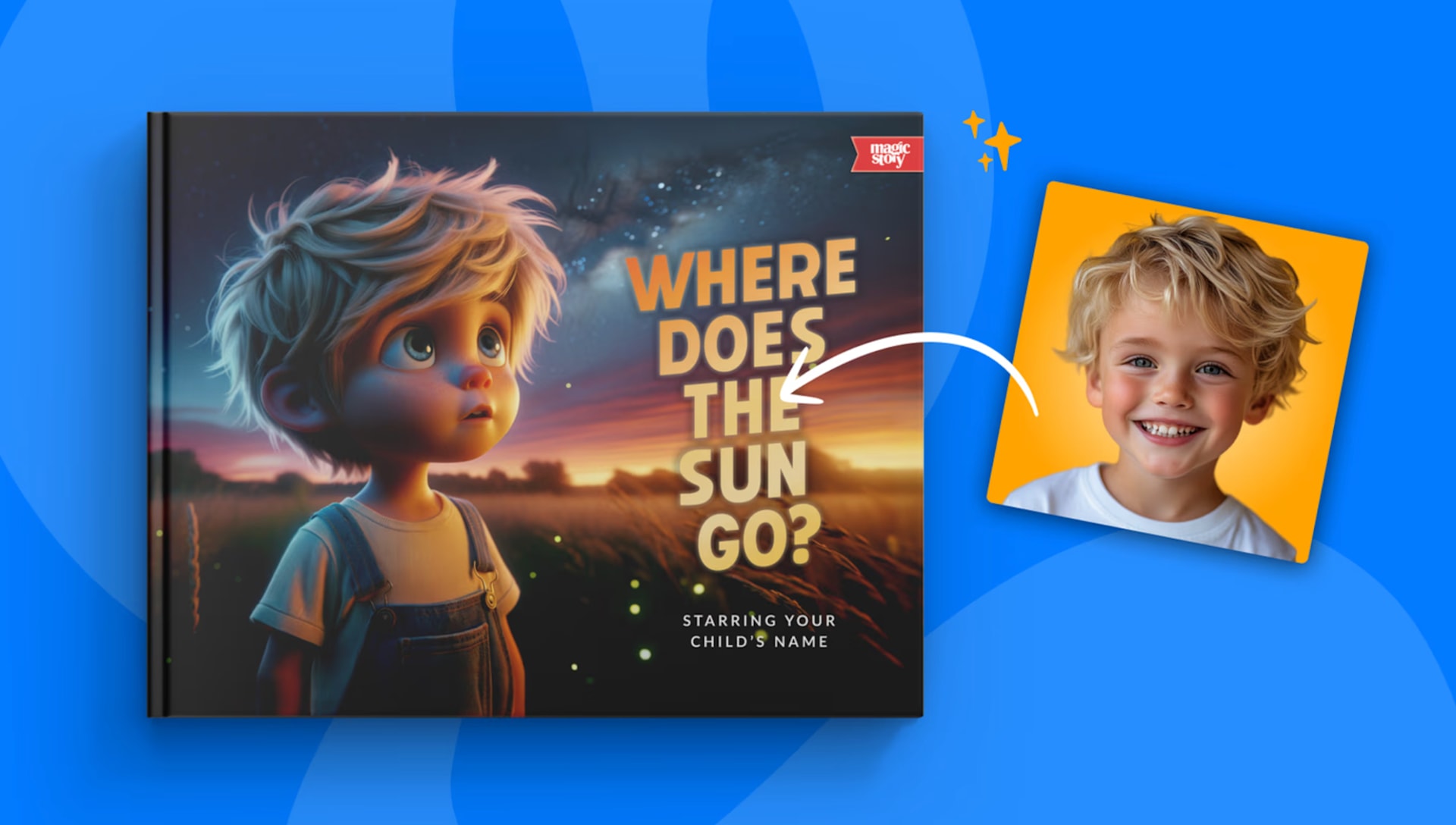
When the sun dips below the horizon, where does it actually go? Your child soars through painted clouds at dawn, chases the golden light across the sky, and uncovers the hidden rhythm behind every sunrise and sunset. This book teaches the basics of Earth's rotation and day-and-night cycles through a story that feels like flying.
It's a beautiful complement to the moon book — together, they help children understand the relationship between day and night as two halves of the same story. See Where Does the Sun Go? A Personalized Adventure That Makes Science Feel Like Magic for more.
Where Does the Wind Go?
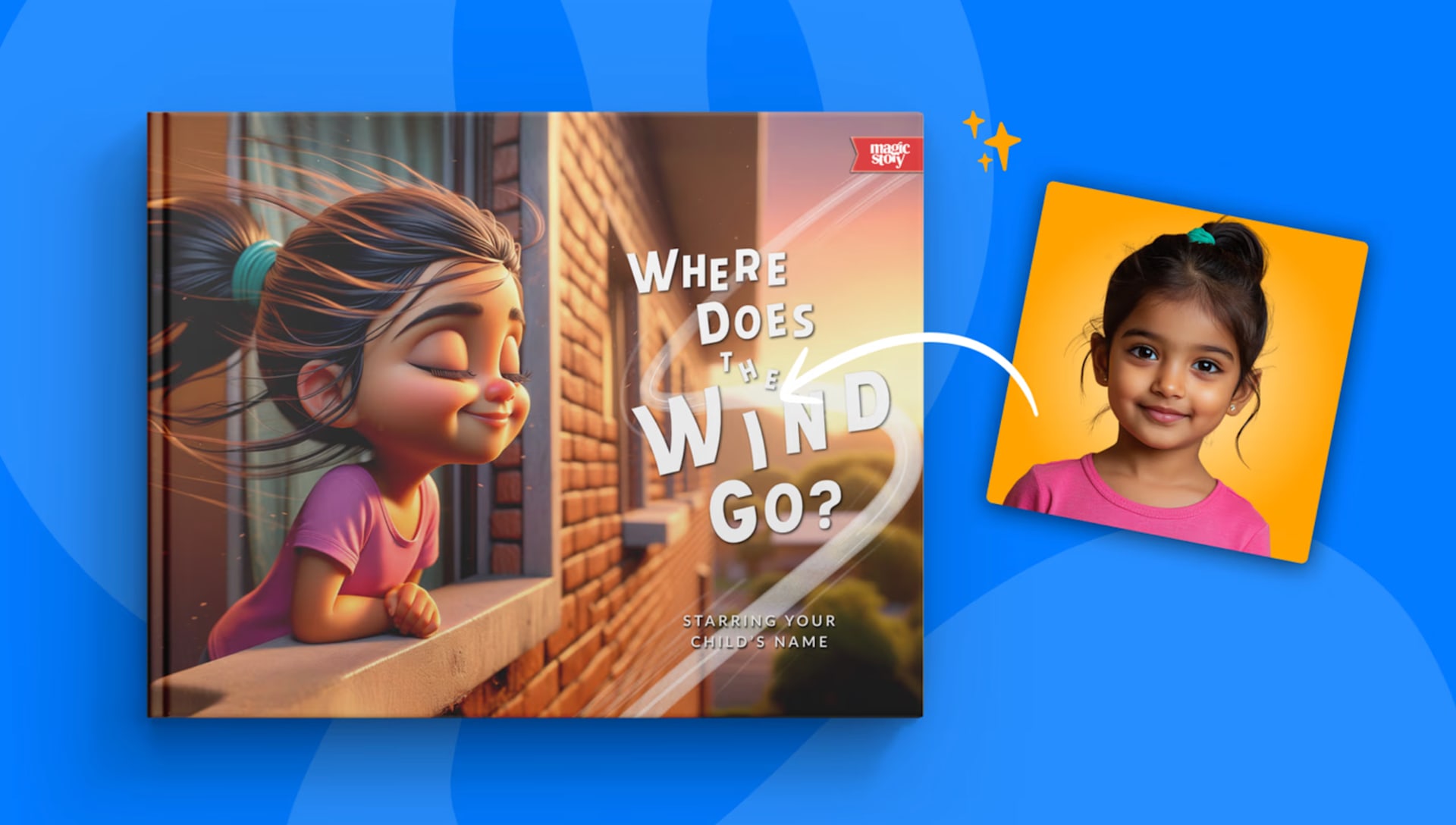
Wind is invisible. You can't hold it, see it, or catch it — but you can feel it. Your child sets off to chase something they can't see, and in doing so discovers that the strongest forces in nature aren't always visible. This book introduces weather concepts in an age-appropriate way while carrying a deeper message about unseen things that matter, as explored further in Where Does the Wind Go? A Personalized Story About Nature's Most Mysterious Force.
Where Does the Rain Go?
A single raindrop falls — and your child follows it on an epic journey. Down through the soil, into underground rivers, out to the ocean, and back up into the clouds again. This book brings the water cycle to life in a way that textbooks never could, helping children understand that nothing in nature truly disappears — it just transforms, as explored further in Where Does the Rain Go? The Personalized Book That Turns Rainy Days Into Adventures.

Why Do Personalized Nature Books Work Better Than Traditional Ones?
There's a growing body of research showing that personalization transforms how children engage with stories. When a child sees their own name on the page and a character that looks like them in the illustrations, something fundamental shifts. This isn't a story about some faraway character having an adventure. This is their adventure.
Studies on shared reading consistently point the same direction: children show more smiles, more laughter, and more spontaneous talk when reading personalized versions of a story compared to generic ones, and personalized versions tend to teach new vocabulary more effectively than the same story without personalization. For a bedtime question about the moon or the rain, that extra engagement is often the difference between a distracted skim and a story a child actually wants read again tomorrow night.
Magic Story's personalized children's books go beyond adding a name. Your child's name and recognizable appearance are woven throughout the illustrations, so they become the explorer asking the story's big questions.
Why Does Reading Order Matter in The Exploring Nature Collection?
Each book in The Exploring Nature Collection is designed to stand alone — but read together, they form something greater. Moon, sun, wind, rain: the collection moves through nature's great cycles in a sequence that feels intentional, connected, and complete, building a child's understanding piece by piece.
Reading them in order is like watching a child's understanding of the world click into place, piece by piece. The moon teaches them about cycles and change. The sun shows them rhythm and rotation. The wind introduces invisible forces. And the rain ties it all together — showing how water connects the sky, the earth, and everything in between.
For parents looking for a meaningful gift, the complete collection comes at a special bundle price that makes the full journey more accessible than buying each book individually.
Why Is Curiosity a Superpower?
Curiosity is a superpower because children who encounter science inside a story retain information longer, ask better follow-up questions, and develop more lasting interest in how the world works than kids who get the same facts as direct instruction. It's not just about what they learn — it's about how learning feels.
When your child sees themselves as the explorer in these pages — their name woven into the text, their likeness reflected in the illustrations — the learning becomes personal. They're not memorizing facts about the water cycle. They're following a raindrop. They're not reading about the moon's phases. They're discovering them with a telescope in their own backyard.
That's the difference between information and wonder. And wonder is what keeps children asking questions long after the book is closed.
The next time your child looks up at a cloudy sky and asks why — you'll be ready. Not with a quick explanation, but with a story that makes the answer feel like an adventure they discovered themselves.
Frequently Asked Questions
What age range is The Exploring Nature Collection best for?
The collection is designed for children ages 3 to 8. Younger children will love the vivid illustrations and being read to, while older children can read independently and engage more deeply with the science concepts woven into each story.
How are the books personalized?
Each book features your child's name throughout the story and photo-quality personalized illustrations that reflect your child's appearance. The result is a hardcover book where your child is truly the main character — not a generic placeholder, but a character that looks like them.
Can I buy individual books or only the full collection?
You can purchase each book individually or buy the complete Exploring Nature Collection as a bundle at a discounted price. Each book stands alone as a complete story, but the four together create a connected journey through nature's cycles.
Do the books teach real science concepts?
Yes. Each book introduces age-appropriate science concepts — moon phases, Earth's rotation, weather patterns, and the water cycle — through narrative storytelling rather than textbook-style instruction. Research shows this approach leads to better retention and deeper understanding in young children.
Are these books good for bedtime reading?
Absolutely. The books were designed with bedtime in mind. Each story begins with a question a child might ask at night, unfolds through a gentle adventure, and resolves with a sense of wonder and calm that pairs beautifully with a bedtime routine.
What is the print quality like?
Every book in the collection is printed in hardcover with premium photo-quality illustrations. These are designed to be keepsake-quality books that hold up to being read again and again.


