Books for Kids Who Are Afraid of Making Mistakes
Picture books for perfectionist kids: a perfect pumpkin plan gone wrong, a unicorn's toot, a ladybug who won't quit and a robot that grows with every excuse.

In this article
- Quick picks: books for kids who are afraid of making mistakes
- What books help a perfectionist child?
- The Pumpkin That Followed Me Home: when it has to be perfect
- Brush With Patience: when they quit halfway
- What books help a child who's embarrassed by mistakes?
- What books are good for kids who get frustrated and give up?
- What books teach kids that messing up and losing are okay?
- What are good books about taking responsibility for a mistake?
- Six lines worth borrowing
- How do I help a child who's afraid of making mistakes?
- How does a personalized book work?
- Before you choose a book about mistakes
- Sources
The best books for kids who are afraid of making mistakes let a child watch a plan go wrong and come out the other side laughing. From our own library, we'd start with The Pumpkin That Followed Me Home, a personalized story about a child who needs the perfect pumpkin and wins with a lumpy one, and Brush With Patience, a personalized story in which a painter elephant teaches that perfection doesn't exist. For embarrassment there's Priscilla and the Unexpected Puff, a classic about a flawless unicorn and one very loud toot. For giving up there's Dotty and the Great Big Blueberry, and for the fear of messing up in front of others, The Magic Baseball. When the mistake has already happened and someone else is getting blamed, read The Blame Bot.
Our personalized books turn one photo into your child's illustrated character, with their name in the story. They are written for ages 2 to 10, and you see a free preview before you buy. This is a guide to our own books, with a few tips from child-development experts on what to say when a small mistake feels huge.
Quick picks: books for kids who are afraid of making mistakes
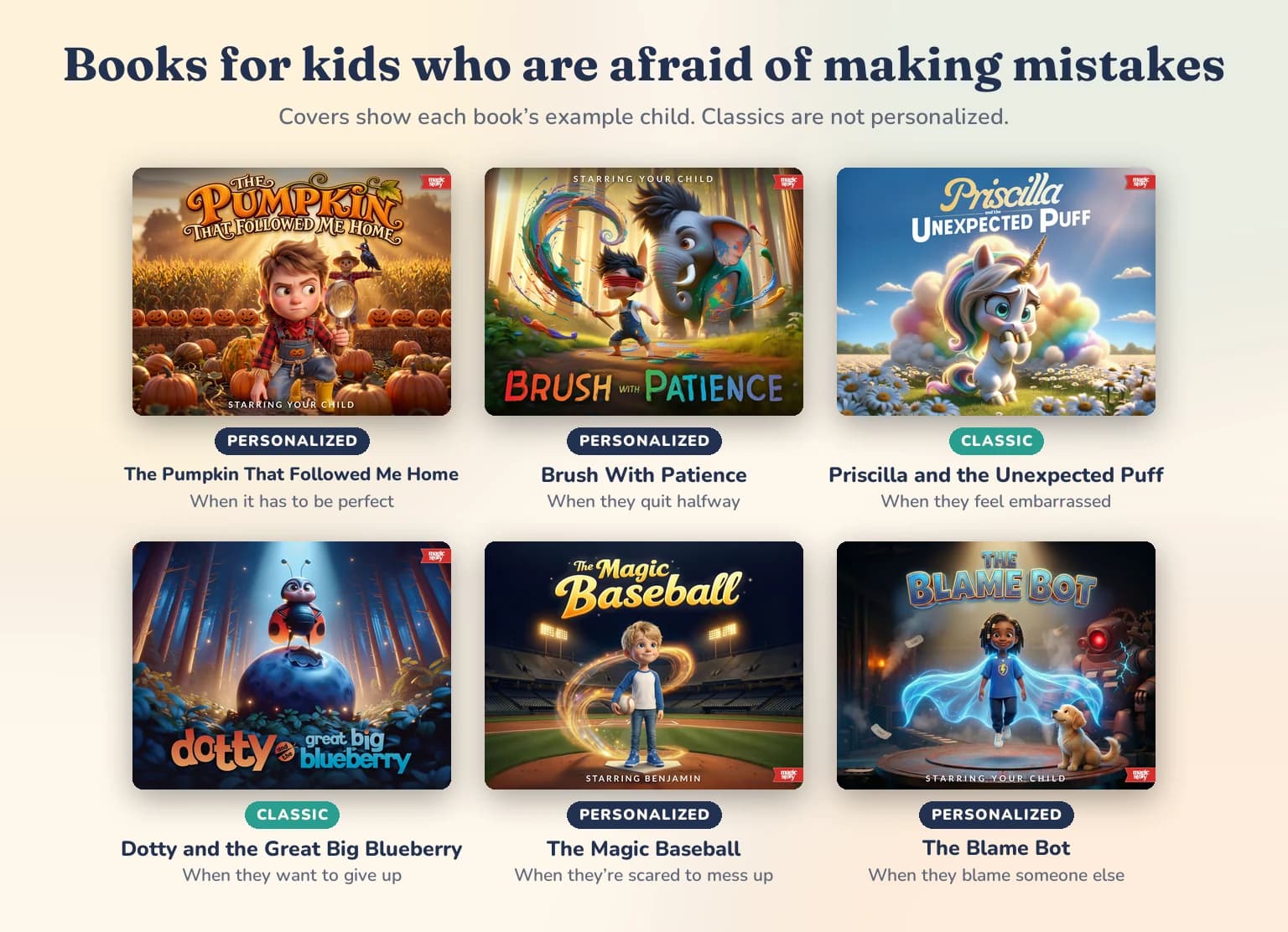
| Book | What happens | Personalized? | When it helps |
|---|---|---|---|
| The Pumpkin That Followed Me Home | A perfect contest pumpkin falls apart, and a lumpy one steals the show | Yes | When everything has to be just right |
| Brush With Patience | An elephant painter sends your child looking for the perfect leaf | Yes | When they start over and never finish |
| Priscilla and the Unexpected Puff | A flawless unicorn toots in front of everyone | No, it's a classic | When they're embarrassed by a mistake |
| Dotty and the Great Big Blueberry | A ladybug tries idea after idea to roll home a giant berry | No, it's a classic | When they want to quit |
| The Magic Baseball | A talking baseball helps your child face a first youth baseball game | Yes | When they're scared to mess up in front of others |
| The Blame Bot | A robot grows bigger with every excuse until your child owns up | Yes | When they blame someone else |
The standard US one-time hardcover price for a personalized book is $44.99, plus shipping and tax. Priscilla and Dotty are classics with their own price on their product pages. Shoppers in other countries see their own price at checkout.
What books help a perfectionist child?
Books where the perfect plan falls apart and something better happens. A perfectionist child usually knows that mistakes are allowed. What they need is to see one happen, survive it and maybe even enjoy it. These two personalized books are built around exactly that.
The Pumpkin That Followed Me Home: when it has to be perfect
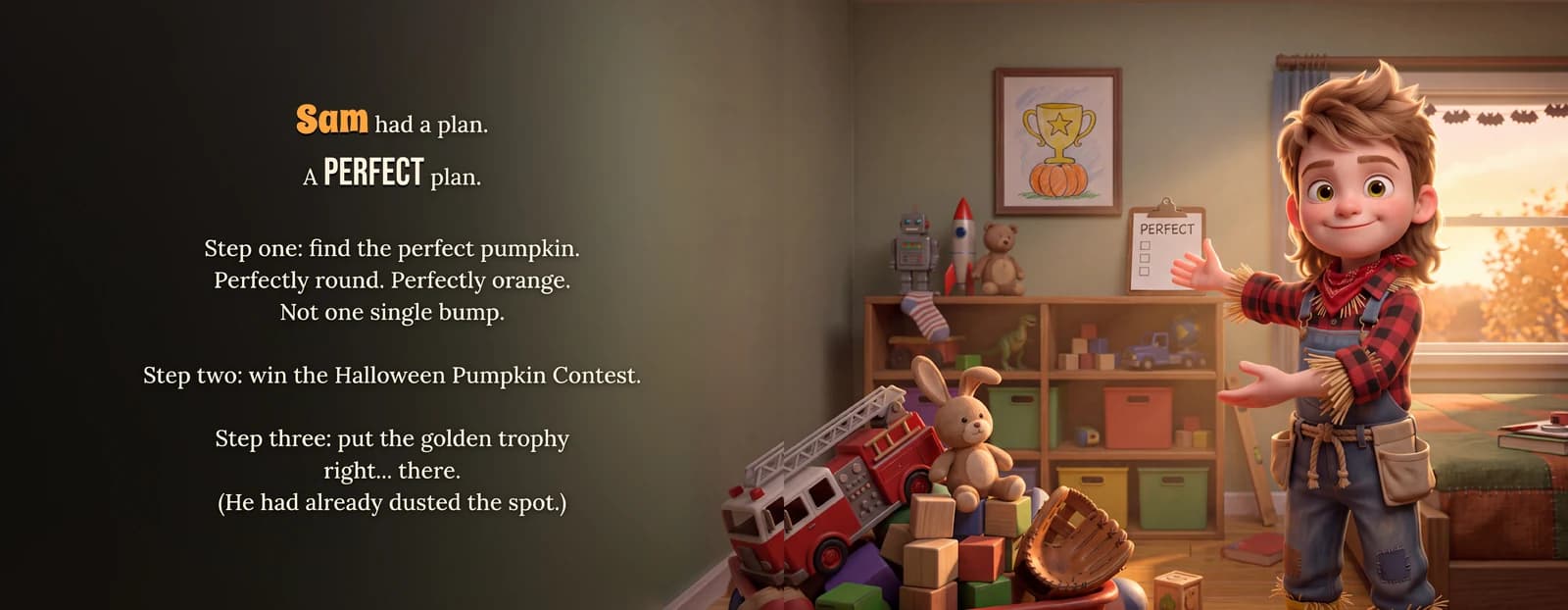
Your child has a plan. A PERFECT plan. Step one: find the perfect pumpkin, "perfectly round, perfectly orange, not one single bump." Step two: win the Halloween Pumpkin Contest. Step three: put the golden trophy right there, on the shelf they've already dusted. They bring a tape measure, a magnifying glass and a level, "for levelness." At the pumpkin patch they reject one pumpkin after another: too tall, too flat, one with a freckle. Then a lumpy, wonky pumpkin with warts and a crooked stem rolls up to their boots, and no matter where they walk, it follows.
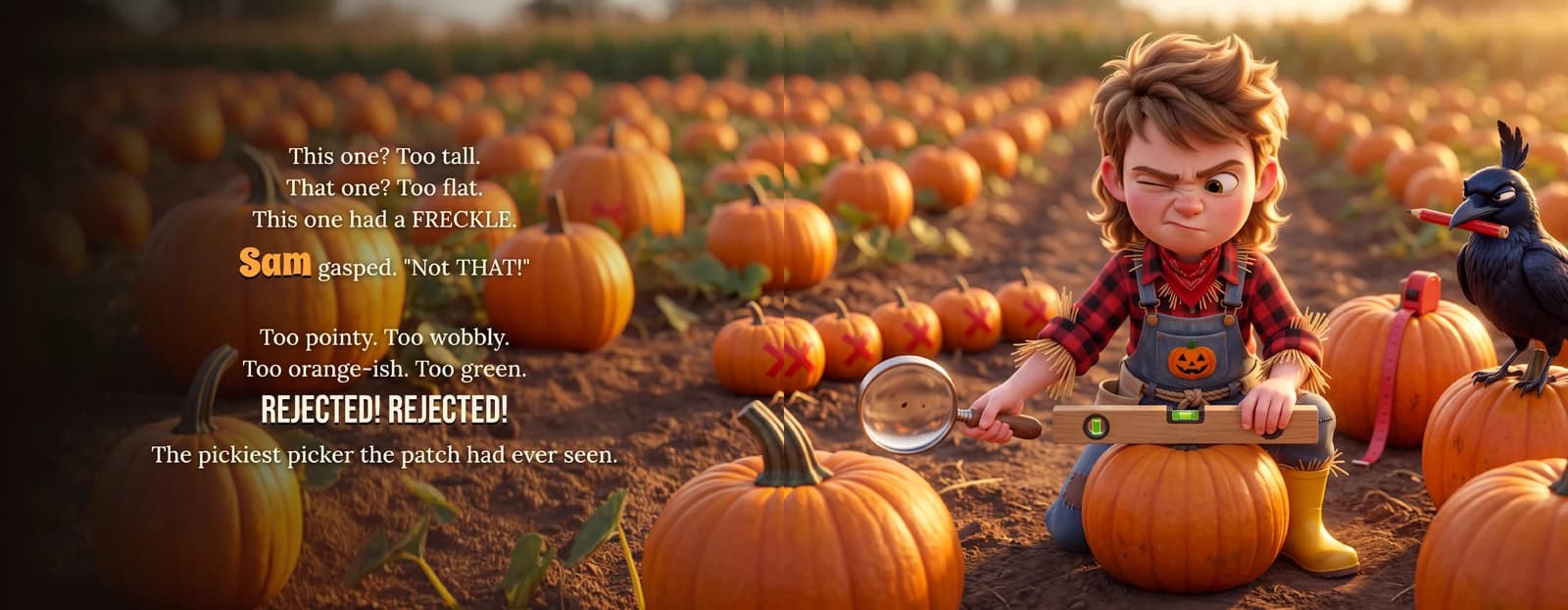
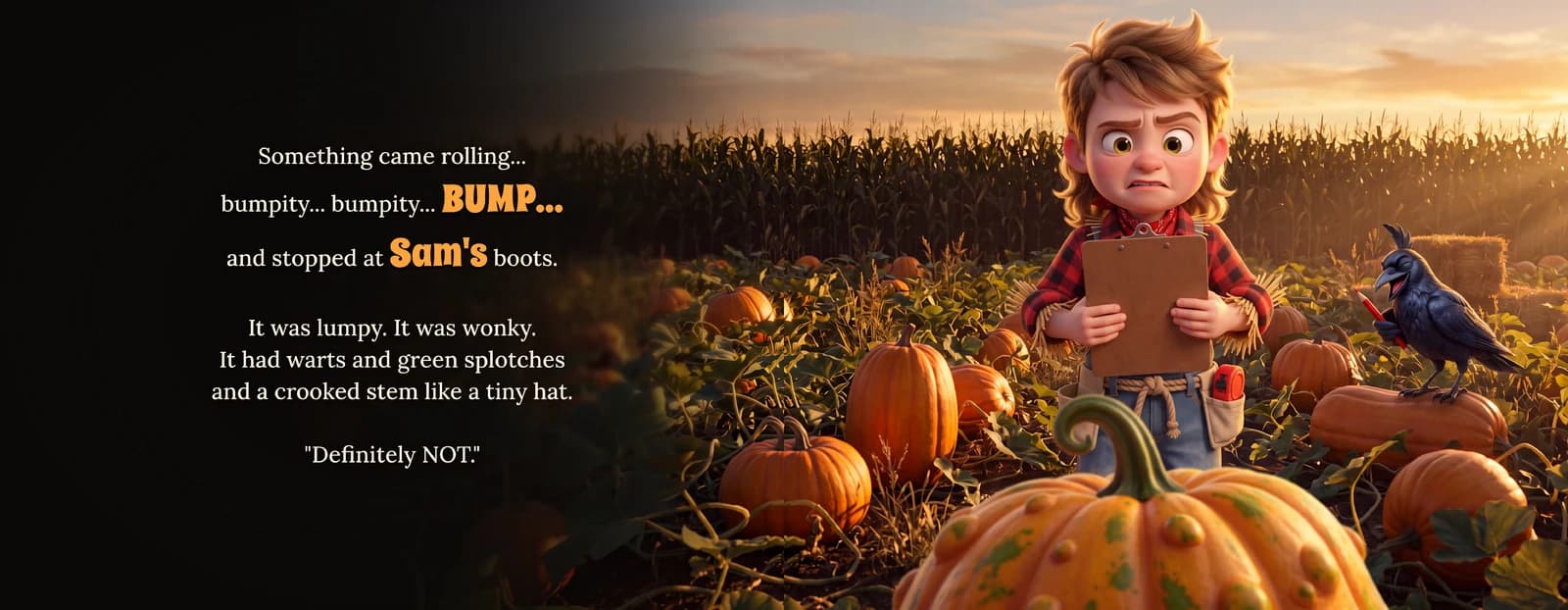
The perfect pumpkin gets a bubble bath, a polish and two cucumber slices. Then a hiccup sends the carving knife sideways, and the night before the contest, the perfect pumpkin goes "SPLOOSH." What happens next is the heart of the book: your child wipes their eyes, looks at Lumpy and says, "Maybe we're BOTH a little lumpy." They carve him just for fun, with no ruler and no plan, and laugh until they snort. At the contest, every bump on Lumpy throws a shadow on the town wall, and a judge who hasn't smiled in forty years finally does.
It's set at Halloween, but the line your child will remember works all year: "Perfect is boring." When a drawing or a block tower doesn't come out right, you have a story to point to.
Brush With Patience: when they quit halfway
Some perfectionists don't melt down. They just never finish. In Brush With Patience, your child loves to paint but starts over every time an idea feels "not epic enough," until the canvases run out and the town's Grand Art Competition is nearly over. So they go looking for Salvador Daliphant, the greatest artist the town ever knew, who now lives alone in the woods.
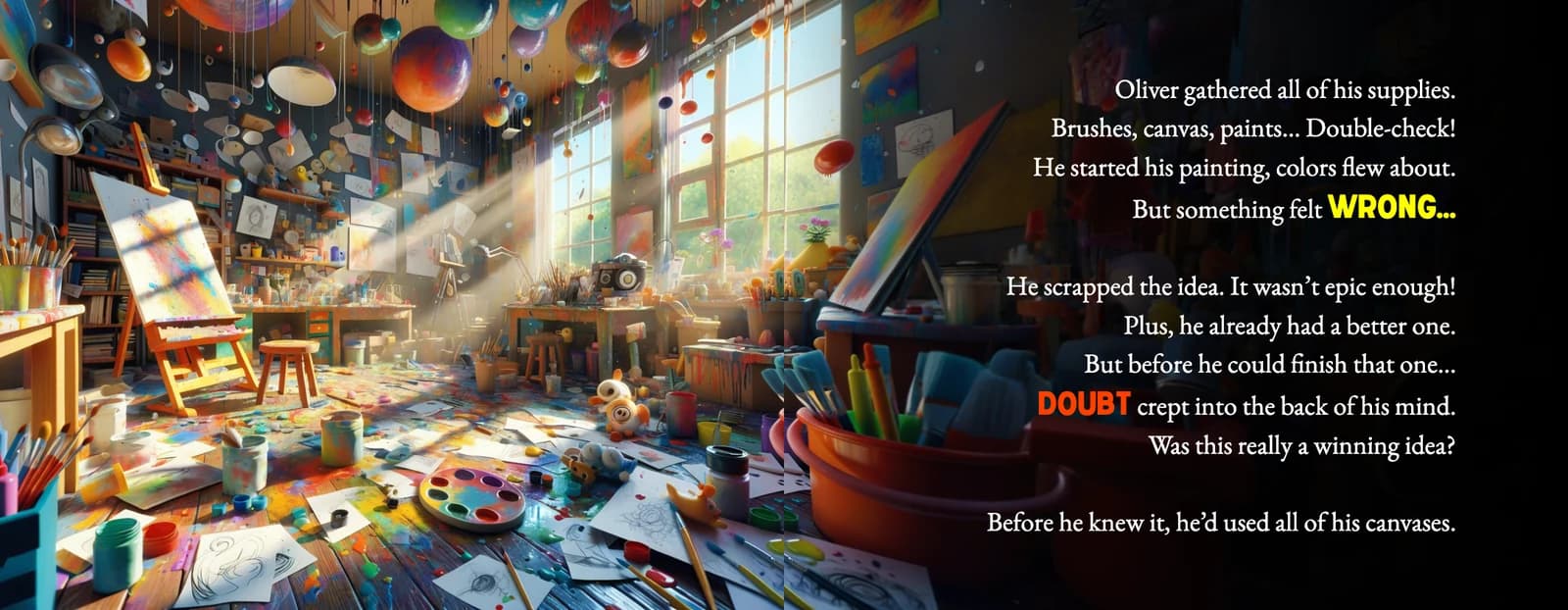
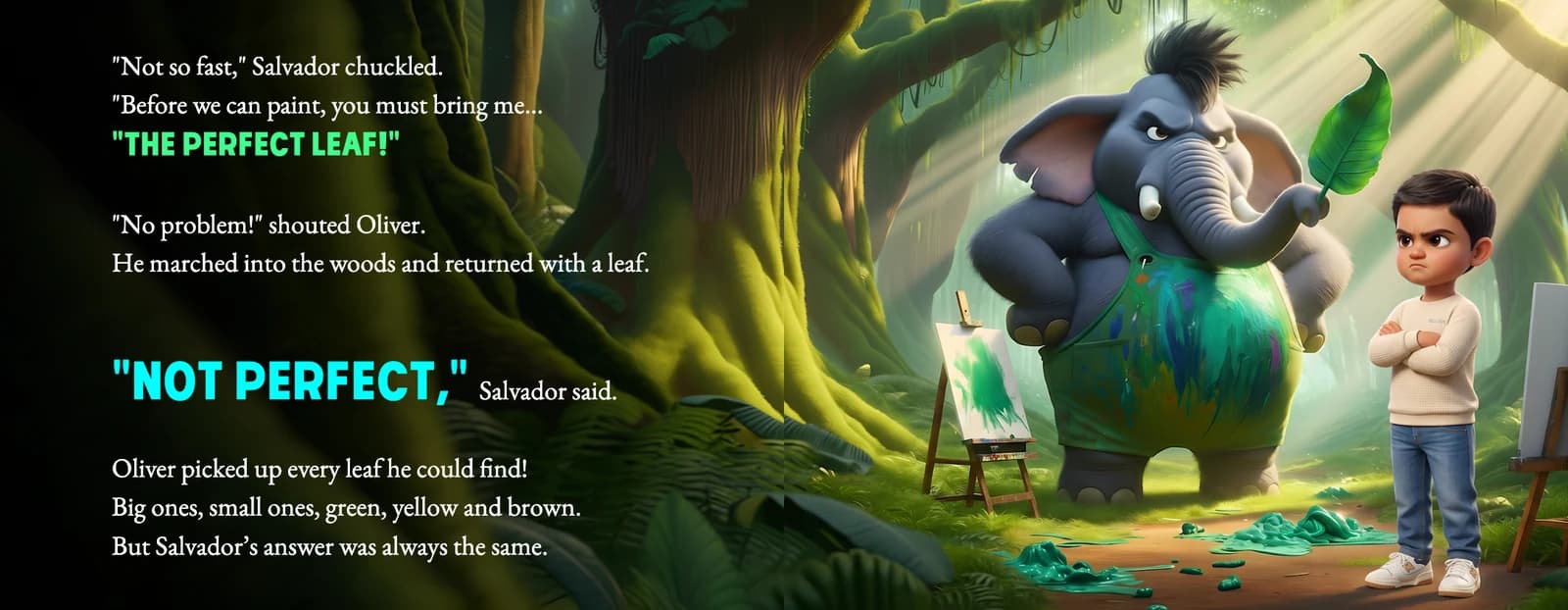
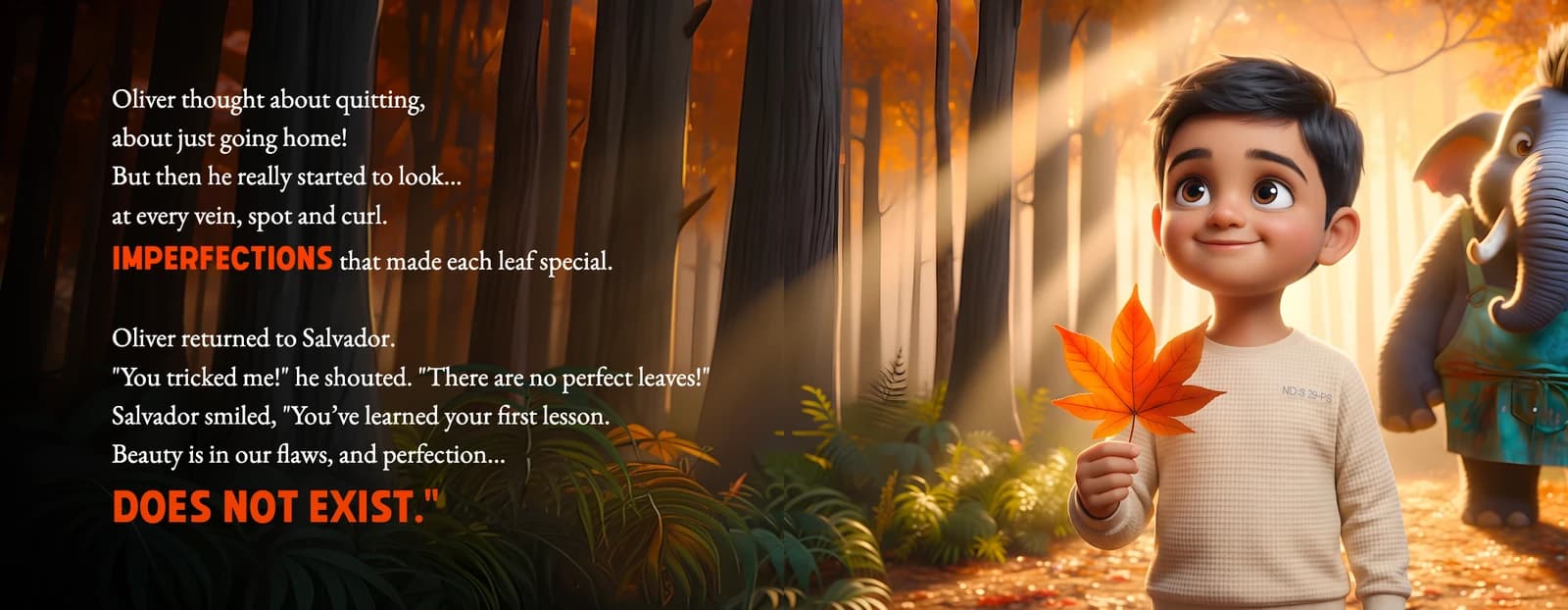
The elephant won't paint at all at first. He sends your child to find the perfect leaf, and every leaf they bring back gets the same answer: "NOT PERFECT." Just as your child is about to quit, they really look at the leaves, at every vein and spot and curl, and understand the trick. "Beauty is in our flaws, and perfection... DOES NOT EXIST." By the end, your child sticks with one idea all the way to the finish and paints a simple, "perfectly imperfect" leaf. Salvador shares the lesson he learned too late: "We must always FINISH what we start."
If your child tears up drawings that aren't perfect, this is a gentle place to start. We wrote more about its story in our Brush With Patience guide.
What books help a child who's embarrassed by mistakes?
Sometimes the fear isn't about getting it wrong. It's about everyone seeing. Priscilla and the Unexpected Puff takes that fear head on, with a joke kids find hilarious. It's one of our classics, so it isn't personalized: Priscilla the unicorn is the star.
Priscilla is known for her perfection, from her golden horn to her rainbow mane, and she teases anyone with "quirks or flaws, or even a single split end." Then, holding court in the meadow, she lets out a toot. She blames a nearby frog. The frog isn't having it, and her friends shout, "You're not a perfect unicorn!"
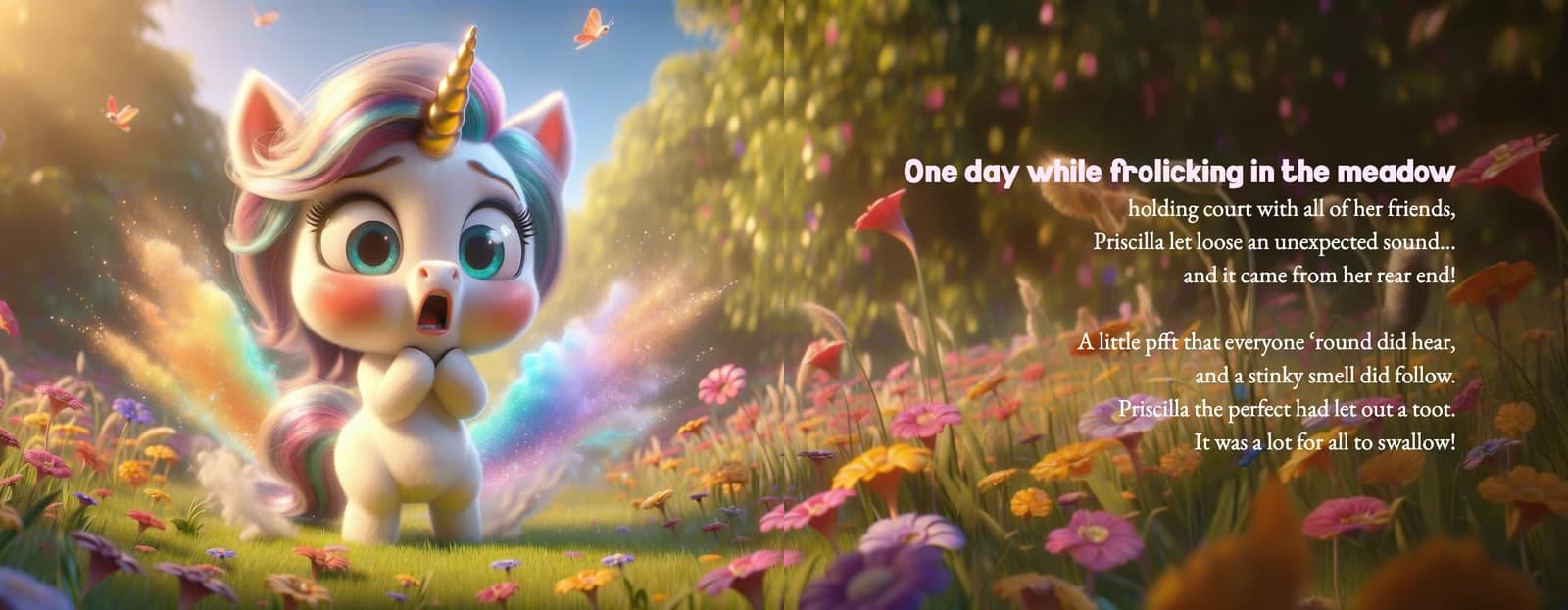
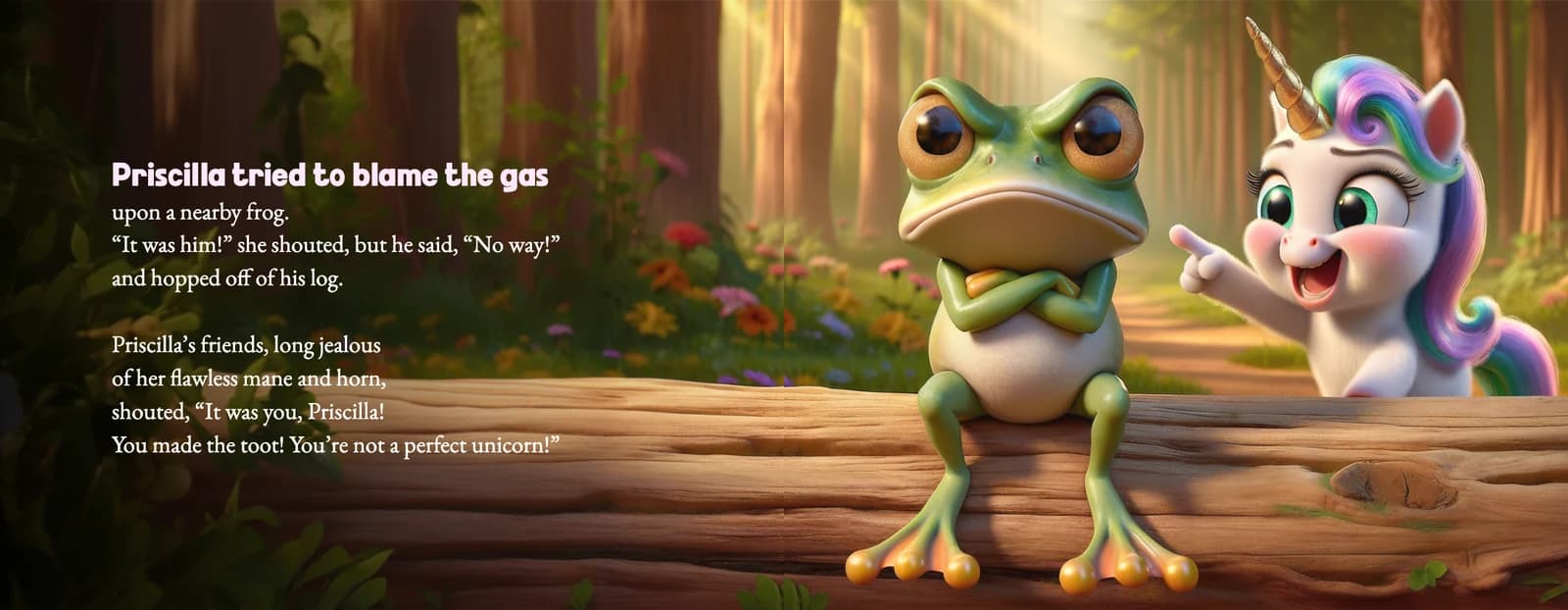
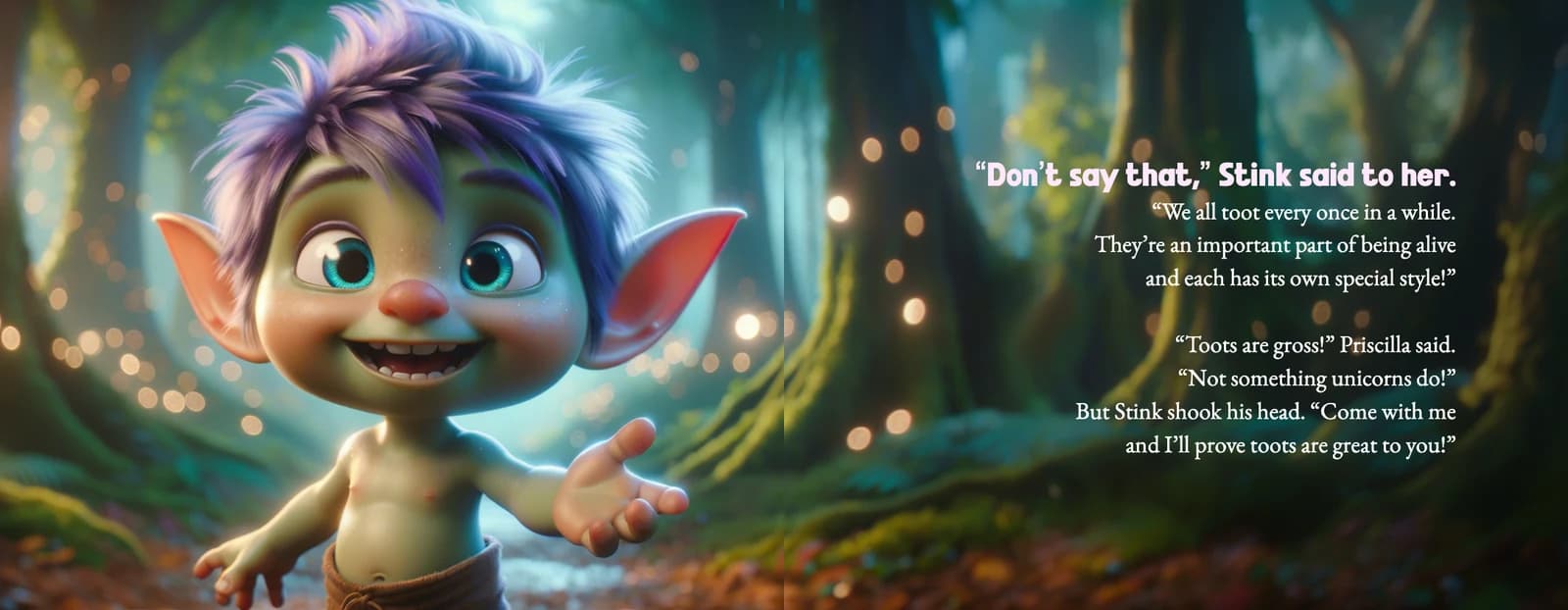
Priscilla runs into the forest in tears, where Stink, a messy goblin she used to tease, tells her, "We all toot every once in a while." He gives her a guided tour of toots, from the Sneaky Fox to the Elephant's Trumpet, and shares his motto: "My flaws make me special, my flaws make me me." By the end, Priscilla stands up for Stink in front of her friends.
Yes, it's a toot book, so preview it if that humor isn't for your family. For a child who wants the ground to swallow them after a small mistake, laughing at Priscilla's is a safe way to practice laughing at their own. It also gives you a way to talk about teasing, since Priscilla starts the story as the one doing it.
What books are good for kids who get frustrated and give up?
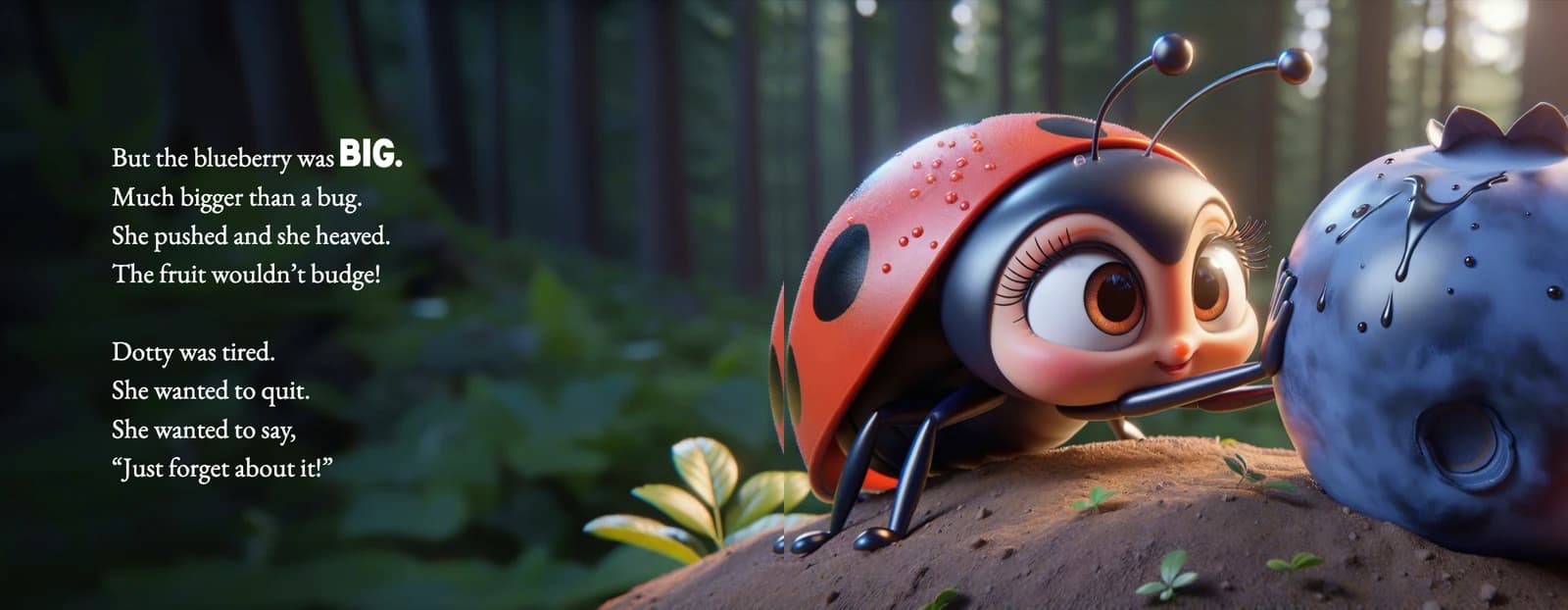
Books where the character wants to quit, says so, and then tries one more idea. Dotty and the Great Big Blueberry is a classic about a ladybug who forgot she was supposed to bring a dish to the Grand Picnic. She finds a blueberry much bigger than a bug, and it won't budge. "Dotty was tired. She wanted to quit. She wanted to say, 'Just forget about it!'"
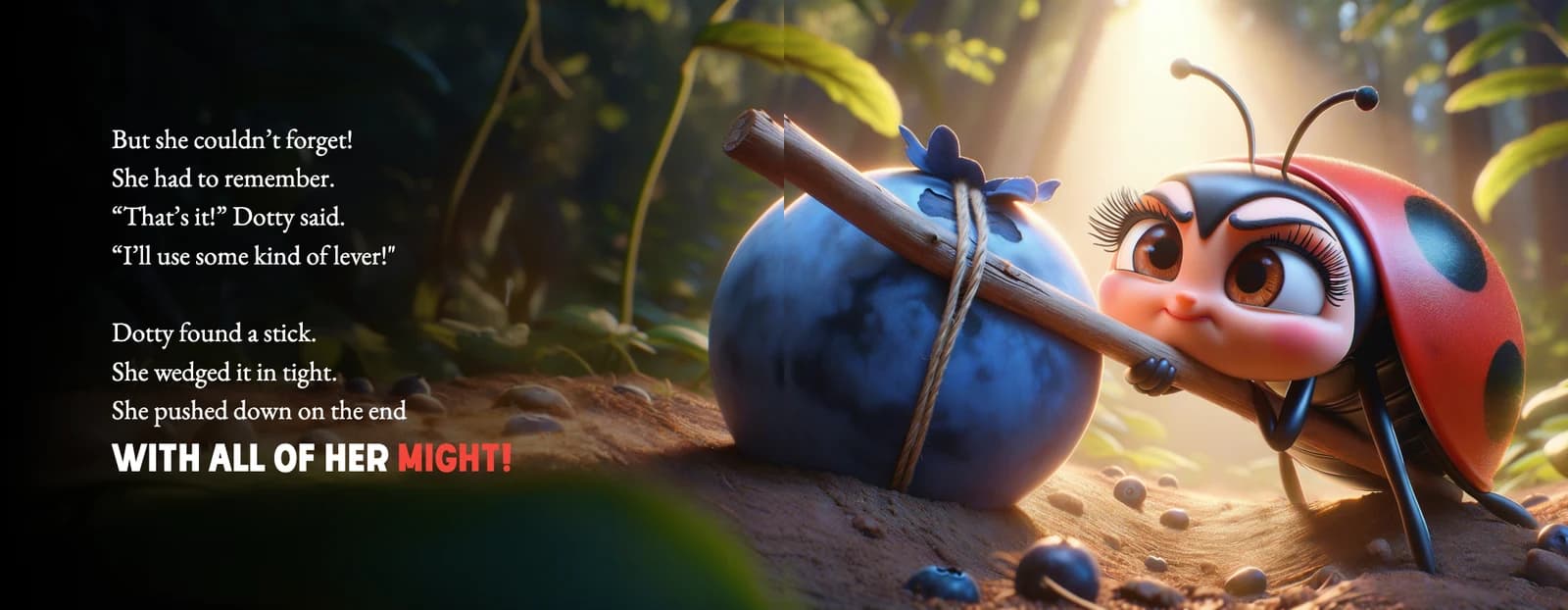
Instead she tries a lever. When the berry rolls into a thorny bramble, she pouts, then notices ants marching toward the juice and lets them chew it free. When the berry goes squishy, she patches it with petals and says, "I'm not done!" She arrives just before sunset: "It just took me a while since the path was a little hilly."
Dotty never gets it right the first time, and the book doesn't pretend she should. Its opening also asks young listeners to count the dots on her back, which makes it an easy read-aloud for younger children.
What books teach kids that messing up and losing are okay?
The Magic Baseball is for the child who loves a sport but is scared of striking out, letting the team down or looking silly. It's personalized, so your child is the one sitting on the bed the night before their first youth baseball game, tummy "doing flip-flops," when they find a dusty baseball under the bed. The ball is Homer, a former practice ball for the pros, and he talks.

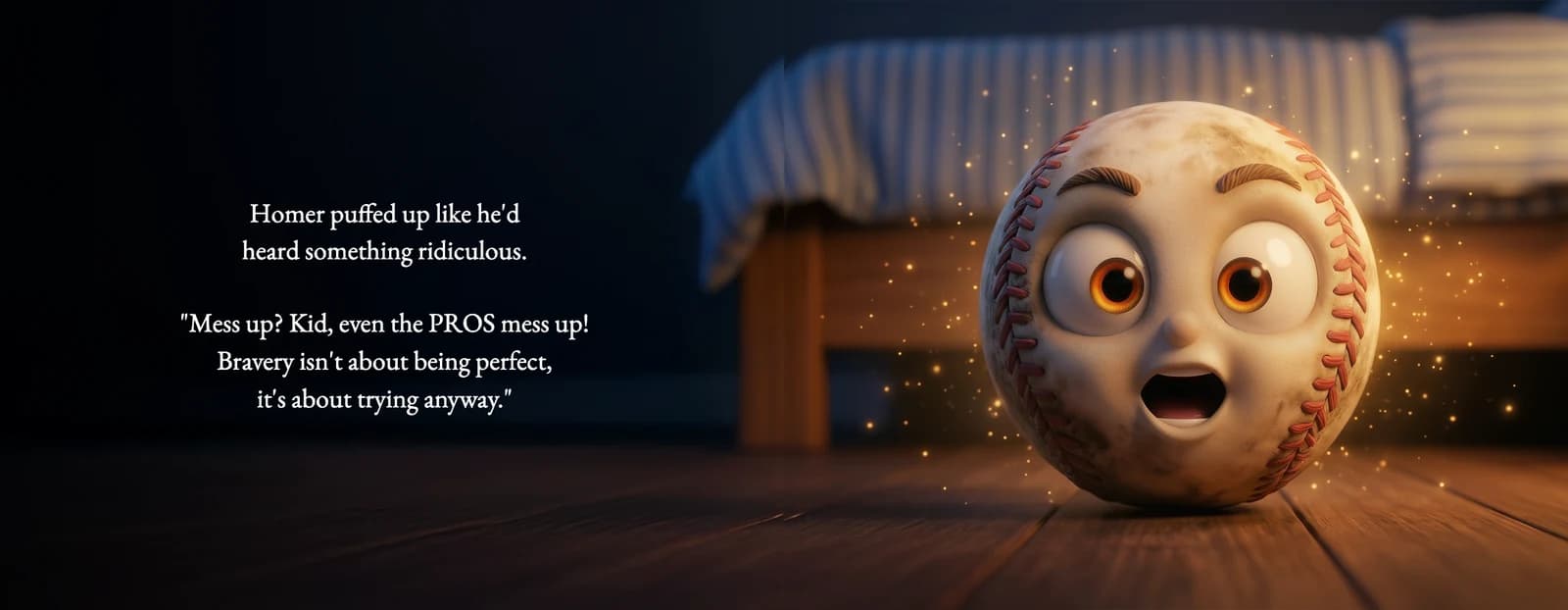
"But what if I mess up?" your child asks. Homer answers: "Even the PROS mess up! Bravery isn't about being perfect, it's about trying anyway." At practice the next morning, a boy misses a catch and stumbles, and your child notices that "nobody was perfect. And nobody cared." Every time someone messes up, they shrug and go again. The book ends with a question worth asking your own child: "Is the magic in you... or in me?"
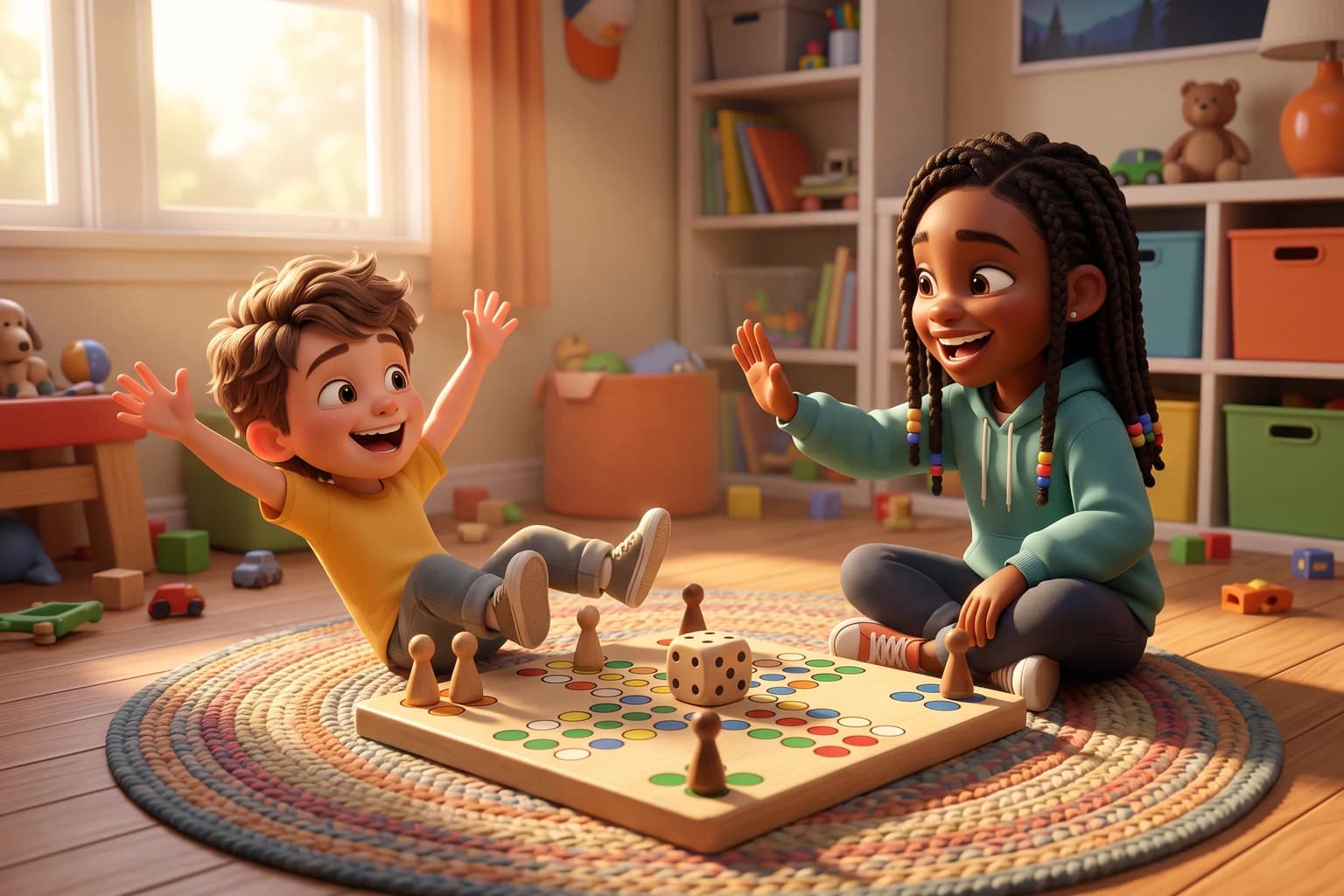
For a child who cries when they lose at board games, Cleveland Clinic child psychiatrist Joseph Austerman suggests talking about winning and losing before you start, so the goal is practice and fun rather than the score, and pointing out what went well afterward instead of picking apart the loss. The same article suggests checking what your child sees from you, whether that's yelling at the TV during a game or getting frustrated in traffic. Our post on helping kids overcome fear of failure in sports has more ideas for young athletes, and our Magic Baseball guide walks through the book.
What are good books about taking responsibility for a mistake?
A child who's afraid of making mistakes often learns a shortcut: say it was someone else. The Blame Bot is about that shortcut. It's personalized, so your child is the one who likes things "just so," lining up toy cars in a perfect straight row, until one happy twirl sends them rolling under the sofa. The dog wakes up, and your child points a finger: "BAD DOG! You did this. Admit it."

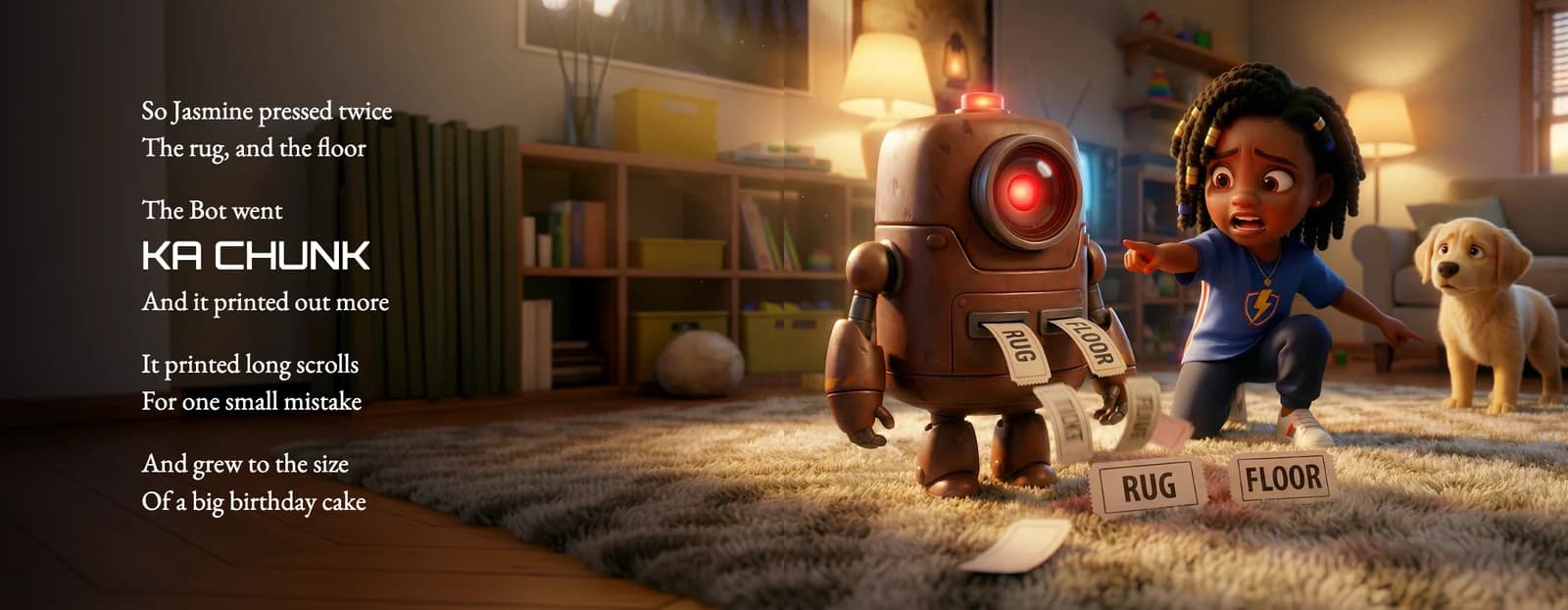

A rusty machine appears and prints a ticket: IT BLAMED BUDDY. "One more little BLAME won't hurt anyone," it says, so your child blames the rug, then the floor, and the Bot grows to the size of a birthday cake, then chest high, then colossal, until the playroom turns into a factory courtroom. Each excuse ("But I slipped!" "But it wiggled!") makes it louder. Then your child remembers Buddy's big, trusting eyes, takes a breath and says, "I'm responsible here." The courtroom crumbles, and your child goes home to apologize to the dog and clean up the cars together.
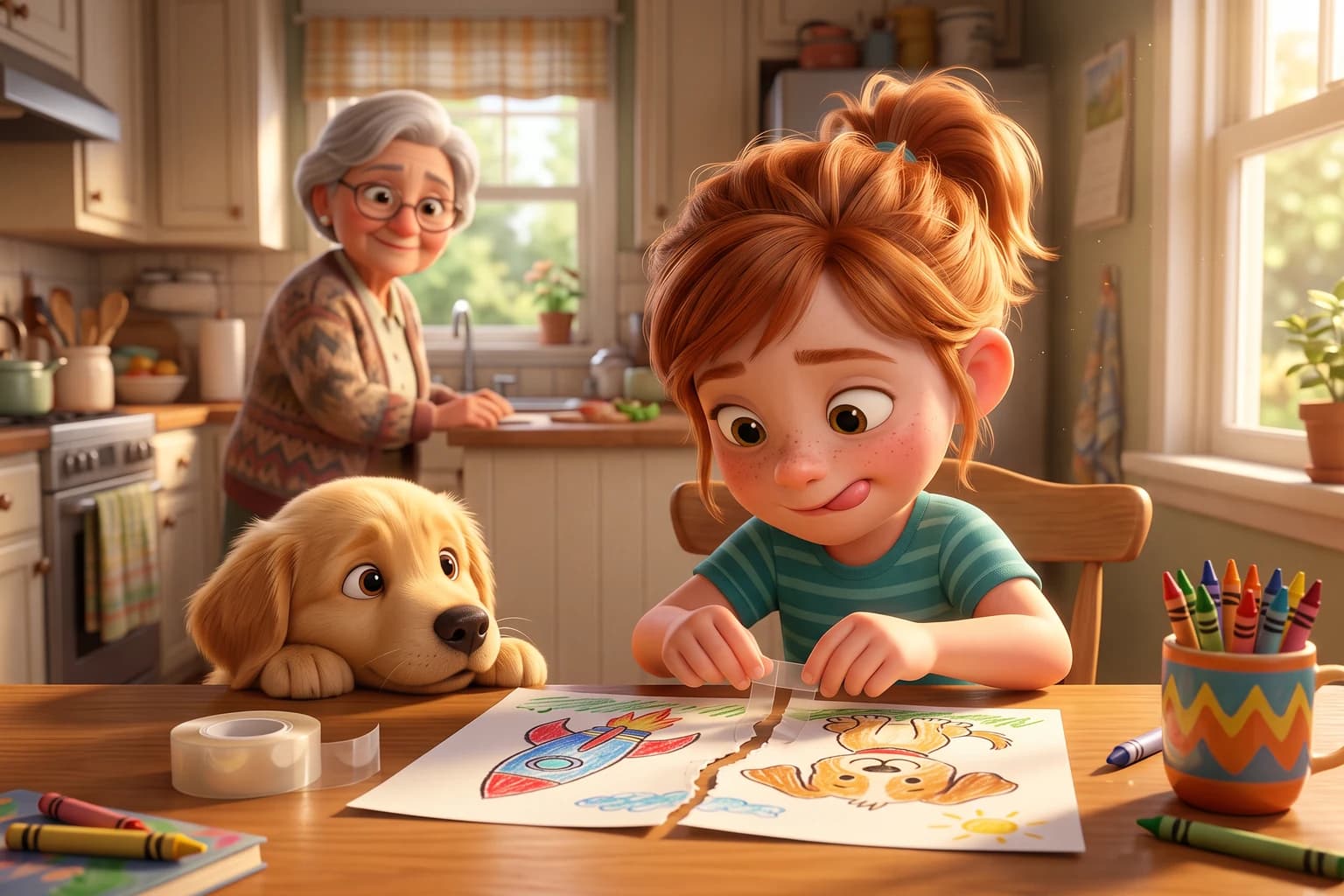
The next day, your child rips a homework page and feels the old urge, then says, "I ripped it. That's on me," and tapes it. The book ends with the bravest words a child can say: "I did it." If your child sometimes fibs to avoid trouble, our guide to why kids lie and how stories help goes deeper.
Six lines worth borrowing
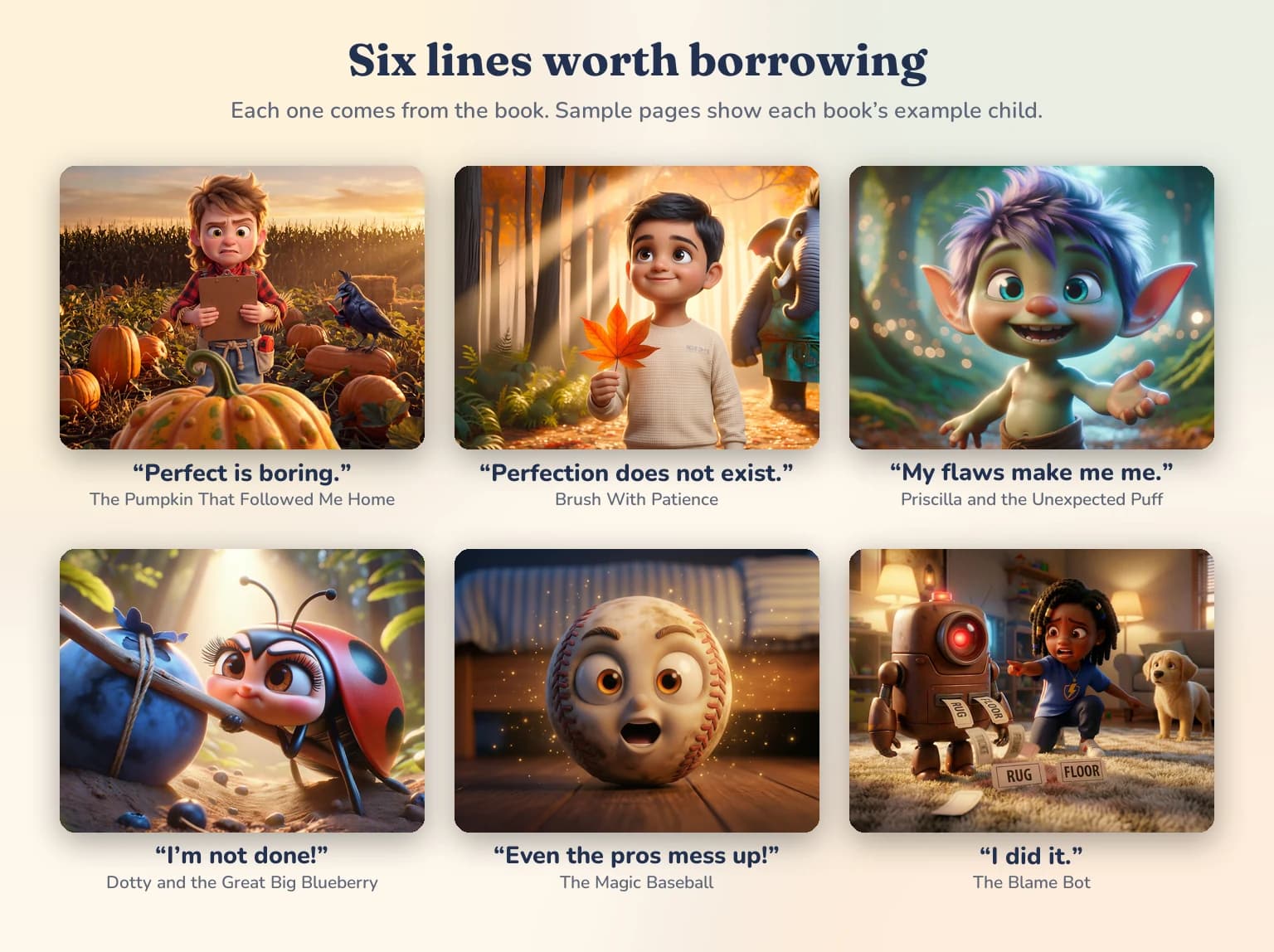
The most useful thing a book can give you is a short line you can both reach for when something goes wrong. After a few readings, try saying the line instead of a lecture:
- "Perfect is boring." For a wobbly drawing or a costume that didn't come out right (The Pumpkin That Followed Me Home).
- "Perfection does not exist." For a child stuck starting over (Brush With Patience).
- "My flaws make me me." For an embarrassing moment (Priscilla and the Unexpected Puff).
- "I'm not done!" For the moment they want to quit (Dotty and the Great Big Blueberry).
- "Even the pros mess up!" For a strikeout, a missed goal or a lost game (The Magic Baseball).
- "I did it." For owning up, said out loud (The Blame Bot).
How do I help a child who's afraid of making mistakes?
A book opens the conversation. What you say afterward does the rest. These suggestions come from child-development experts and are worth keeping in your back pocket:
- Name the feeling first. In a Child Mind Institute article on helping kids learn to fail, clinical psychologist Amanda Mintzer warns that "It's okay, you'll do better next time" can feel like a brush-off. She suggests something like "I see you're really disappointed, I know you really wanted to do better."
- Then look at what could change. The same article describes it as "a balance of acceptance and change": once your child is calm, ask whether there's something you could try differently next time.
- Let them see your mistakes. Child Mind suggests explaining that failure happens to everyone, even you, and showing how you handle your own disappointment.
- Praise the effort. Cleveland Clinic's advice on disappointment is to keep praising good effort and good behavior, because learning to cope with losses takes time.
The books give you a shared language for all of this. You can say, "That sounds like a Lumpy moment," and your child knows exactly what you mean. Books aren't a treatment, though. If worry about mistakes keeps getting in the way of school, play or sleep, talk with your child's pediatrician.
How does a personalized book work?

- Upload one photo. Add your child's name and one clear photo of their face. Our photo tips help if you're unsure which picture to use.
- See a free preview. You get your child's illustrated character in a scene from the book you chose, with no account or credit card needed. The preview doesn't show every page of the finished book. Read how the free preview works.
- Get the hardcover. Each personalized book is printed to order after you buy, then shipped to you.
In the US, Standard delivery takes 5 to 10 business days from order to arrival, including printing. Checkout shows the delivery estimate for your address, and our guide to how long delivery takes has the details.
Before you choose a book about mistakes
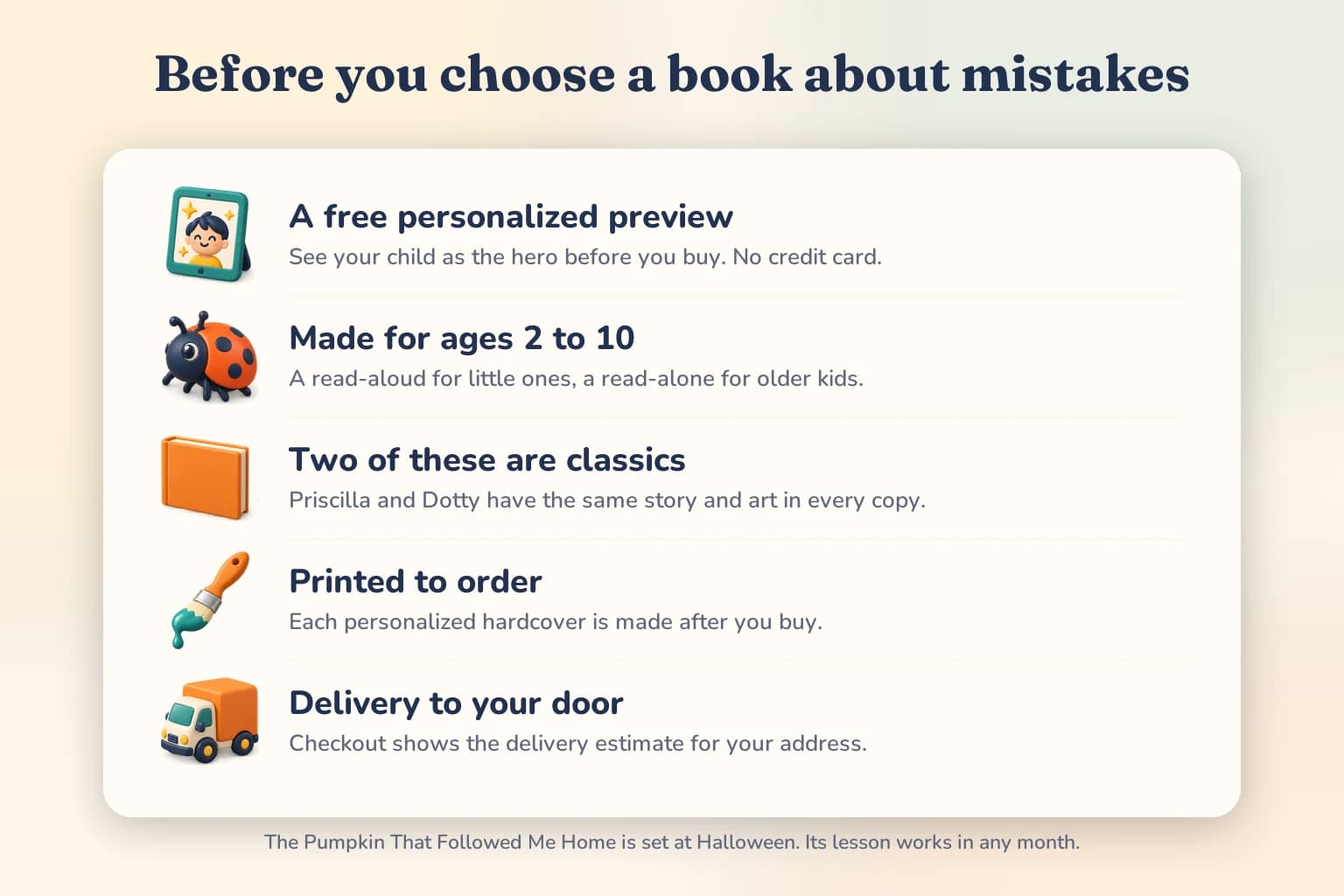
Match the book to what your child actually does when something goes wrong, not to their age. A five-year-old who freezes before soccer needs The Magic Baseball more than a book about painting. If you're not sure, the free preview lets you see your child in the story first, and the sample pages on each product page show the book's tone and how many words are on a page.
Sources
Questions parents ask
What are the best books for kids who are afraid of making mistakes?
Pick the book that matches what your child does when something goes wrong. From our own library: The Pumpkin That Followed Me Home is for the child who needs everything perfect. Brush With Patience is for the child who starts over and never finishes. Priscilla and the Unexpected Puff is for embarrassment, Dotty and the Great Big Blueberry is for wanting to quit, The Magic Baseball is for the fear of messing up in front of others, and The Blame Bot is for blaming someone else. This is a guide to our own books, not an independent ranking.
What books help a perfectionist child?
Books where the perfect plan falls apart and something better happens. In The Pumpkin That Followed Me Home, your child's flawless contest pumpkin collapses the night of the contest, and the lumpy one nobody wanted wins the town over. In Brush With Patience, an elephant painter sends your child to find the perfect leaf until they learn there isn't one. Both are personalized, so your child is the one who learns to laugh at a wonky result.
What books teach kids that losing is okay?
The Magic Baseball is about a child who is nervous before their first youth baseball game and asks a talking baseball, What if I mess up? The ball answers that even the pros mess up and that bravery means trying anyway. At practice, kids miss catches, shrug and go again. It pairs well with a family game night where you talk about effort instead of the score.
What books teach kids to take responsibility for a mistake?
The Blame Bot. After knocking over a row of toy cars, your child blames the family dog, and a rusty robot starts printing blame tickets and growing bigger with every excuse. It only stops when your child says I'm responsible and apologizes to the dog. The next day, when your child rips a homework page, they say That's on me and tape it.
What should I say when my child melts down over a small mistake?
Start with the feeling before the fix. The Child Mind Institute suggests naming the disappointment, for example I see you're really disappointed, rather than brushing it off with you'll do better next time. Once your child is calm, ask what you could try differently together. If worry about mistakes keeps getting in the way of school, play or sleep, talk with your child's pediatrician.
Are Priscilla and Dotty personalized?
No. Priscilla and the Unexpected Puff and Dotty and the Great Big Blueberry are Magic Story classics: the story and art are the same in every copy, and the unicorn and the ladybug are the stars. The Pumpkin That Followed Me Home, Brush With Patience, The Magic Baseball and The Blame Bot are personalized with your child's photo and name.
Is The Pumpkin That Followed Me Home only for Halloween?
It's set around a Halloween pumpkin contest, so the pictures are full of pumpkin patches and jack-o'-lanterns. Its message works in any month: perfect is boring, and something made with joy is better. It's a good one to reach for whenever a drawing or a project doesn't come out the way your child planned.
What ages are these books for?
Magic Story books are written for ages 2 to 10. Younger children enjoy them as read-alouds and the funny pictures, and older children can read them on their own. Brush With Patience has the most words per page of these, so it suits children who can follow a longer story.