Brush With Patience: A Picture Book for the Frustrated Young Artist
Explore Brush With Patience, meet Salvador Daliphant, and try a small art activity that leaves room for mistakes, pauses, and starting again.

In this article
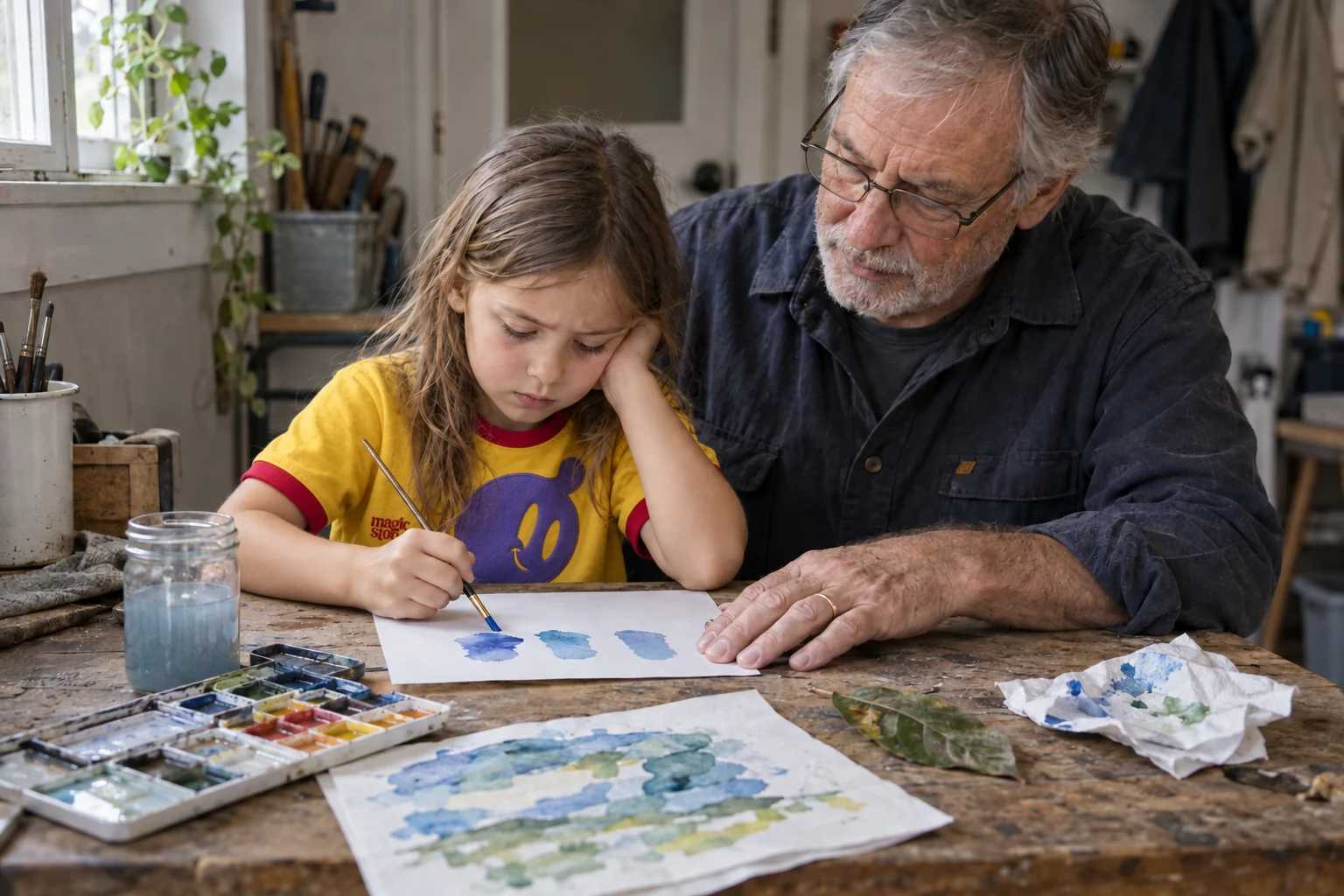
The paper is crumpled. The blue is wrong. The picture in a child's head looks nothing like the one on the table.
If that happens at your house, another instruction to "be patient" may not be the most useful thing you can offer. Try a smaller next step: "Shall we test that blue on a spare piece first?"
Brush With Patience builds its adventure around that space between wanting to make something and knowing how.
An art competition, an elephant, and a difficult picture
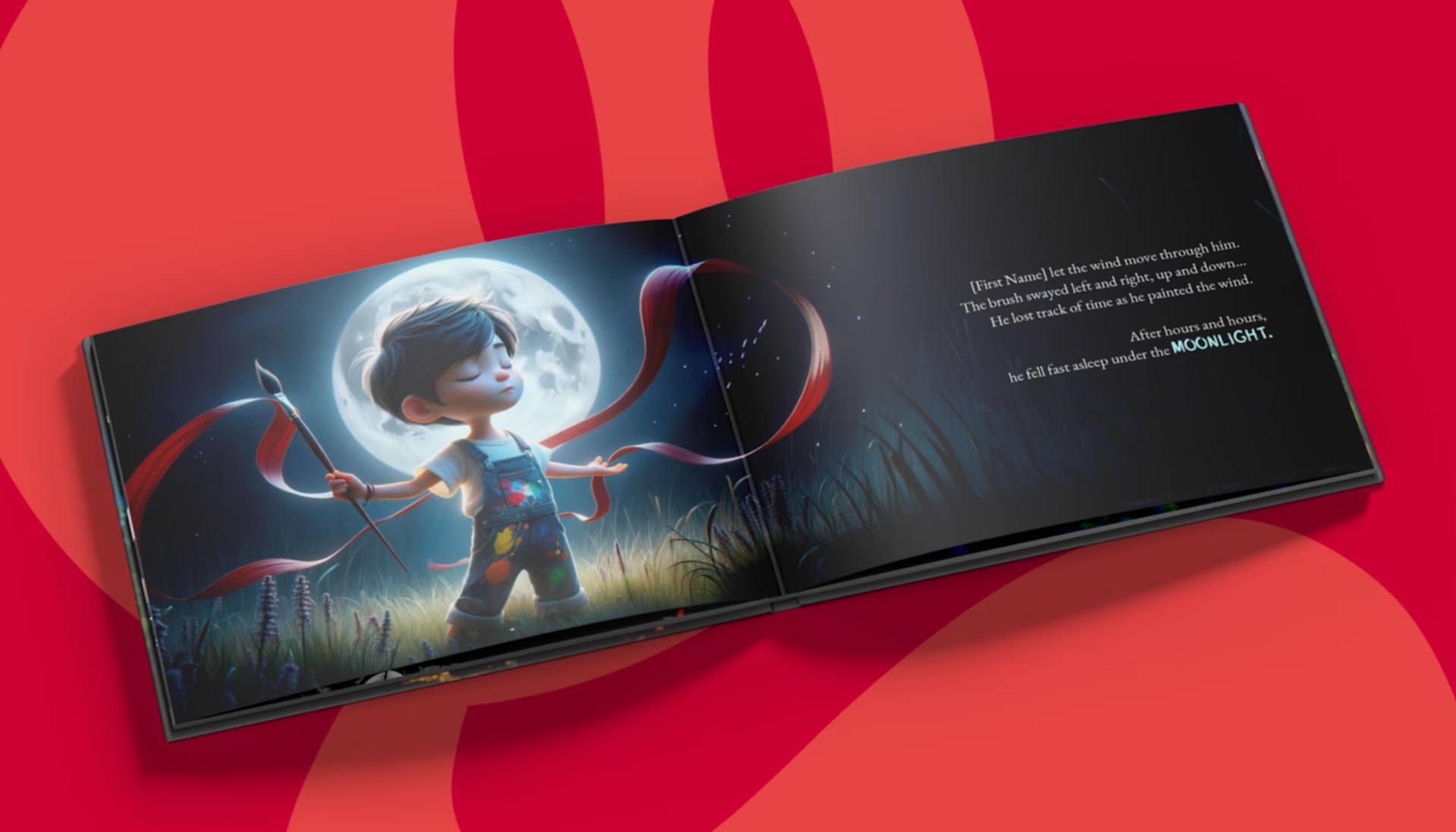
In Brush With Patience, your child's character is preparing artwork for a competition. Their companion is Salvador Daliphant, a gentle elephant with a painter’s eye for color. He helps them slow down, notice the picture taking shape, and keep working when the result does not arrive immediately.
The story includes your child's name and illustrated likeness. Its appeal is the art-room predicament and the unlikely companion. There is plenty to talk about when a picture takes an unexpected turn.
Follow the artist’s choices
Let the first read be a story. On another day, if your child is interested, stop at a difficult moment and ask, "What could they try next?"
Make room for answers beyond "keep going." A different brush, a drink of water, help from someone else, or leaving the picture until tomorrow can all be reasonable choices. Persistence does not have to mean continuing while miserable.
Try noticing something specific in the artwork: "That part has lots of little marks." Ask which marks your child would like to try.
A ten-minute art invitation
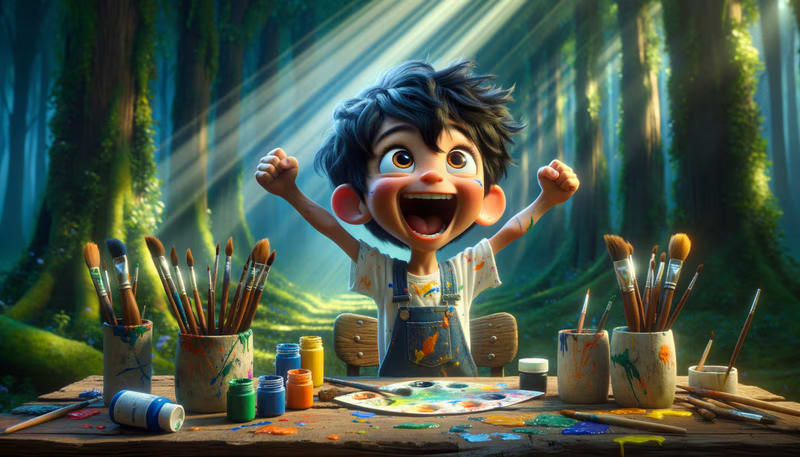
Set out paper and a few familiar materials. You do not need a competition or a model to copy.
- Make a test page. Try dots, lines, colors, and how hard to press. Keep it beside the main picture.
- Choose one small thing. A leaf, a funny hat, or a pattern is enough.
- Draw alongside them. Let them see you change a mark or start again without making a speech about it.
- Leave the ending open. Ask whether they want to keep the picture, add to it later, or move on.
If a child asks you to fix something, clarify what they want: "Would you like an idea, or would you like me to draw this bit?" Sometimes the most helpful contribution is holding the paper still.
For grandparents giving the book
A small set of washable art materials and an invitation to draw together can make the gift more personal. Ask the parent which supplies suit their home. Skip glitter or a large kit unless the family wants it.
Before ordering, review the sample pages, create the child's preview with a parent-approved photo, and check the delivery estimate. Our gift guide explains the practical steps.
Keep the finished picture if the child wants you to. Write the date on the back. The afternoon does not need a prize to be worth remembering.
Questions parents ask
Who is Salvador Daliphant?
He is the elephant artist who accompanies the child in Brush With Patience.
Does my child need to enjoy painting?
No, but an interest in making things may help you choose this story. Preview the pages to see whether the artwork and plot appeal to them.
How can we use the story after reading?
Try a short drawing session together. Let the child choose whether to continue, change the idea, or take a break.


