Why Visualization is Key to Your Child’s Success
Learn how visualization & mental rehearsal help kids build confidence, resilience, and success - backed by science and enriched through storytelling.

5 min read | December 3, 2024 · Updated July 19, 2026
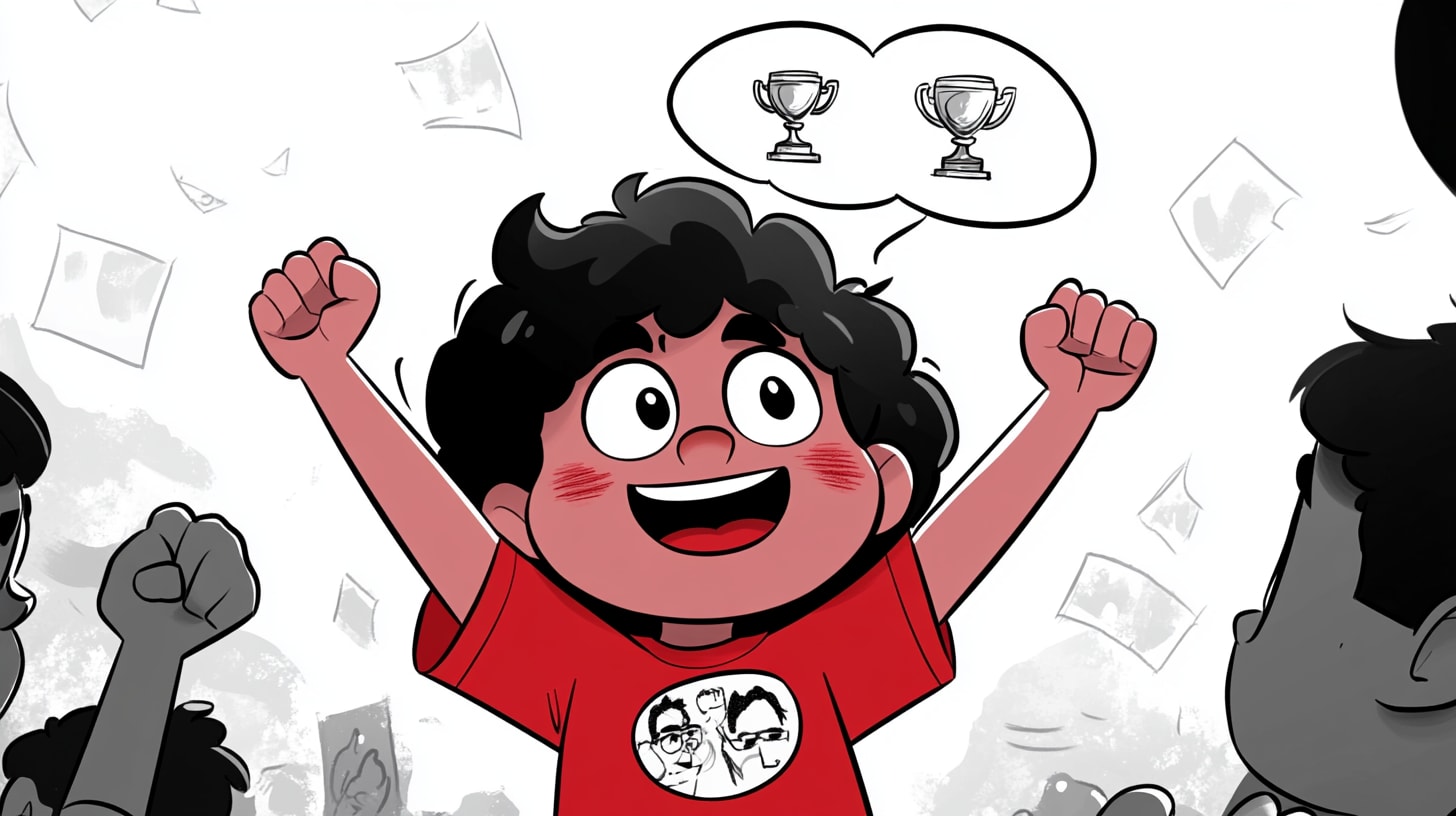
Owen is seven, and he has refused to jump off the diving board for two summers running. Not because anyone told him he'd fail — his older cousin does it constantly, laughing on the way down — but because Owen has never once pictured himself doing it and landing fine. His mother tried a different approach this year: at bedtime, she started reading him a story where a character who looks and sounds a lot like Owen jumps, again and again, page after page, always landing fine. Three weeks later, at the pool, Owen stood at the edge for a long moment, said "I already know how this goes," and jumped.
That sentence is worth sitting with, because it's close to a working definition of what visualization is supposed to do: give someone a rehearsed, already-familiar version of a moment before they have to live it for the first time.
What Is Visualization, and Why Does It Help Performance?
Visualization is the practice of mentally rehearsing an action or outcome before it happens, and it works because the brain doesn't fully distinguish a vividly imagined experience from a real one when it comes to activating the neural systems involved. The idea traces back to Psycho-Cybernetics, Dr. Maxwell Maltz's 1960 book describing the brain as a goal-seeking system that responds to imagined experience almost the way it responds to lived experience.
That's a decades-old theory, but it has some genuinely modern backing. In a study from the Cleveland Clinic, healthy adults who mentally rehearsed a muscle contraction — imagining the movement, without physically performing it — gained measurable strength in that muscle compared to a control group who did nothing. It's one study, in adults, using a narrow physical task, so it isn't proof that visualization works for every kind of goal. What it does show is that mental rehearsal isn't purely motivational talk; it has a measurable physiological footprint.
Elite athletes have long built training around this idea. Michael Phelps has described mentally rehearsing entire races before falling asleep — every stroke, every turn, and, notably, the version where something goes wrong, so that when his goggles filled with water mid-race at the 2008 Olympics, he'd already rehearsed swimming blind.
Do Stories Function as Visualization for Children?
No study has directly tested storybook reading as a visualization intervention in children, so this section is an honest extension of adjacent research rather than a settled finding — worth saying plainly in a topic area where it's easy to overstate. What developmental research does show is that young children's memory is shaped by self-relevance: studies of four- to six-year-olds find children remember information tied to themselves better than the same information tied to someone else. Separately, a small study of families reading personalized books with toddlers found more smiling, laughing, and vocal engagement with personalized stories than with matched non-personalized ones.
Put those two findings next to the adult visualization research, and a plausible — not proven — picture forms: a story that puts a child in the position of the one solving the problem gives that child's brain a self-relevant scenario to rehearse, in something like the way an athlete rehearses a race. It's a reasonable hypothesis built on real research in two adjacent fields, and it deserves to be described that way rather than as an established fact about how children's stories work.
Can Visualization Build a Child's Confidence and Resilience?
The pieces that would need to be true for this to work are individually well supported, even though the full chain — story rehearsal leading to real-world resilience in children specifically — hasn't been tested end to end. Through a story built around them, children get a repeatable chance to:
- Picture themselves as capable. Seeing a version of themselves handle a hard moment gives them a mental reference point that a warning or a pep talk doesn't.
- Rehearse a specific fear or setback. Walking through a nerve-wracking scenario in story form, safely and repeatedly, is closely related to how being the hero of a story shapes a child's confidence.
- Practice noticing their own choices. A story where the character actively decides to try again, rather than simply succeeding by luck, models the difference between confidence and outcome.
- Build a habit of returning to hard moments instead of avoiding them. Repetition matters here the same way it matters for why personalized stories drive engagement and learning more broadly — the story only does its work if a child comes back to it more than once.
What This Looks Like in Practice
A child afraid of the dark can be given a story where a character who looks like them explores the dark anyway and is fine. A child working on patience can be given a story where their own avatar practices waiting and it pays off. In both cases, the mechanism being borrowed is the athlete's mechanism — rehearse it first, so it's familiar later — applied to an ordinary bedtime story instead of an Olympic final, which is part of what personalized books can do for kids' confidence and curiosity more generally.
Give someone a rehearsed, already-familiar version of a moment before they have to live it for the first time.
Owen still doesn't love diving boards, exactly. But the summer after he first jumped, he did it again on the first afternoon at the pool, without a story read to him beforehand and without needing to talk himself into it. He'd already rehearsed the version where he lands fine enough times that, by then, it was just what he expected to happen.
Frequently Asked Questions
What is visualization, and how does it help children succeed?
Visualization is mentally rehearsing an outcome before it happens — a technique athletes like Michael Phelps have described using to picture every stroke and turn before a race. The idea traces back to psycho-cybernetics, Maxwell Maltz's theory that the brain works like a goal-seeking system that responds to vividly imagined experiences almost as if they were real. A well-known study of adults found that mentally rehearsing a muscle movement, without any physical repetitions, produced measurable strength gains — evidence that mental practice isn't purely metaphorical.
How do stories act as mental rehearsal for kids?
No study has directly tested storybook reading as a visualization intervention, but the building blocks are there: young children show better memory for information tied to themselves, and when a story puts a child in the role of the one solving the problem, it plausibly functions the way athletic visualization does for adults — a low-stakes rehearsal of a self-image before the real moment arrives.
Can visualization really build a child's confidence and resilience?
The mechanism is plausible and consistent with what's known about self-referential memory and mental rehearsal in adults, though direct evidence in children specifically is still thin. What a story can offer is a repeatable chance to picture themselves as capable, to rehearse navigating a fear or setback before facing a real one, and to practice a mindset that treats a challenge as something to move through rather than avoid.
How do personalized books use visualization?
A personalized story lets a child see a version of themselves as the one facing the fear or solving the problem, rather than watching it happen to someone else. A child afraid of the dark can see themselves as the one who explores it anyway in a story built around that fear, or a child working on patience can watch their own avatar practice it — the same rehearsal mechanism athletes describe, applied to an ordinary bedtime story.