Where Does the Rain Go? A Water-Cycle Story and Rainy-Day Activity
Follow raindrops through this personalized adventure, then notice runoff, changing puddles, and condensation with a child who wants to know more.

In this article
A puddle was here this morning. Now it is smaller. Your child wants to know where the water went.
That is a better beginning than a worksheet with all the arrows already filled in.
The story follows a raindrop's journey
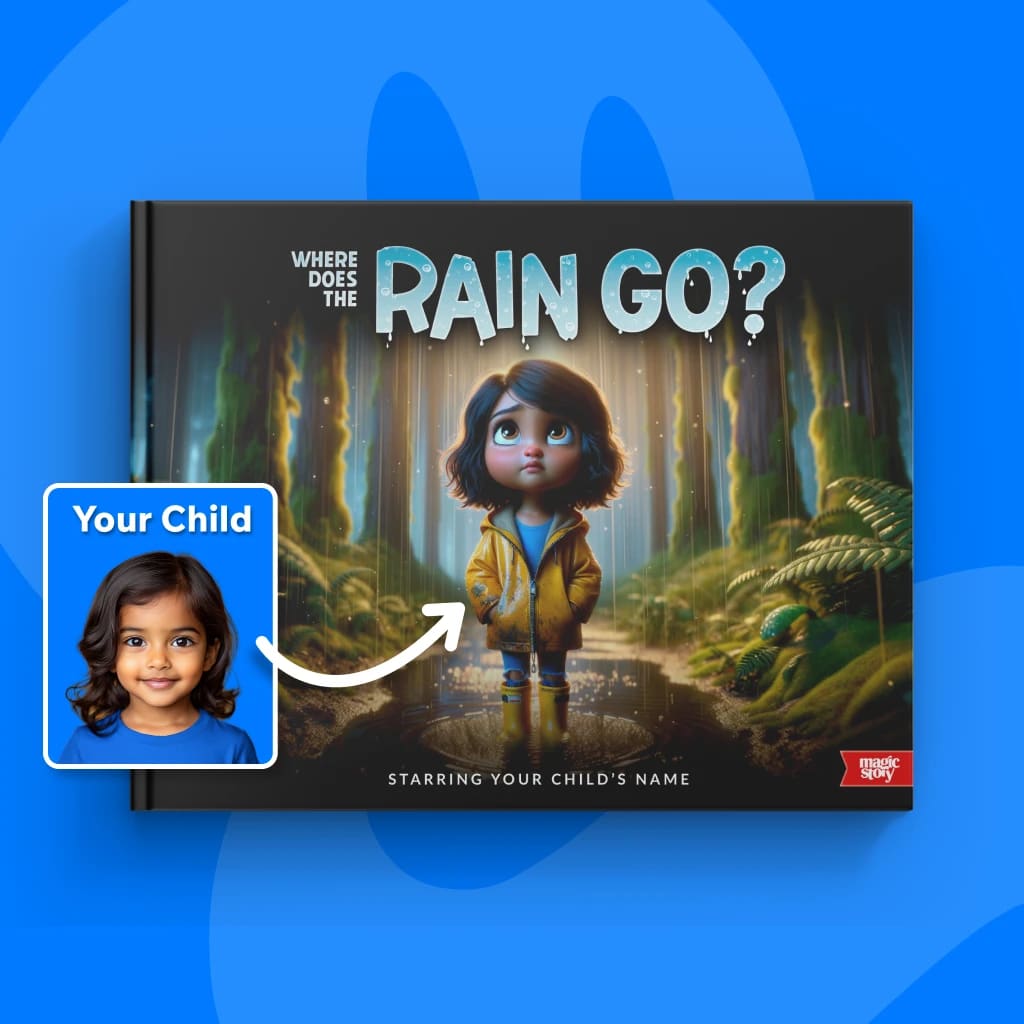
Where Does the Rain Go? takes the child's character from rain at the window through a journey involving the ground, streams, and clouds. Their name and illustrated likeness appear in the adventure.
The story gives you an opening. Real water has several possible routes, so avoid promising that every drop follows exactly the same neat circuit.
A useful water-cycle explanation
Rainwater can flow downhill as runoff, soak into the ground, or collect on the surface. Liquid water can evaporate into invisible water vapor. When vapor condenses into tiny droplets, it can contribute to cloud formation. The US Geological Survey's water-cycle guide for children shows these routes together.
A puddle shrinking does not prove evaporation was its only exit. Some water may also have soaked into the ground or drained away. That is an opportunity to compare surfaces and ask another question.
Watch one small place
After the weather is safe, choose a shallow puddle visible from a safe path or window. Sketch it or take a photograph and note the time. Return later.
Ask what is different. Is the surface still wet? Was it sunny or cloudy? Is the puddle on soil or pavement? Record what you know and leave guesses labeled as guesses.
Keep away from drains, floodwater, and fast-moving water. An ordinary patch of wet pavement offers plenty to notice.

Try a cold cup indoors
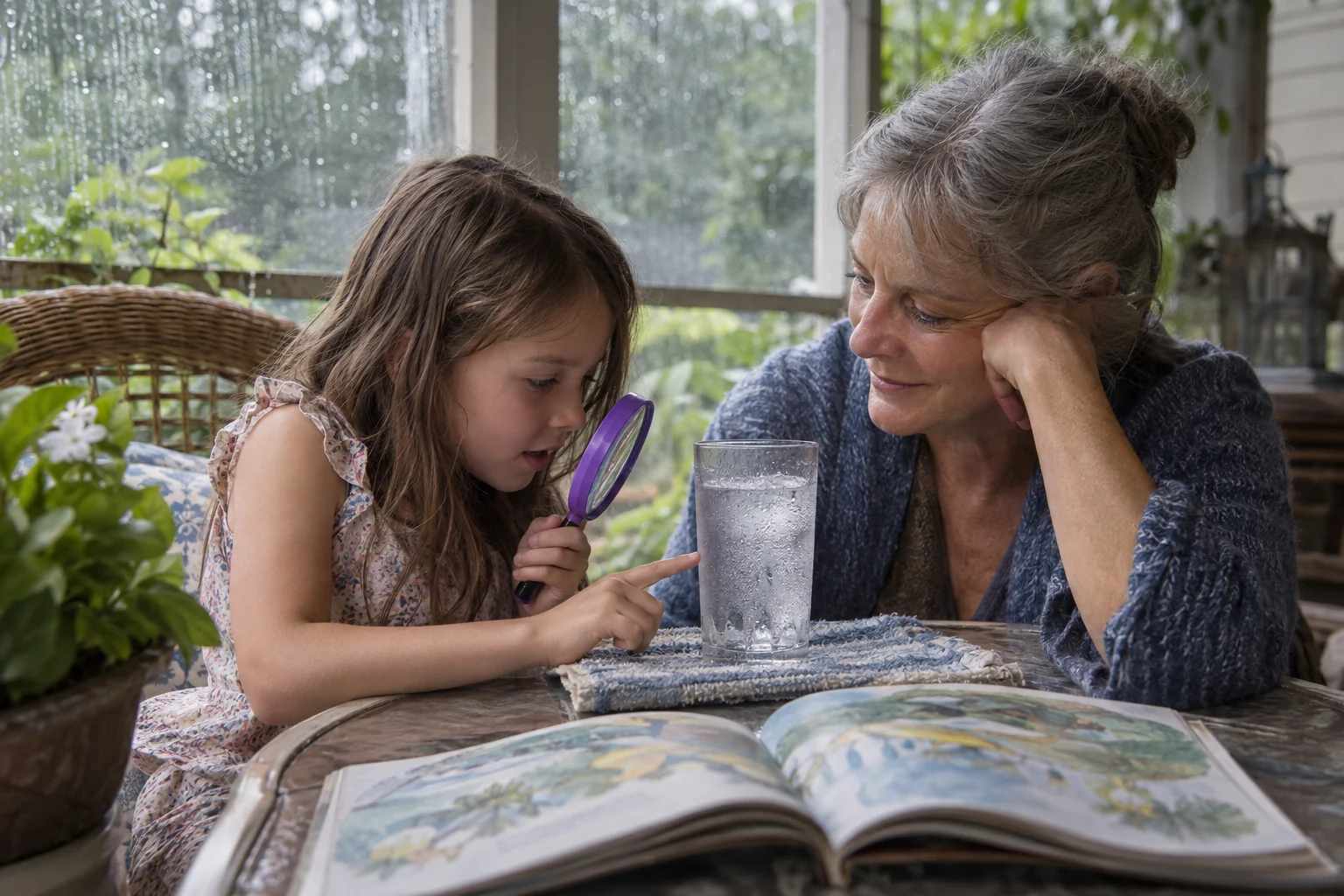
Put cold water in a sturdy cup and watch its outside. On a humid day, droplets may appear there. They come from water vapor in the surrounding air condensing on the cold surface, rather than water leaking through the cup. USGS explanation of condensation.
If droplets do not appear, note the room conditions and try another time. Keep a towel underneath and involve an adult for setup and cleanup.
Leave room for the child's version
Invite your child to draw where they think one drop could go next. You can add another possible route beside it. The drawing can include a talking raindrop as long as you both know which parts are invented.
For grandparents reading remotely, compare the weather at each home. One person may have rain while the other has a dry sky. Neither is doing the activity wrong.
Check the personalized book preview for the character, then read the separate sample story pages before ordering. The sample pages use a sample character.
The Wind story offers another question for a different day. Start with the puddle you actually have.
Questions parents ask
Where does rain go after it falls?
It can run into waterways, soak into the ground, or collect in places such as puddles. Water also returns to the air through evaporation.
Is a cloud made of invisible water vapor?
Water vapor itself is invisible. Visible clouds contain tiny liquid droplets or ice crystals.
Do we need to go outside in a storm?
No. Watch from indoors during unsafe weather. A simple observation after the rain can be enough.


