Where Does the Moon Go? A Story and a Simple Moon Journal
Meet the moth in this personalized Moon adventure, learn why the Moon changes appearance, and start an observation journal with your child.


In this article
The Moon is out before dinner. Yesterday it looked rounder. Tonight a cloud has hidden it altogether.
You have the start of an investigation before anyone opens a book.
A telescope, a moth, and a question
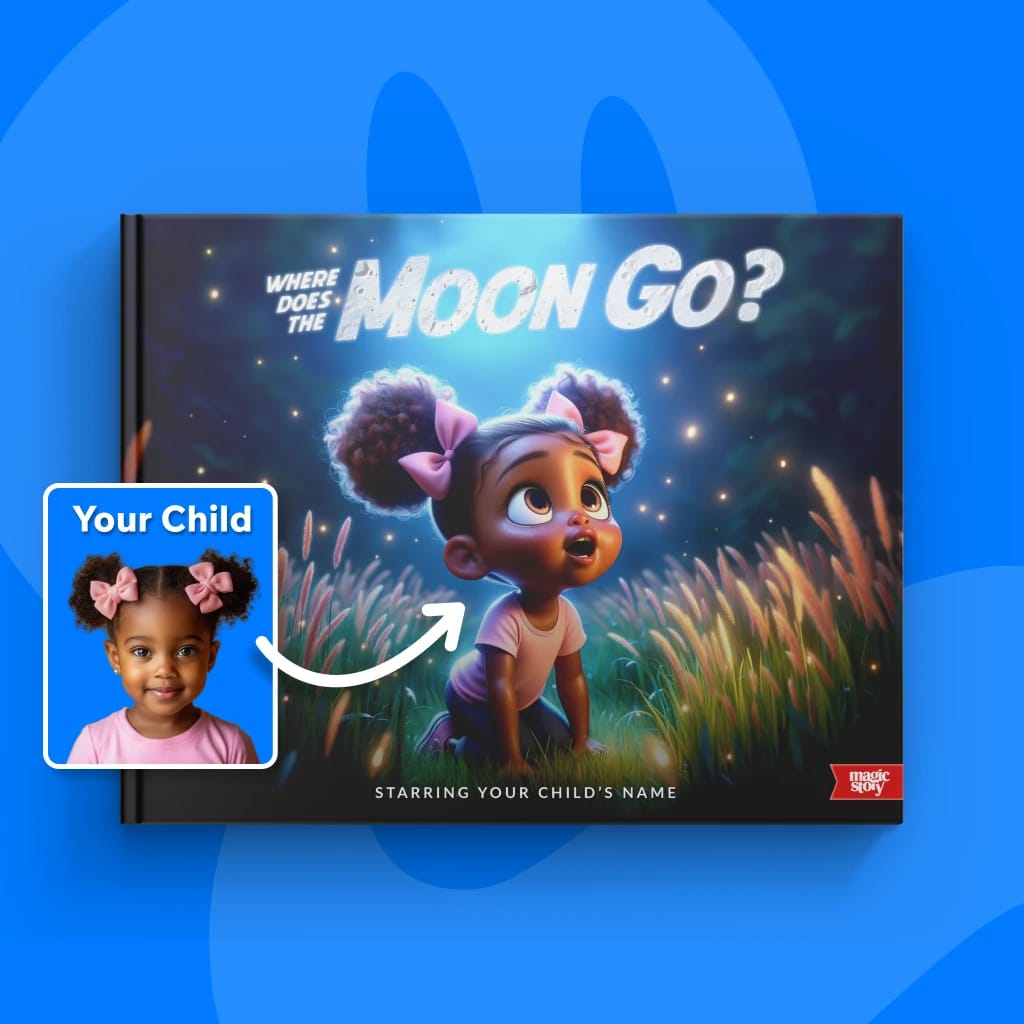
In Where Does the Moon Go?, the child's character begins at a backyard telescope with a question: where does the Moon go during the day? A wise moth joins the search. The child's name and illustrated likeness appear in the adventure.
After the moth's journey, bring the question back to your own window. Can you spot the Moon while it is still light? What shape does it seem to be today?
The short answer to the question
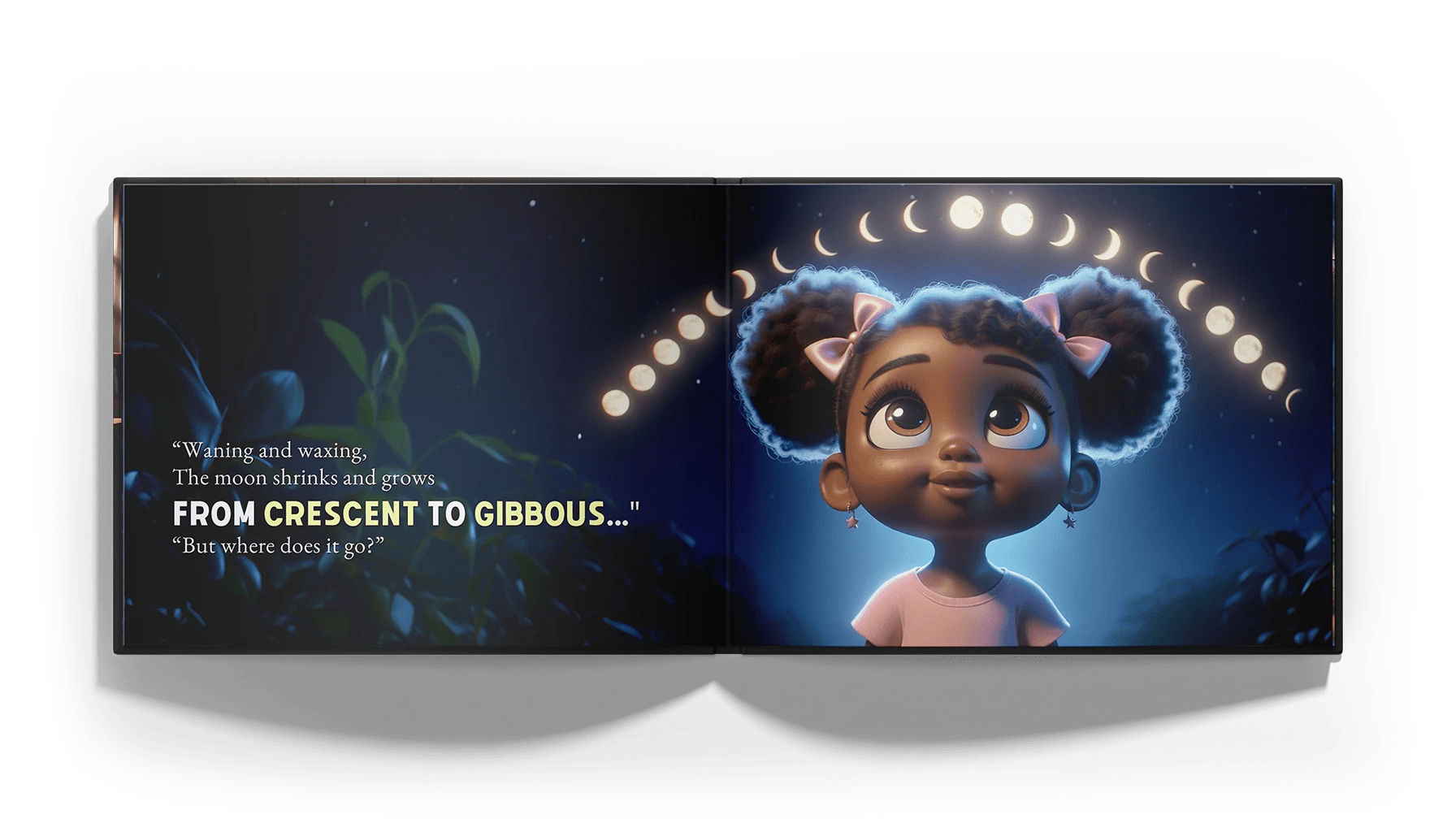
The Moon does not vanish when the Sun comes up. It continues orbiting Earth and is often visible during daylight. Its visible phases change because we see different portions of the half illuminated by the Sun. The Moon's phase cycle takes about 29.5 days. NASA's guide to Moon phases.
That means a four-week chart will not cover an exact full phase cycle, and a fixed bedtime is not always a useful viewing time.
Make a journal that can include blank skies
Fold a few sheets of paper or use a notebook. For each observation, write the date and time. Draw the shape you actually see, along with clouds or nearby landmarks if useful.
Add one of three notes:
- We saw the Moon.
- Clouds covered the sky.
- We looked and did not find it.
Those last two entries are observations too. A blank or cloudy-sky drawing belongs in the journal too.
After several days, compare drawings. What changed? Was the Moon in the same place? What else would you like to find out? You can use NASA's diagrams to check an idea and choose what to look for next.
Keep it easy to join
A window or a short step outside may be enough. Choose somewhere safe and keep normal bedtime needs in mind. There is no need to buy equipment or stay awake for a special event to begin noticing the sky.
Grandparents can keep their own drawings and compare them with the child. Note where and when each person looked; different viewing conditions are part of the conversation.
Before choosing the book
Check the personalized book preview for the character, then read the separate sample story pages before ordering. Choose it for a child interested in the sky or in the moth’s adventure.
For another question to follow, try Where Does the Sun Go?. One question can be enough for tonight.
Questions parents ask
Where does the Moon go during the day?
It continues orbiting Earth. It is often visible in daylight, depending on its position, phase, and viewing conditions.
Why does the Moon change shape?
The Moon itself stays round. As it orbits Earth, we see different amounts of its sunlit half.
Do we need a telescope for a Moon journal?
No. You can draw the visible shape with your eyes alone. Never aim binoculars or a telescope toward the Sun.