The Sneeze of Destiny: A Dragon Story About Looking Again
Read The Sneeze of Destiny with questions about first impressions, missing information, and kindness that still leaves room for sensible boundaries.


In this article
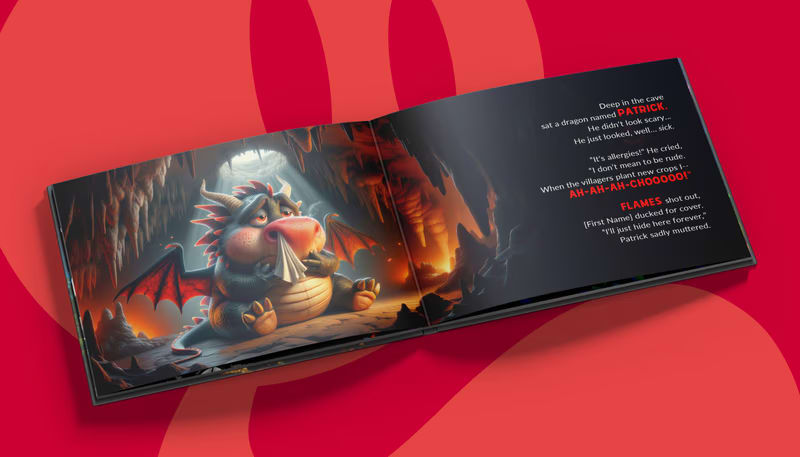
A dragon has frightened a whole land. Everyone seems certain they know what is wrong. Then your child's character and Buddy the dog take a closer look.
That is the invitation in The Sneeze of Destiny: pause long enough to find out whether the first explanation is the whole story.
The adventure on the page
In The Sneeze of Destiny, the child and Buddy encounter a dragon that has been misunderstood. New clues change the situation, and the child helps the dragon and villagers find a way forward.
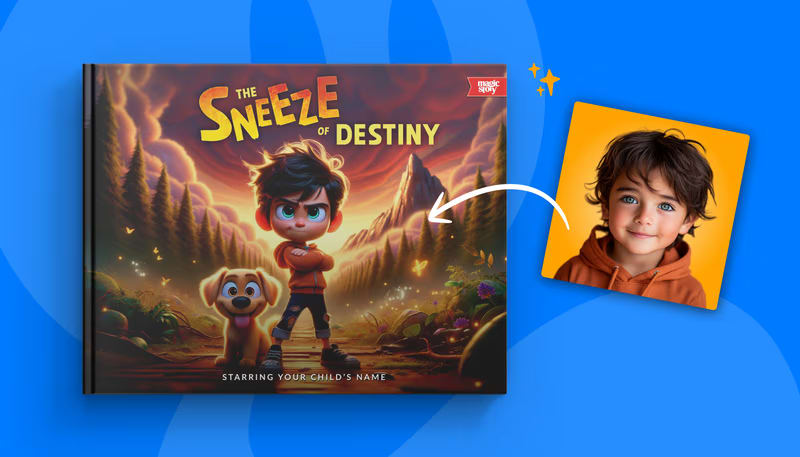
Personalization places your child's name and illustrated likeness in this fictional quest. The quest gives you a chance to talk about what the characters notice and how their choices change.
Follow the clues together
Try "What made them think that?" or "What do we know now that we didn't know before?" A child can point to the picture instead of answering in words.
Let them disagree with a character's choice. They might think the villagers should have asked for help sooner, or that Buddy noticed something important. You do not need to guide every answer toward a moral.
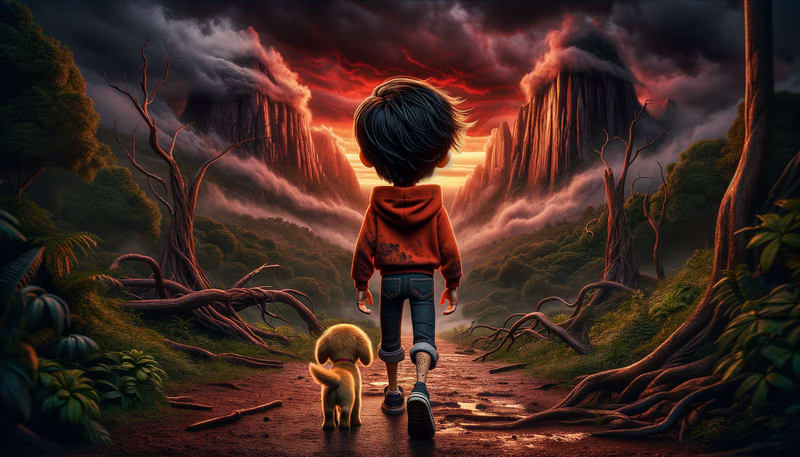
Make a distinction between an observation and a guess. "The dragon is making a loud noise" describes something happening. "The dragon wants to hurt everyone" adds an explanation that might need checking.
Take the idea into an ordinary moment
If another child walks away from a game, you can name several possibilities: they may want a break, be disappointed, or have somewhere else to go. Then ask what your child could do: invite them once, give them space, or ask a grown-up who knows more.
Avoid claiming to know the other child's feelings. You can model uncertainty: "I don't know. We could ask."
A grandparent can use the same approach during shared play. Describe what happened before assigning a motive. "He took the last block" leaves more room for a useful response than "He is selfish."
Keep kindness and safety together
Understanding someone is not the same as agreeing to everything they do. A child can say, "I don't like that," move away, or ask an adult for help. They are not responsible for fixing another person's repeated hurtful behavior.
The dragon is fictional. Real disagreements need adults who listen and take sensible action, particularly when someone is being hurt or excluded.
One more way to read it
On a reread, invite your child to tell a scene from Buddy's point of view. What would the dog have noticed first? What would the dragon want the villagers to know?
Or simply enjoy the adventure again. Our guide to talking about feelings at home offers further ideas when you want them. A good story is allowed to stay a good story.
Questions parents ask
Who accompanies the child in The Sneeze of Destiny?
Buddy the dog joins the child in the adventure.
What can we talk about while reading?
Try asking which clues change the characters' minds and what they still do not know about the dragon.
Does empathy mean being friends with everyone?
No. Children can consider someone's feelings and still say no, keep distance, or ask an adult for help.


