Show-and-Tell Nerves: Reading Marco and the Very Scary Show and Tell
A chatty parrot, a classroom challenge, and a few small ways to help your child prepare something they want to share at show-and-tell.


In this article
Show-and-tell sounds small until you are the person standing at the front of the room.
A child may know everything about their favorite rock and still have trouble saying one sentence about it while classmates watch. Preparing can begin much earlier than a speech: choosing the object, deciding on a first sentence, and knowing who will help if they get stuck.
Meet Marco, the very talkative parrot
In Marco and the Very Scary Show and Tell, your child's character is worried about speaking to the class. Marco has plenty to say, including some odd advice, while the child works toward using their own words.
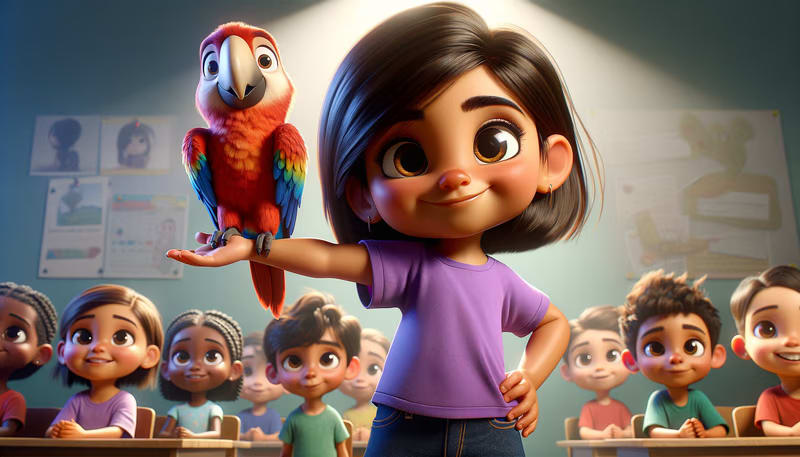
The book uses the child's name and illustrated likeness. Its classroom predicament gives you a place to talk about what the character wants to say and who might help.
Find the first sentence
Ask your child what they want classmates to know. Help them make it small enough to remember: "This is my rock. I found it at the beach."
Then offer a choice of listener. A stuffed animal, you, or a grandparent on a call may feel different from an audience. Ask before inviting anyone else to watch.
If your child wants to practice, try this sequence:
- Put the object somewhere easy to hold or point to.
- Say the opening sentence once.
- Let the listener ask one question the child has agreed to hear.
- Stop while it still feels manageable.
There is no need to correct every filler word, insist on eye contact, or demand a louder voice over and over. The useful question is whether the child knows what they want to share.
Make a plan for getting stuck
A simple fallback can be more useful than "You'll be fine." Ask the teacher what is allowed: a prompt card, a partner, showing an item from a seat, or telling the teacher first.
Offer concrete help: pack the object together, practice the first sentence, and find out who can help in the classroom.
After the day is over
Try "Would you like to tell me about it?" before asking how well it went. If the child is disappointed, listen before proposing another practice session.
Use specific observations when you have them: "You chose something you really wanted to share." Avoid comparing the child with a louder sibling or calling them shy in front of other people.
For more ideas about everyday changes around school, see helping children with transitions. Marco can supply a funny companion for the conversation. The child's own pace should set the rehearsal schedule.
Questions parents ask
What is the book about?
The child faces an upcoming show-and-tell with help from Marco, a talkative parrot.
How much should we rehearse?
Start with one short, voluntary practice. Follow the child's lead instead of requiring repeated performances.
What if my child cannot speak in front of the class?
Talk with their teacher about what happens and what support is available. Ongoing difficulty deserves individual attention, not more pressure to perform.