The Emotion Emporium: A Story for Talking About Big Feelings
Meet the fox and sloth in The Emotion Emporium, then try simple reading prompts that give children room to talk about feelings in their own words.


In this article
A door opens onto anger. Another leads to sadness. Somewhere else, joy has taken over the room. In The Emotion Emporium, feelings become places a child can explore with a fox and a sloth for company.
A picture gives you something to notice together. A door, a color, or a character’s expression can be the start of a conversation.
What happens in the story?
The Emotion Emporium places your child's name and illustrated likeness in a journey through a world of feelings. The animal guides accompany the child through experiences including anger, sadness, joy, and pride. The doors and rooms give each part of the adventure a setting to talk about.
Follow whichever detail catches your child’s eye, whether it is a feeling-filled room or the fox waiting by the door.
Try one question, then leave room for an answer
Start with the character: "What do you notice in this room?" If your child wants to continue, try "How do you think the character feels?" Accept a different reading of the picture. A face that looks angry to you might look worried to them.
Offer words as possibilities: "Maybe disappointed? They wanted something different to happen." Avoid correcting a child's account of their own feeling. If they say they are tired, you do not need to insist that they are secretly sad.
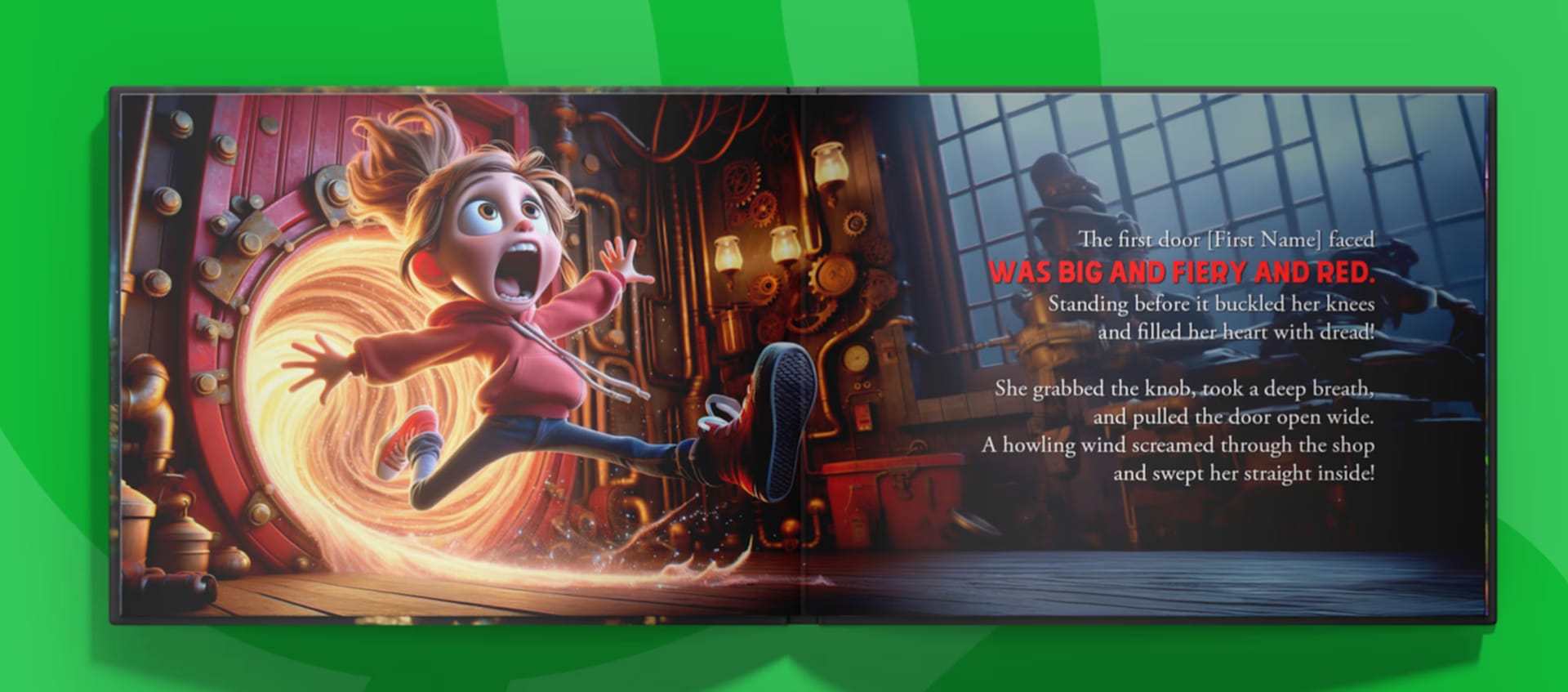
A younger child might point, copy a face, or choose a color. An older child might want to tell a long story about school. Both leave you something to respond to. So does "I don't know."
Keep the feeling separate from the limit
A story about anger does not remove the need for boundaries. You can say, "You wanted another turn. I won't let you hit," and save the fuller conversation for later.
When things are quiet, return to a picture if your child is willing: "Was any part of today like this?" Let them decline. A familiar picture can give the conversation a gentle starting point.
For everyday scripts, see our guide to helping children understand feelings at home.
Make a room of your own
Put out paper and a few crayons. Invite your child to draw a room for a feeling, real or invented. What would the furniture look like? Would it need quiet, company, or somewhere to jump?
A grandparent can join in over a call by drawing their own room and showing it to the camera. Take turns describing your pictures and asking about each other’s rooms.
Before you choose the book
Look through the sample story pages and make a separate free character preview. Check the likeness and spelling, then review the format and current price on the product page. The sample story character is different from your child's personalized preview.
If your child would rather read about a dragon or a pirate, start there. Our guide to books about emotions offers other ways into the conversation. The best opening is often the story they want to hear.
Questions parents ask
What is The Emotion Emporium about?
A child explores a fantastical world of feelings with a fox and a sloth. The book includes the child's name and illustrated likeness.
When should we read a book about feelings?
Choose a calm moment when your child wants a story. During an upset, focus first on safety and what they need; a discussion can wait.
How can we use the story to talk about feelings?
Pick a picture that interests your child and ask what they notice. You can offer a feeling word tentatively and follow their own description.


