The Analog Parenting Revolution: Why More Families Are Choosing Books Over Screens in 2026 (And What the Research Actually Shows)

Magic Story
12 min read | February 26, 2026

The Analog Parenting Revolution: Why More Families Are Choosing Books Over Screens in 2026 (And What the Research Actually Shows)
Meta Description: The research on screen-free activities for kids is clear—but what actually works for busy families? Discover the analog parenting shift reshaping 2026.
Marcus noticed it first at breakfast. His four-year-old daughter Emma was describing her cereal bowl in the third person—"Emma is pouring the milk now"—as if narrating a YouTube kids' video. She'd never seen herself on camera. But somehow, between the TikToks he thought were harmless, the animated shows during dinner prep, and the iPad during appointments, her entire relationship with reality had begun to look like content. That morning, sitting with her across the table, he made a quiet decision: something had to change. Not a dramatic screen purge—life wasn't going to be that simple—but a real shift back to the activities that had shaped his own childhood. Books. Imagination. Conversations. That afternoon, he bought Emma a picture book. She barely looked at it. But he was determined. Within weeks, something shifted. By 2026, Marcus wasn't alone. Millions of parents were reaching the same breaking point.The "Anxious Generation" Moment: What's Actually Happening With Kids and Screens in 2026
The seismic shift in family life we're witnessing in 2026 didn't happen overnight—it's the culmination of years of research, warnings, and real-world consequences finally breaking through the noise.
Jonathan Haidt's The Anxious Generation landed like a thunderbolt in 2024, but its impact on parenting culture is hitting its peak right now. The central thesis is simple and terrifying to parents: we've turned children into digital natives just as we've learned that constant connectivity is eroding their mental health, attention spans, and social development. Anxiety diagnoses in kids have skyrocketed. So have sleep disorders, depression, and what researchers call "digital distraction syndrome"—the inability to focus on anything for more than minutes at a time.
The data isn't abstract anymore. We're seeing it in real policy:
- School phone bans are becoming standard. From New York to California, districts are recognizing that phones in pockets are a cognitive drag. Teachers report students can't retain information when their devices are nearby—even powered off.
- Australia banned social media for under-16s. The country's government took a sledgehammer to the algorithmic playpen, and suddenly, other nations are asking: what took us so long?
- Parents are voting with their choices. Waldorf schools, Montessori programs, and tech-free preschools have waiting lists measured in years. Affluent tech workers in Silicon Valley—the people who built these platforms—are sending their kids to low-tech schools. When the architects don't use their own product, that's a signal.
But here's what's different about 2026: this isn't moral panic. It's informed skepticism backed by neuroscience. Parents have read the research. They've watched their kids. And they're asking a harder question than "how much screen time is okay?" They're asking: What are my kids missing?
The Research on Books vs. Screens: What Actually Happens in a Child's Brain
If screens are the problem, books are emerging as the evidence-backed answer. But we need to be precise here—this isn't nostalgia. This is neuroscience.
Language development gets turbocharged by reading. A landmark Stanford study found that children who were read to regularly had significantly larger vocabularies and stronger language pathways by age three than children whose primary exposure to language came through screens. More importantly, the quality of language matters. A book offers complex sentence structures, metaphor, and narrative—screens, even "educational" ones, tend toward shorter, simpler speech patterns optimized for quick consumption.
Parent-child bonding deepens through shared reading. When you read aloud to a child, something chemical happens. Eye contact. Touch. Turn-taking. Questions. Your child's brain is getting a hit of oxytocin—the same hormone that builds attachment in infants. Screen time, by contrast, often isolates children or creates passive consumption. A parent next to a phone isn't present; a parent reading a book is.
Imagination strengthens when it's required to do the work. Books leave gaps. Your child has to picture the dragon, imagine the castle, create the character's voice. Screens fill in every detail. The visual cortex is activated, but the imaginative neural networks—the parts of the brain we use for creativity, problem-solving, and abstract thinking—remain dormant. Over time, screens may be literally shrinking the mental muscles kids need to think creatively.
Sleep architecture improves with books, deteriorates with screens. The blue light from devices suppresses melatonin production. Even worse, the rapid-cut editing of most screen content over-stimulates the sympathetic nervous system (fight-or-flight). A bedtime book activates the parasympathetic system—rest and digest. Kids fall asleep faster, sleep deeper, and wake more refreshed. Parents report that children's behavior, mood, and school performance improve noticeably within weeks of replacing screen-time with reading.
The picture is clear: books aren't just less harmful than screens; they actively build neural architecture that screens don't develop. This is why the push toward screen-free activities for kids isn't about judgment. It's about giving kids' brains what they actually need to grow.
Going Analog Doesn't Mean Going Backward
Here's where many parents get stuck: the idea of "screen-free" feels like deprivation. It sounds like vintage parenting—no convenience, all exhaustion. That's not what this is.
Going analog is a reframe. It's not about eliminating technology (that's impossible and honestly, undesirable). It's about being intentional about which activities get screen time and which don't. It's recognizing that not every moment needs to be optimized or convenient.
Some of the most analog activities are actually the most pragmatic:
- A book takes five minutes or an hour. You control the pacing. A show waits for the next episode. A game demands the next level. Books have natural stopping points.
- Books are portable. They don't need wifi, batteries, or updates. They work on planes, in waiting rooms, and in bed.
- Books cost less than subscriptions. A personalized book that becomes your child's favorite might cost $30. A monthly streaming service for background content? That's perpetual.
- Books build memories. Kids remember the books you read to them. They don't remember which Disney+ show played on a Tuesday in February.
The analog revolution isn't a regression. It's a correction. Parents in 2026 are recognizing that the convenience of screens came at a hidden cost—and they're deciding it's worth being slightly less convenient if their kids are actually present, curious, and calm.
Screen-Free Activities That Actually Work (For Real, Busy Families)
Let's be honest: "go outside and play" is advice that works great if you live in a safe neighborhood, the weather is cooperating, and you have time to supervise. For most families, screen-free living requires practical substitutes that fit into actual life.
Reading is the anchor activity. This is where we start because it works across ages, requires minimal setup, and compounds over time. A child who reads (or is read to) regularly doesn't just develop better language skills—they're less bored. Less boredom means fewer requests for screens. It becomes a positive cycle.
But reading alone isn't enough. Pair it with:
- Audio activities. Podcasts, audiobooks, and music remove the screen but keep the engagement. Many families find that listening to a book while doing a craft—coloring, building, cooking—is the sweet spot between passive screen time and isolated quiet time.
- Hands-on making. Lego, drawing, Play-Doh, building with cardboard—these aren't revolutionary, but they are radically underutilized in favor of apps. The beauty? They require almost no prep and kids can do them for hours.
- Play-based learning. Cooking together, setting up a pretend restaurant, building an obstacle course. These aren't "educational" in the formal sense, but they build executive function, creativity, and problem-solving better than any app.
- Structured boredom. Yes, boredom. Kids need unfilled time. Not busy time. Unfilled time is where imagination lives. Let them be bored for 20 minutes before suggesting an activity. You'll be surprised what they invent.
- Social time with other kids. Not managed playdates with activities. Just... kids together. Playing in a backyard. At a park. Building forts. Fighting. Negotiating. This is where kids learn to regulate emotions, resolve conflict, and actually be social—skills that don't develop on Roblox.
The pattern here: screen-free activities don't have to be elaborate. They just have to be deliberate. A family that replaces 30 minutes of iPad time with 30 minutes of reading aloud will see measurable changes in behavior, sleep, and focus within weeks.
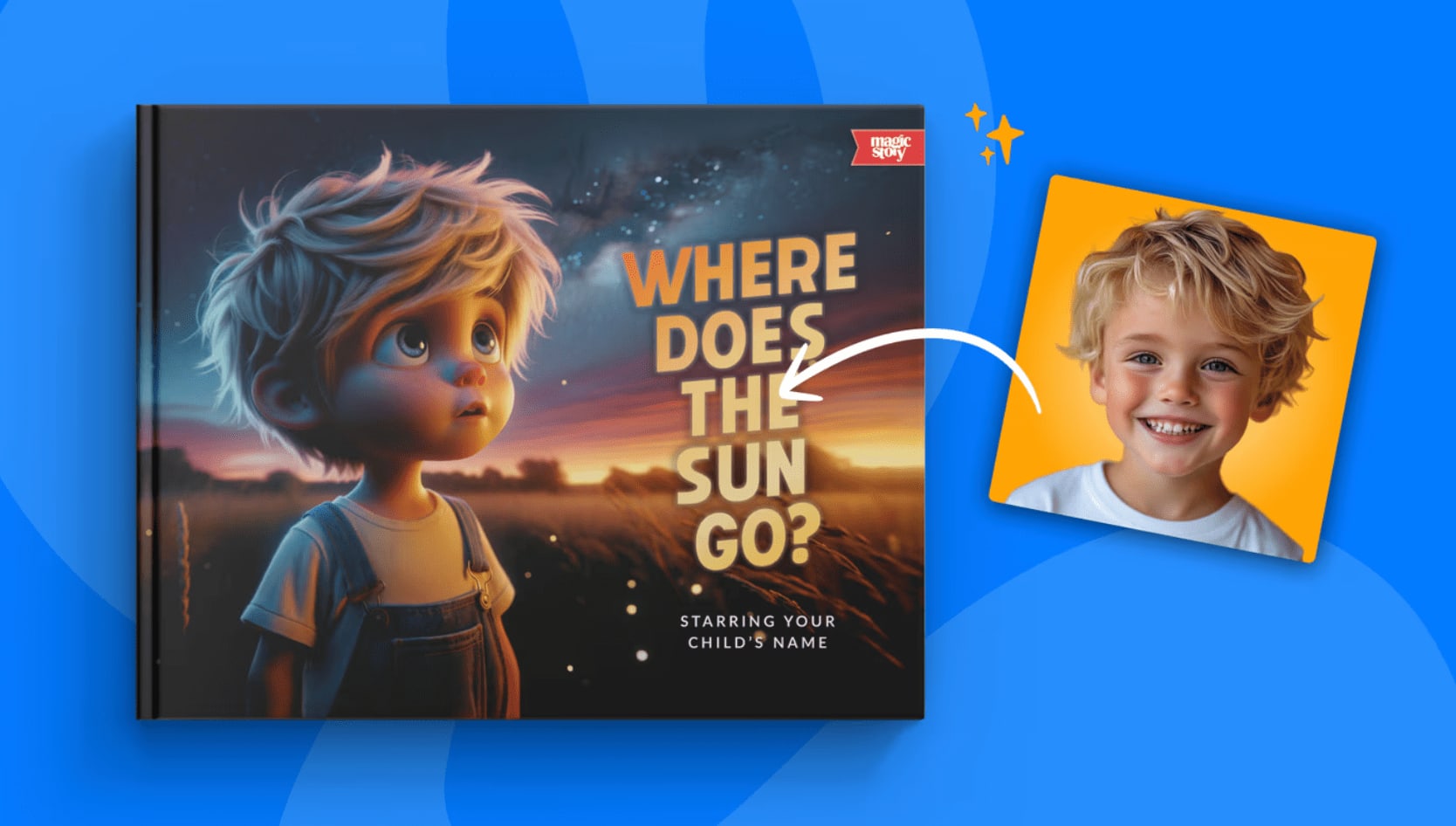
The Best Screen-Free Activity? A book your child stars in. Personalized stories transform reluctant readers into book lovers—because suddenly, the main character is them. Explore personalized books that make screen-free reading irresistible at magicstory.com/all.
Why Personalized Books Are the Secret Weapon for Reluctant Readers
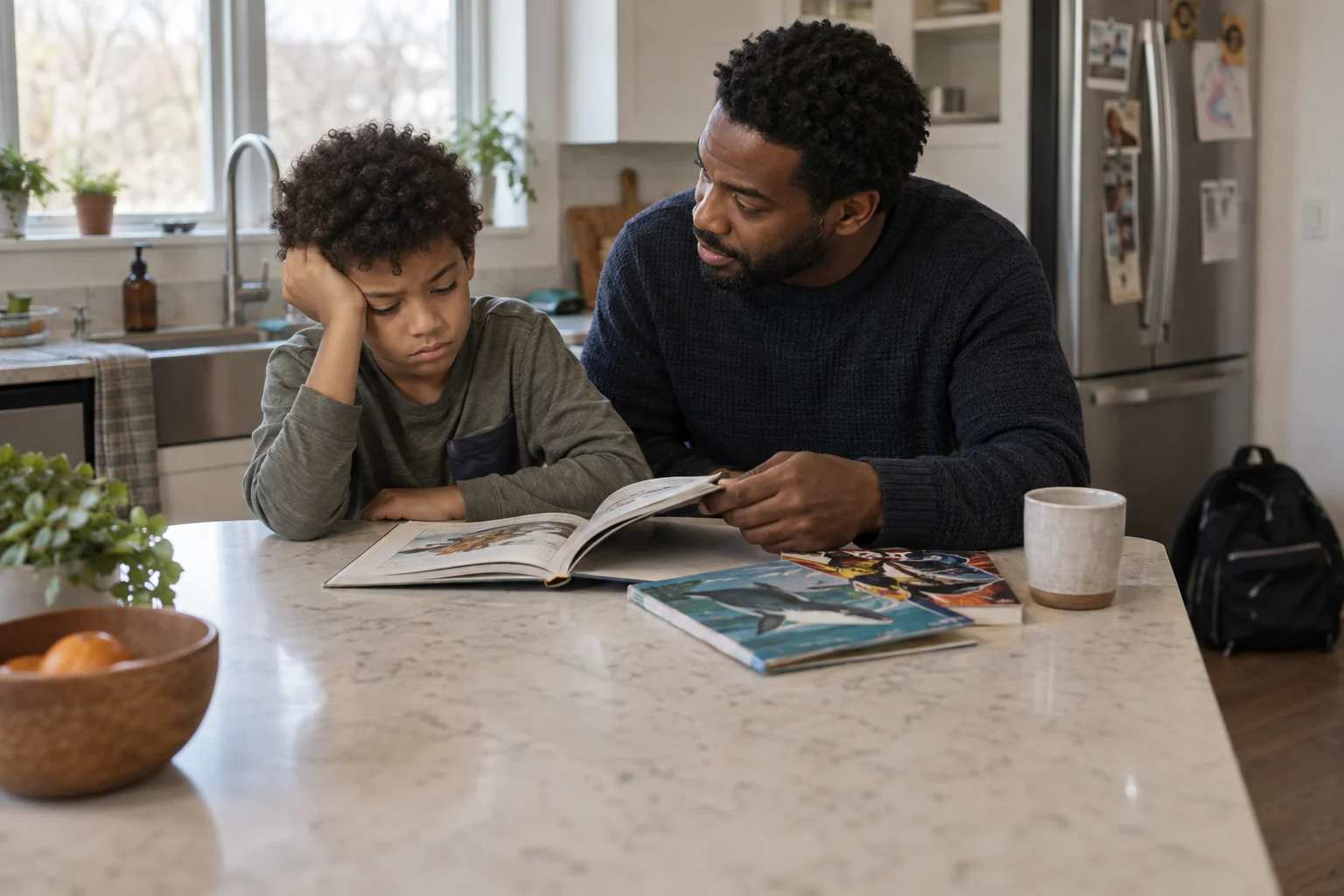
Here's a confession: not every kid is a natural reader. Some children see books as slow, boring, and irrelevant. They've been raised on rapid-cut videos. Static pages feel like punishment.
This is where personalized books reframe the entire relationship with reading.
When a child opens a book and sees their own name on the cover, sees themselves as the hero of the story, something shifts neurologically. It's no longer abstract narrative. It's personal. It matters to them. Reluctant readers become curious. They ask to read it again. They want to show everyone. The book becomes theirs in a way that generic picture books never do.
Magic Story has built an entire approach around this insight. Their personalized books address real emotional challenges kids face—the ones that generic picture books often gloss over:

Zen & the Storm Inside addresses something many parents don't talk about: kid anxiety. It teaches mindfulness and emotional regulation through a story where your child is the protagonist learning to calm their nervous system. This is the kind of book a therapist would recommend—except your child actually wants to read it because it's about them.

There's No Such Thing as Monsters tackles childhood fears directly. Your child becomes brave in the story. They learn to talk about what scares them. Bedtime becomes less of a power struggle and more of a reassurance ritual.

Even Whales Go to Bed normalizes bedtime routines. When your child sees themselves going through a calming bedtime ritual—alongside whales, bears, and other animals—it stops being a battle and becomes a story they're part of.
There's also Chroma and the Neverending Colorverse, which ignites creativity and imagination through a world where colors come alive. It's the kind of story that sparks questions, art projects, and play.
The common thread: these aren't preachy. They're narratives. Your child is the protagonist. And the outcome is that they choose to read—not because you told them to, but because the story is about them.
For parents building a screen-free family, personalized books are the conversion point. They're the tool that makes "put the tablet down" followed by "let me read you a story" feel like a treat instead of a compromise.
Building a Screen-Free Bedtime Routine That Actually Sticks
Bedtime is ground zero for the analog revolution. It's also where parents struggle most because the shift requires real behavioral change—from both kids and parents.
Here's what actually works:
Start earlier than you think. The wind-down doesn't begin when lights go out. It begins 60–90 minutes before bed. This means no screens after dinner. Not negotiable. The blue light suppression of melatonin means your child is neurologically incompatible with sleep right now. Replace that screen time with something calming.
Create a sensory transition. Bath, dimmed lights, soft music, or a calming audiobook. The goal is to signal to your child's nervous system: we're shifting gears. Predictability is powerful. If bedtime always looks the same, kids' bodies anticipate sleep.
Make reading the anchor. This is the non-negotiable part of bedtime. Not "maybe a quick story." This is: every single night, we read. 10 minutes, 20 minutes, doesn't matter. Consistency matters more than duration. Kids come to expect it. They look forward to it. If you have a personalized book that addresses a specific challenge (monsters, anxiety, bedtime resistance), this is where it becomes its own reward.
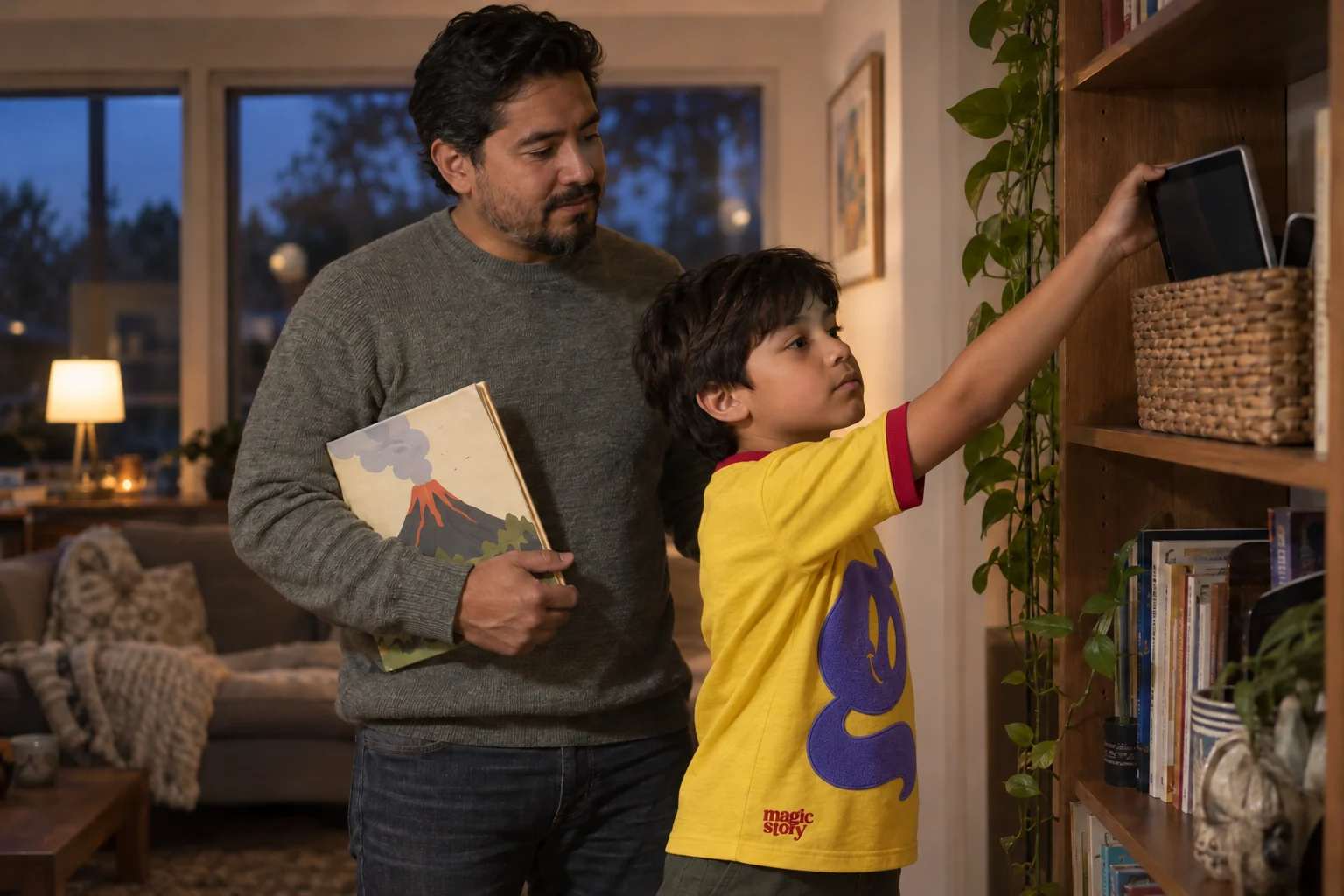
Keep the book by the bed. Not on a shelf. By the bed. So the first instinct when it's time for sleep isn't "can I have the iPad?" but "can we read the book?" Proximity shapes behavior.
Trade, don't subtract. If you're removing screen time, you're adding something. The child whose afternoon iPad time is replaced with afternoon story time doesn't feel deprived. You've given them something better—your attention. Most parents find that kids who get consistent reading attention have fewer behavioral problems and sleep better overall.
Expect resistance, and plan for it. The first week or two, kids will push back. They're used to screens. Reading feels slow. This is normal. Stick with it. By week three, something shifts. Kids' brains adjust. Bedtime becomes easier, not harder.
FAQ: The Screen-Free Questions Parents Actually Ask
1. What's the right age to start going analog?
Now. If your child is currently born, they're not too young. If they're ten, they're not too old. The American Academy of Pediatrics recommends no screens before age 18 months, limited screen time between 2–5, and parental controls after that. But honestly, the research suggests earlier is better. A child who grows up with books as their primary entertainment doesn't develop the same anxiety around screens that older kids do. That said, you can't undo the past. Start where you are.
2. How much screen time is actually acceptable?
The research doesn't support a magic number. What it does support: more books and in-person interaction than screens. If you're at 30 minutes of screen time a day, your child is probably fine. If you're at three hours, you're likely seeing behavioral and sleep impacts. The goal isn't zero (it's unrealistic). The goal is: when your child is given a choice between a book and a screen, they sometimes choose the book.
3. What do I do when my kid refuses the book and demands the tablet?
You're the parent. You're in charge. This is easier said than executed, because screens are literally engineered to be addictive. But: you can't negotiate with a five-year-old about whether screens should exist in your home. You can, however, make books more attractive. Personalized books help here—because they're genuinely more interesting to kids. You can also acknowledge the resistance without giving in: "I know you want the tablet. We're doing books tonight. Tomorrow we can have 20 minutes after breakfast." Consistency over sympathy. Kids adapt faster than you think.
4. What if both my kids have completely different reading levels and interests?
Read to the whole family together, and read individually with each child. Family reading time (everyone in the room, you reading aloud, mixed ages) teaches younger kids to listen and exposes older kids to stories they might not choose themselves. Individual time lets you meet each child where they are. A reluctant reader gets a personalized book with high interest. An advanced reader gets something challenging. Personalized books are particularly useful here because they meet kids exactly at their level and interest.
5. Is this just for younger kids? What about tweens and teens?
The research on reading and brain development continues into the teenage years. But the approach changes. Tweens and teens need autonomy. They need to choose their own books (with guidance, not mandates). They need time unplugged, but it shouldn't look like forced family story time. Audiobooks and graphic novels work well for this age. The goal shifts from "build reading as a habit" to "protect focused time" and "reduce social media's pull." Screen-free activities for teens look different, but they're equally important for mental health and sleep.
Key Takeaways: The Analog Shift Is Practical, Not Ideological
The analog parenting revolution happening in 2026 isn't about judgment or nostalgia. It's about parents recognizing that we over-corrected. For a decade, we treated screens as inevitable, educational, and relatively harmless. The data and our own observations have proved otherwise.
Here's what we know:
- Books build neural architecture that screens don't.
- Children who are read to have stronger language, better sleep, deeper attachment to parents, and more resilience.
- Screens aren't evil, but they're potent—and they're designed to be. Treating them casually is like leaving candy out and expecting moderation.
- Screen-free activities for kids don't have to be elaborate or expensive. Books, craft, play, and time together work.
- Bedtime reading is perhaps the single most impactful habit a parent can build for child health, development, and family closeness.
- When books are personalized and relevant to a child's interests and emotional challenges, they become irresistible—even for kids raised on screens.
Marcus, the parent from the beginning of this piece? By month two, Emma wasn't narrating her life anymore. She was living it. And every evening at 7:30 p.m., she asked for the book. Not because he insisted. Because she wanted to know what happened next in a story where she was the hero.
That's the real shift. It's not about taking screens away. It's about giving kids something better to choose instead.
Start your analog reading revolution today. When books star your child as the protagonist, they're not just screen-free activities—they're irresistible. Browse personalized books →
Want to make screen-free reading a habit? Magic Story+ delivers a new personalized book monthly—it's the subscription that makes books irresistible to kids who would otherwise reach for a tablet.