Six Easter Activities That Make Room for Kindness
Plan an egg hunt, a basket exchange, and simple Easter crafts that give children practical ways to include someone else in the celebration.

In this article
An egg hunt becomes a different game when the fastest child cannot take every egg.
You can design that difference before the first basket comes out. These six Easter activities give children concrete ways to include another person while leaving room for the ordinary excitement of finding something for themselves.
Before the hunt: agree on the rules
Decide whether each child has a color, a search area, or a set number of eggs. Choose hiding places everyone can reach. Explain the plan before anyone starts collecting.
Ask about food allergies and choose items suitable for the children taking part. Paper pictures can replace small treats or toys when those are unsuitable.
1. Hide a hunt for someone else
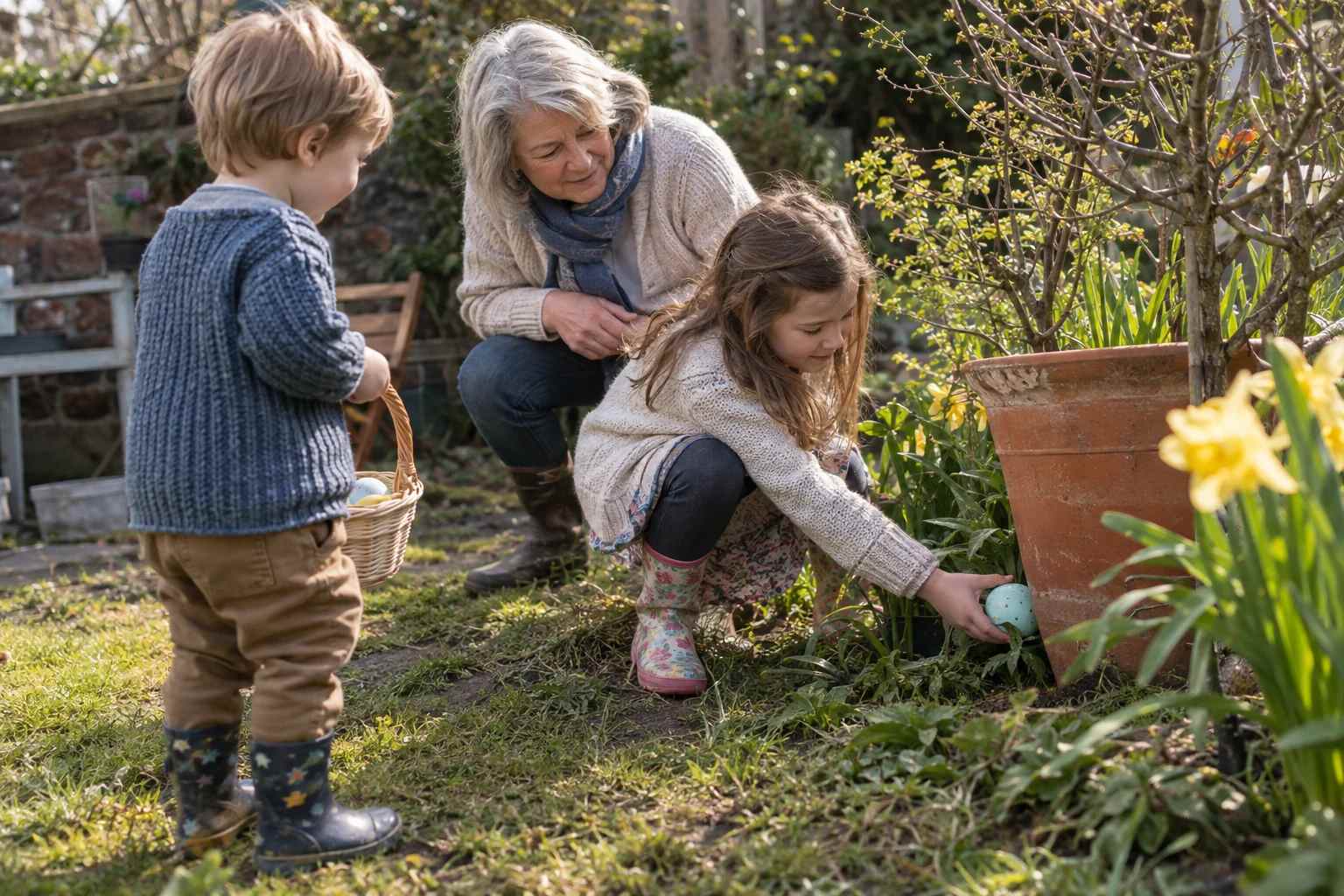
Set aside a separate batch of eggs or picture cards. Invite your child to hide them for a sibling, grandparent, or friend who wants to play.
Think about the person searching. A grandparent may prefer clues at table height; a younger child may need eggs partly visible. Let the child offer a clue when asked instead of racing to reveal every hiding place.
2. Put a true message in an egg
Write or draw something specific: "I liked building the tower with you" or "Thank you for teaching me that song."
The recipient can read it privately or aloud. Children who cannot write can dictate a message or draw a shared memory.
3. Pack a basket with the recipient in mind
Agree on a small budget or use things you already have. Ask the child to choose for another person's interests, rather than assuming everyone wants the same favorite color or snack.
A basket might hold a drawing, a library book to read together, or an invitation to play a game. An adult should check any food choice with the recipient's caregiver.
4. Give something that is actually wanted
If a child wants to pass on an outgrown book or toy, let them choose freely. Do not turn the activity into a surprise removal of belongings.
Check the receiving person's wishes or the organization's current donation rules first. Libraries and shelters do not all accept the same items. Clean, complete, requested things are more useful than a basket assembled only to empty a cupboard.
5. Make paper thank-you flowers
Cut or draw a flower, add a short message, and deliver it to someone who would welcome it. An adult can handle scissors while a younger child decorates.
Name the actual act you appreciated. "Thanks for walking me to school" is enough; the note does not need an elaborate speech.
6. Carry the eggs together
Set a shared goal: move a few eggs from one basket to another using spoons, without racing another team. Adapt the distance, objects, and movement to the players.
Let children decide how to help when an egg drops. End when it stops being fun. Let the players suggest a new route for the next turn.

A story after the excitement
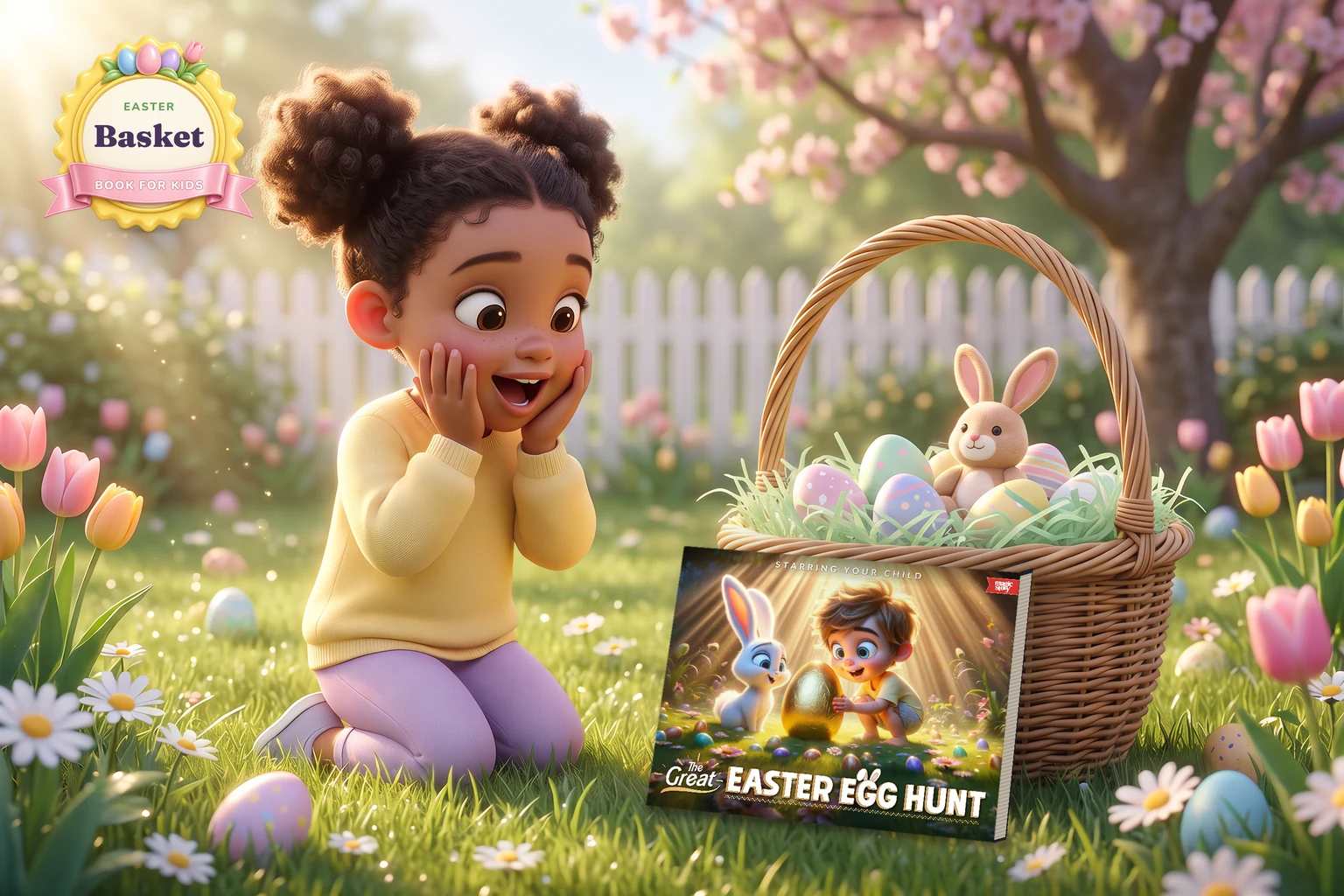
The Great Easter Egg Hunt Adventure follows the child's character and Cottontail through candy-colored clues and a golden surprise, with moments about helping and sharing.
After reading, ask which part they would like to borrow for a real hunt. Cottontail’s clues might inspire a new hiding place or a hunt designed for someone else.
Choose one activity that fits your family's Easter traditions. For help choosing a basket book, see our personalized Easter book guide.
Questions parents ask
How can an Easter egg hunt include different ages?
Assign separate colors or areas, use reachable hiding places, and agree on how many eggs each child can collect before the hunt starts.
Should children have to give away their Easter candy?
You can invite sharing without making a child surrender a prized item. Plan shared treats or a separate giving activity in advance.
Can we do these activities without candy?
Yes. Use age-appropriate pictures, notes, clues, or a shared activity as the prize, taking care with small objects around young children.