Best Personalized Books for 3-Year-Olds: 5 Picks That Make Kids the Star
Discover the best personalized books for 3-year-olds: expert picks for bedtime, fears, sharing, and identity in stories where your child is the hero.

11 min read | February 6, 2026 · Updated August 27, 2026

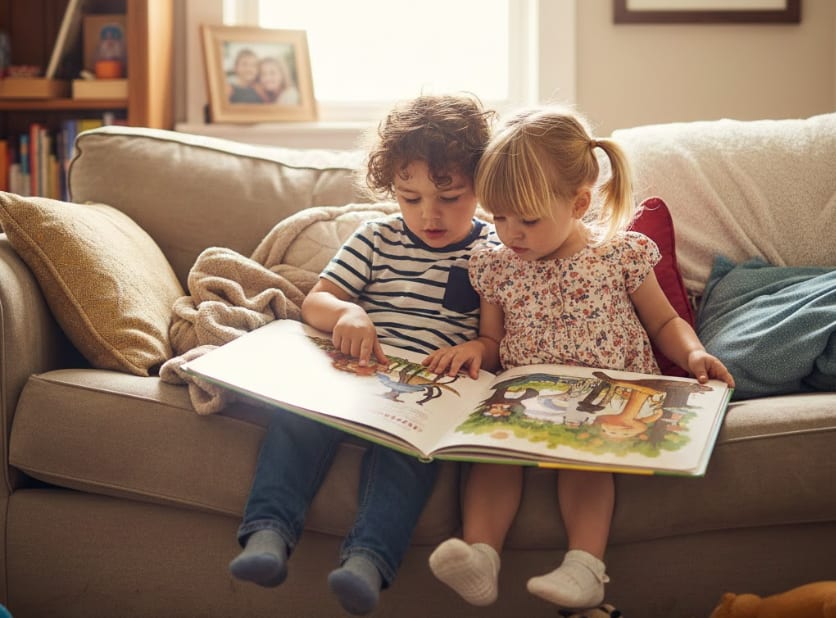
Your three-year-old just looked up at you mid-tantrum and said, "I'm so angry I could explode." Your heart melted, even as the tantrum continued. This is the age of the language explosion, where your little one is suddenly a tiny human with huge feelings and the vocabulary (sometimes) to match. It's also the age of bedtime negotiations worthy of a UN summit, sudden fears of the dark that weren't there last week, and the beginning of real friendships — complete with sharing struggles that would make any diplomat proud.
Personalized books are a game-changer at this age, building on the same magic we cover in our guide to personalized storybooks for toddlers. When your three-year-old sees themselves as the hero of the story, something happens that a generic picture book can't replicate: they're not just listening, they're rehearsing. They're processing the exact feelings that produced this morning's "I could explode," practicing new skills, and building confidence — all while cuddled up with you.
Below are five personalized books chosen for what three-year-olds are actually working through right now, not just books with your child's name stamped on the cover.
What Actually Works for a 3-Year-Old's Short Attention Span?
At three, patience for a story is short and the pull toward hearing it again is strong. The best personalized books for this age lean into both instead of fighting them — and the payoff for repetition is bigger than it looks.
Repetition Is the Point, Not the Problem
A University of Sussex study led by psychologist Jessica Horst found that toddlers who heard the same story several times learned new words faster than toddlers who heard a wider rotation of different stories once each. If your three-year-old wants "the whale book" for the eleventh night running, that's not a rut — it's how they're building vocabulary and confidence at this age. Books with a simple setup, a brief challenge, and a clear ending give repeated reads something to land on each time.
Relatable, Not Just Magical
This is the year of bedtime resistance, monster-under-the-bed anxiety, reluctance to share, and the occasional hilariously obvious lie. Books that put your child's face directly into one of these real situations do more work than a fantastical story with no connection to daily life — your child needs to see themselves handling the thing they're actually facing.
A Calm, Reassuring Voice
Tone matters as much as content at this age. A gentle narrative voice helps a three-year-old feel safe even while a story explores something scary, like the dark or an imaginary monster. If a book ever feels like it's escalating rather than settling your child, that's a sign to close it and come back another night — the goal is reassurance, not exposure for its own sake.
Room to Be the Hero, Not Just the Audience
Three-year-olds are starting to understand themselves as separate people with their own name, appearance, and preferences. A book that puts them at the center of the action — not just narrating events that happen near them — speaks to that emerging sense of self directly.
The 5 Picks Worth the Repeat Requests
Every hardcover below is $44.99 USD, or $24.99 USD/month if you subscribe to Magic Story+. Prices shown are for US customers; check the product page for pricing in your shopping country.
| Book | What It's About | Why It Works at 3 |
|---|---|---|
| You Should Never Play Tennis With A T-Rex | A wildly silly dinosaur-sports mishap | Short, laugh-out-loud arc that holds attention start to finish |
| Even Whales Go to Bed | A calm underwater bedtime routine | Slow, soothing pacing that normalizes the nightly wind-down |
| Learning to Share with Captain Inkbeard | A pirate adventure built on sharing treasure | Reframes "mine" as an adventure instead of a loss |
| There's No Such Thing as Monsters | Investigating what's really behind the fear | Gentle, repeated exposure that defuses closet-and-under-bed fears |
| Me and Spark Aren't Afraid of the Dark | A glowing companion for nighttime | A friendly character makes darkness feel less lonely |
You Should Never Play Tennis With A T-Rex

Your child faces off against a T-Rex with famously tiny arms, then a Velociraptor built for speed, across a string of sports that go hilariously wrong. It's a genuinely funny, fast-moving story, and three-year-olds respond to exactly that kind of big, exaggerated silliness — a T-Rex trying to serve a tennis ball is the sort of image they'll ask to see again immediately.
Underneath the laughs, there's real payoff: your child's character keeps trying a new sport after each mismatch, which is a gentle, low-stakes rehearsal of "that didn't work, try again" — useful at an age full of first attempts that don't go as planned.
Try this: Read it with big voices and exaggerated reactions. The sillier you play it, the more your three-year-old leans in.
Even Whales Go to Bed
If you're currently locked in a nightly bedtime battle, this book is your ally. Your child moves through a calming bedtime routine alongside some very large, very tired sea creatures — a gentle reminder that even the biggest, strongest animals need sleep.
Bedtime resistance peaks around three, and it's rarely defiance for its own sake — your child is often genuinely worried they're missing something, or they're not ready to downshift from the day's stimulation. The deliberately slow pacing here does the same downshifting for their body that you're trying to do at 7 p.m.
Try this: Read it 15–20 minutes before lights out as a fixed part of your wind-down routine, not a one-off.
Learning to Share with Captain Inkbeard
The playground drama of three-year-olds often centers on one word: "Mine!" This book reframes sharing as an adventure rather than a loss — your child teams up with a cheerful pirate to discover that sharing treasure, and friendship, actually makes the adventure better.

Sharing is developmentally hard at this age. Three-year-olds are still learning that other people have needs of their own, and that generosity can feel good rather than costly. The story doesn't lecture — it shows your child's character experiencing that payoff directly.
Try this: Read it before a playdate, or afterward once emotions from a sharing conflict have settled — not in the heat of the moment.
There's No Such Thing as Monsters
The monster fear often appears out of nowhere at three: creatures under the bed, in the closet, lurking in the hallway. This book doesn't dismiss that fear. It helps your child investigate it and discover that "monsters" are usually shadows, the house settling, or the dark playing tricks.

The illustrations are designed to look slightly spooky at first, then reveal themselves as harmless — which mirrors how the story helps desensitize the fear through repeated, safe exposure rather than logic that's too abstract for a three-year-old.
Try this: Read it right after your child mentions a monster fear, and again periodically afterward as part of building nighttime confidence, not just as a one-time fix.
Me and Spark Aren't Afraid of the Dark
Fear of the dark is nearly universal at three, and this book offers companionship through it rather than a lecture about it. Your child isn't facing the darkness alone — they have Spark, a glowing companion, right there with them, discovering together that the dark is different, not dangerous.

The illustrations gradually reveal more detail in the dark as the story goes on, helping a child's eyes — and mind — adjust. Many parents use this book alongside an actual transition off the nightlight.
Try this: After reading, ask what your child can actually see in the dark ("Can you see the dresser? The door?"). It grounds their perception in reality instead of imagination.
Does a 3-Year-Old Actually Notice the Personalization?
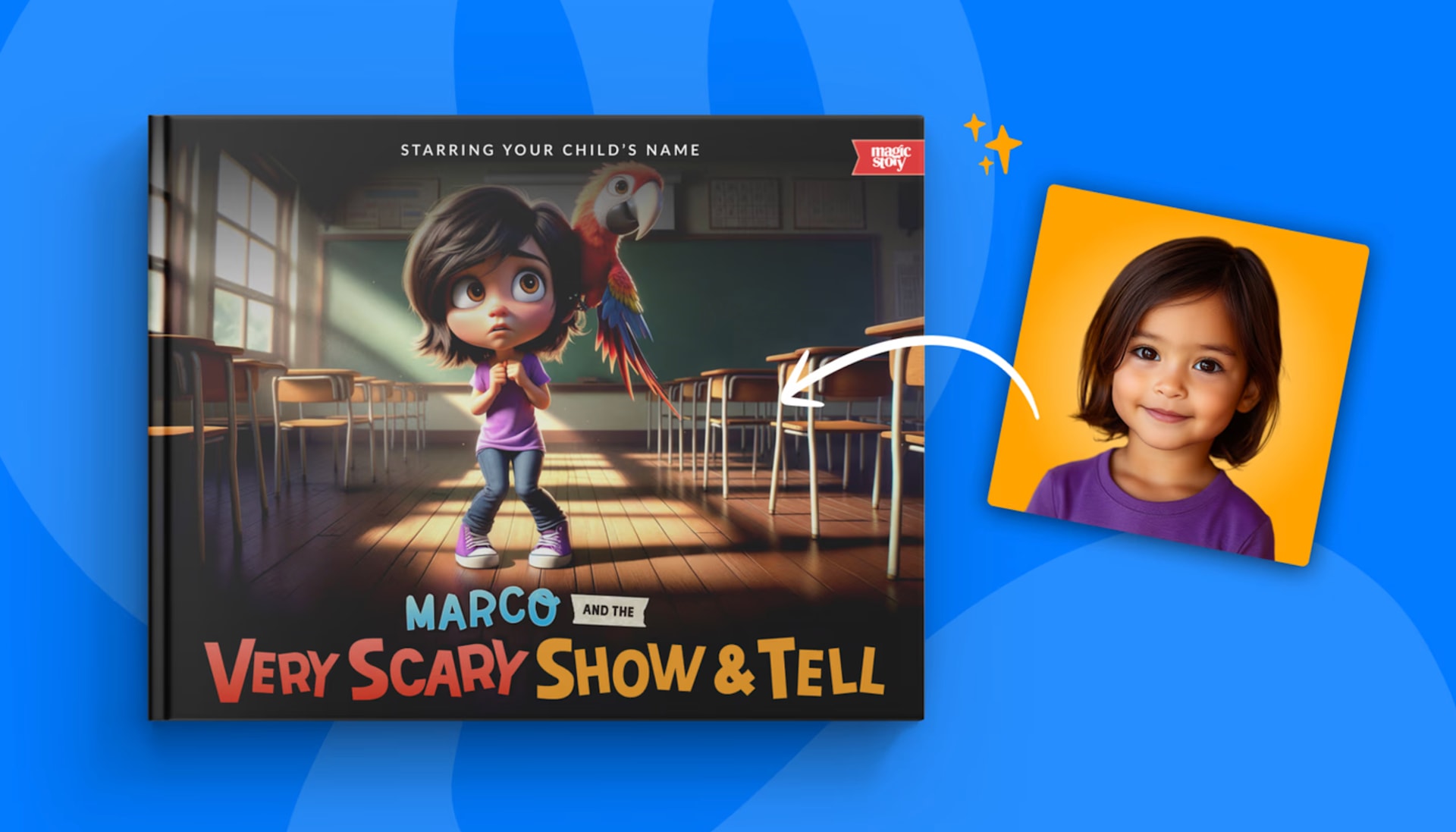
Yes — three-year-olds recognize their own name and their own face in photos, and that emerging self-awareness is exactly what these books tap into. Every title above puts your child's actual name and likeness into the story, not just onto the cover, which is what makes "you are the hero" land as true rather than as a marketing line.
At three, your child is constructing their sense of self for the first time in any real way. Seeing themselves in a story sends a specific message: "You are important enough that a story is about you." That matters for self-esteem and belonging, but it also does something more practical — a three-year-old sits through a story more willingly, and remembers more of it, when they're the one experiencing it. Watching their character handle bedtime resistance or fear of the dark is quiet rehearsal for handling the real thing, at a safe distance.
You'll usually see this show up as behavior, not just attention. A three-year-old who's genuinely engaged will point at the page and say "that's me," correct you if you get a detail wrong, or ask to "do the book again" the moment it ends. That's a stronger signal than whether they sat still — plenty of three-year-olds wiggle through a story they're completely absorbed in. Watch for the requests to reread, not the stillness.
If your child is moving past the toddler stage into an even wider emotional world, our picks for 4-year-olds and 5-year-olds pick up where this one leaves off.
How to Read These With (Not Just To) a 3-Year-Old
Read With Real Enthusiasm
Use different voices for different characters. Exaggerate emotions. Three-year-olds feed off your energy, and a story becomes more engaging the moment you look like you're enjoying it too.
Pause and Ask
At a moment of emotion or action, pause and ask: "How do you think [your child's character] feels right now?" or "What would you do?" This turns reading into conversation instead of a monologue.
Name the Personalization Out Loud
"Look, that's YOU! And that's your favorite color!" Three-year-olds love spotting themselves in the illustrations — call it out explicitly rather than assuming they'll notice on their own.
Let Them Ask for It Again
Three-year-olds love repetition, and asking for the same book isn't boredom — it's processing. Each read deepens their understanding a little more.
Follow Their Lead
Some kids want to fill in sounds or words; others want to quietly track the character through the pictures. Let your child set the pace rather than sticking rigidly to yours.
Bring the Story Into Real Life
While brushing teeth before bed: "Remember how [your child's character] got ready for bed in the book? We're doing that now." This bridges the story world and real life, which is where the lesson actually sticks.
Don't Rush a Reluctant Reaction
Not every three-year-old lights up the first time. Some watch quietly and only mention the book days later, or act out a scene from it during play instead of talking about it directly. That's still engagement — it just doesn't always look like enthusiasm in the moment.
Three-year-olds are working through more at once than it looks like from the outside — new words for big feelings, the first real negotiations over sleep and sharing, fears that seem to appear overnight. The next time your three-year-old announces they're "so angry I could explode," you'll have more than sympathy to offer: you'll have a shelf of stories where a character who looks and sounds just like them has already been there, and made it through.
Start with the book that speaks to whatever your child is currently facing, and let the repeat requests tell you it landed. If it becomes the one they ask for every single night for a month, that's not a sign you picked wrong — it's exactly what a good personalized book is supposed to do at three.
Frequently Asked Questions
Aren't personalized books too expensive as gifts for a 3-year-old?
Magic Story hardcovers are $44.99 USD — or $24.99 USD/month with Magic Story+ — which is more than a mass-market board book, but you're buying a keepsake, not a consumable. Parents often report that their child's personalized books become treasured items kept into adulthood. You're investing in a memory and a developmental tool, not just entertainment. These are US prices; check the product page for pricing in your shopping country.
Will my 3-year-old actually understand the personalization?
Yes. Three-year-olds recognize themselves in photos and understand the concept of their own name, and personalized books tap into this emerging self-awareness. You'll likely see your child immediately identify themselves in the illustrations and take pride in being the story's hero.
What if my child gets anxious instead of reassured by books about fears?
You know your child best. If they seem genuinely distressed, skip the scary-themed books for now and return to them in a few months — there's no rush. Books about fears work best when introduced by a calm, connected parent. If your child seems overwhelmed, pause and talk about their feelings instead.
Can personalized books replace regular picture books?
Not entirely. Diversity in stories matters. Your child needs both personalized books, which build identity and agency, and traditional picture books, which expand imagination and expose them to different characters and worlds. A balanced library has both.
Are the books durable enough for a 3-year-old?
Magic Story books are printed as hardcovers designed for shared reading and keepsake shelves. They are not board books, so an adult should help younger children handle the pages with care.
What makes a personalized book different from just writing my child's name in a generic book?
A deeply personalized book integrates your child's name and recognizable image throughout the narrative and illustrations, not just on the cover. Your child isn't a label pasted onto someone else's story; they're the character whose face and choices drive the adventure.